
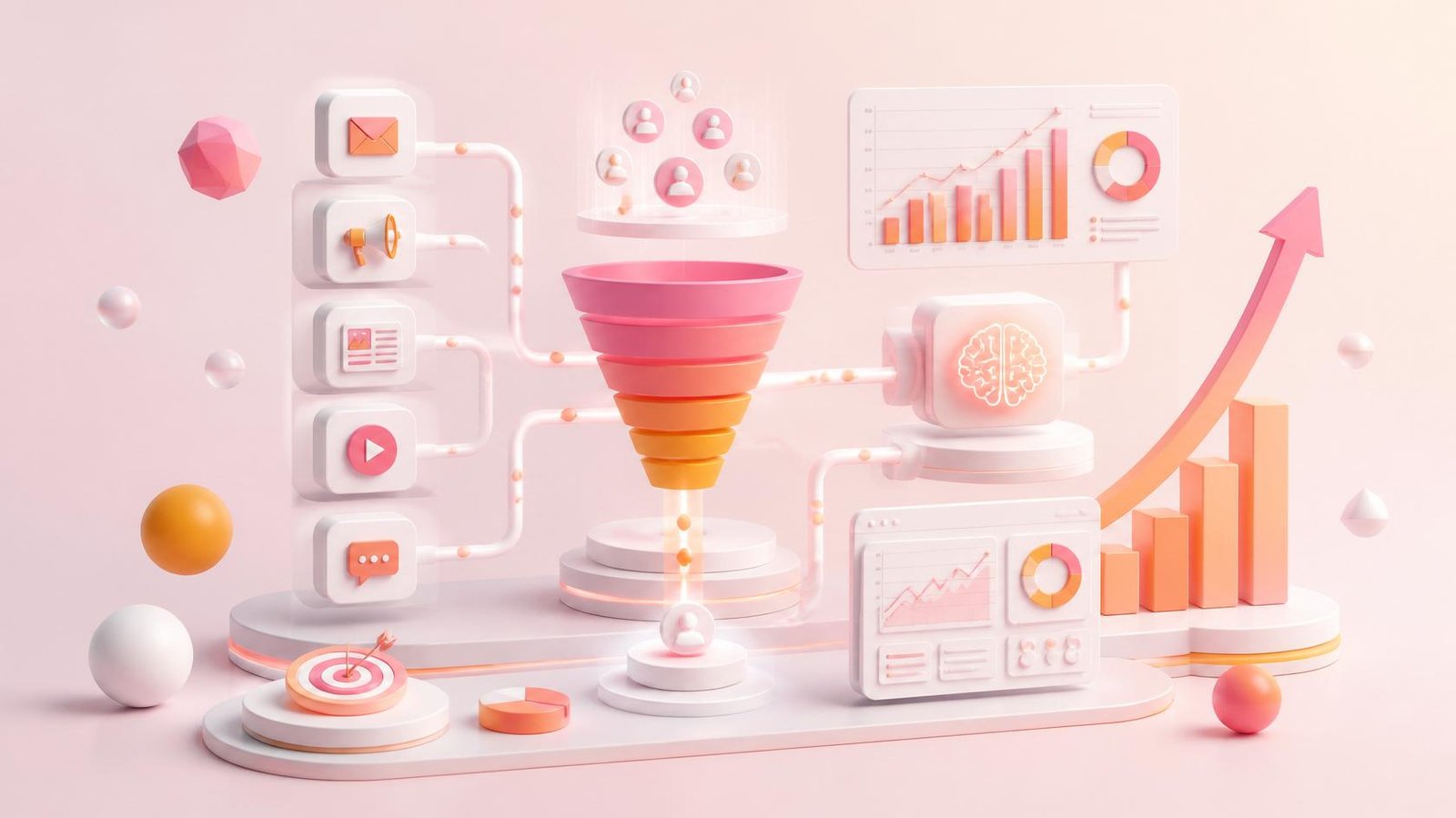
Demand generation has become one of the most important growth strategies for modern B2B businesses. As buyers become more informed and purchasing journeys grow increasingly complex, companies can no longer rely solely on cold outreach, paid advertisements, or gated content to generate qualified leads. Today’s customers spend significant time researching solutions, comparing competitors, reading reviews, and consuming educational content before they ever speak with a sales representative.
This shift has fundamentally changed how businesses approach marketing. Instead of focusing only on capturing leads, organizations are investing in demand generation strategies that create awareness, educate potential buyers, and nurture long-term relationships. The goal is not simply to increase the number of leads entering the pipeline but to attract the right audience and guide them through every stage of the buying journey.
Whether you’re a SaaS company, technology provider, financial services firm, or enterprise business, a strong demand generation strategy helps build brand authority, improve lead quality, shorten sales cycles, and increase revenue. In this guide, you’ll discover the top demand generation strategies that are delivering measurable results in 2026 and learn how to apply them to your own business.
What Is Demand Generation?
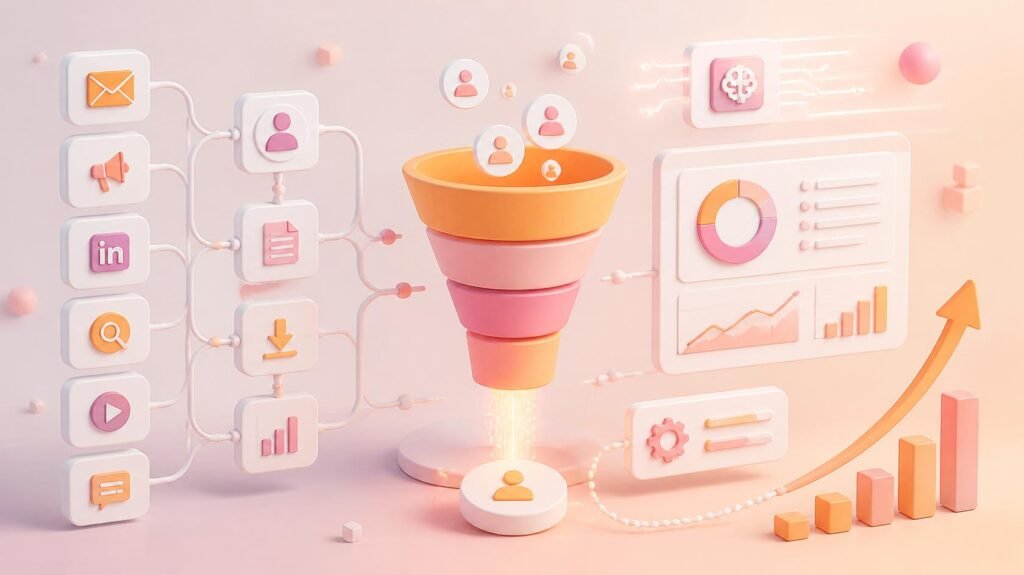
Demand generation is a long-term marketing approach designed to create interest in a company’s products or services before prospects are ready to make a purchase. Unlike traditional marketing campaigns that focus primarily on collecting contact information, demand generation emphasizes educating potential customers, building trust, and establishing meaningful relationships throughout the buyer’s journey.
Modern demand generation combines multiple digital marketing channels into one unified strategy. Search engine optimization, content marketing, email campaigns, webinars, paid advertising, social media, marketing automation, and AI-powered personalization all work together to attract and nurture prospects.
Rather than asking prospects to buy immediately, demand generation gradually helps them understand their challenges, explore possible solutions, and recognize why your business is the right choice.
This approach creates a healthier sales pipeline because prospects enter the buying process already informed and engaged.
Demand Generation vs. Lead Generation
Although the terms are often used interchangeably, they represent different stages of customer acquisition.
| Demand Generation | Lead Generation |
|---|---|
| Creates awareness and interest | Captures prospect information |
| Focuses on educating buyers | Focuses on generating inquiries |
| Builds long-term relationships | Generates immediate opportunities |
| Covers the complete buyer journey | Primarily targets decision-stage prospects |
| Improves brand authority | Increases lead volume |
An effective B2B marketing strategy combines both approaches. Demand generation creates interest, while lead generation converts that interest into qualified opportunities for the sales team.
Why Demand Generation Matters More Than Ever
The modern buying process has changed dramatically over the past few years. Decision-makers now have instant access to online reviews, comparison websites, product demonstrations, analyst reports, and AI-powered search tools. Instead of depending on sales representatives for information, buyers conduct their own research before engaging with vendors.
This means businesses must provide valuable information long before prospects are ready to purchase. Companies that consistently educate their audience become trusted advisors rather than just another vendor competing on price.
A well-executed demand generation strategy delivers several long-term benefits. It increases organic website traffic, improves brand visibility, attracts higher-quality leads, reduces customer acquisition costs, and supports more predictable revenue growth. Most importantly, it builds trust, which has become one of the most valuable assets in today’s competitive marketplace.
Top Demand Generation Strategies That Actually Work

1. Build a Content Marketing Engine Instead of Individual Campaigns
Content remains the foundation of successful demand generation because it answers the questions buyers are already asking. Instead of creating isolated blog posts or promotional articles, businesses should develop a content ecosystem that supports every stage of the buyer journey.
Educational articles, industry reports, case studies, whitepapers, videos, webinars, and downloadable resources all contribute to building credibility. When prospects consistently find useful information from your brand, they naturally begin to trust your expertise.
High-performing companies no longer publish content simply to increase website traffic. They create resources that solve real business problems and guide readers toward practical solutions.
For example, a cybersecurity company might publish articles about preventing ransomware attacks, while a SalesTech provider could create guides explaining how AI improves sales forecasting. These resources educate potential customers while positioning the company as an industry authority.
Over time, this approach generates consistent organic traffic and attracts prospects who are genuinely interested in your products or services.
2. Invest in SEO to Capture High-Intent Buyers
Search engine optimization continues to be one of the highest-return demand generation strategies because it connects businesses with buyers actively searching for solutions.
Every day, thousands of decision-makers search Google using terms like “best CRM software,” “AI sales tools,” “marketing automation platform,” or “demand generation strategy.” Ranking for these searches allows your business to reach prospects at the exact moment they’re looking for answers.
Rather than targeting only competitive short-tail keywords, successful marketers also focus on long-tail search queries that reflect specific customer intent. These searches often have lower competition and attract visitors who are much closer to making a purchasing decision.
A strong SEO strategy should include:
- High-quality educational content
- Keyword optimization
- Internal linking
- Fast-loading pages
- Technical SEO improvements
- Helpful visuals and tables
Businesses that consistently publish optimized content often see compounding traffic growth, making SEO one of the most cost-effective long-term marketing investments.
3. Use AI to Deliver Personalized Buyer Experiences
Artificial intelligence has transformed demand generation by enabling businesses to personalize marketing at scale.
Today’s buyers expect relevant recommendations and tailored experiences rather than generic promotional messages. AI makes this possible by analyzing customer behavior, website activity, previous interactions, and demographic data to deliver personalized content across multiple channels.
Instead of sending identical emails to every prospect, AI can recommend different resources based on industry, job role, company size, or buying stage. Website visitors can receive customized landing pages, product suggestions, or chatbot conversations that match their specific interests.
This level of personalization improves engagement because prospects feel that businesses understand their unique challenges.
AI also helps marketing teams prioritize leads by identifying buying signals, predicting purchase intent, and automatically scoring prospects based on their likelihood to convert. Sales teams can then focus their efforts on the most promising opportunities.
As AI technology continues to evolve, personalized demand generation is becoming a competitive advantage rather than an optional marketing tactic.
4. Create Valuable Lead Magnets That Solve Real Problems
While demand generation focuses on building awareness, businesses still need effective ways to convert engaged visitors into qualified leads.
This is where lead magnets play an important role.
Rather than offering generic eBooks, successful companies develop resources that provide immediate practical value. Industry benchmark reports, ROI calculators, implementation templates, research studies, strategy checklists, and interactive tools often generate significantly higher conversion rates because they address specific business challenges.
The best lead magnets help prospects accomplish something useful within minutes. When visitors receive genuine value before becoming customers, they’re much more likely to trust your brand and continue engaging with future marketing campaigns.
Table: Content Types for Every Stage of the Buyer’s Journey
| Buyer’s Stage | Recommended Content | Primary Goal |
|---|---|---|
| Awareness | Blog articles, videos, industry reports | Build awareness and educate |
| Consideration | Webinars, case studies, comparison guides | Demonstrate expertise |
| Decision | Product demos, ROI calculators, customer stories | Drive conversions |
5. Align Sales and Marketing Around Shared Revenue Goals
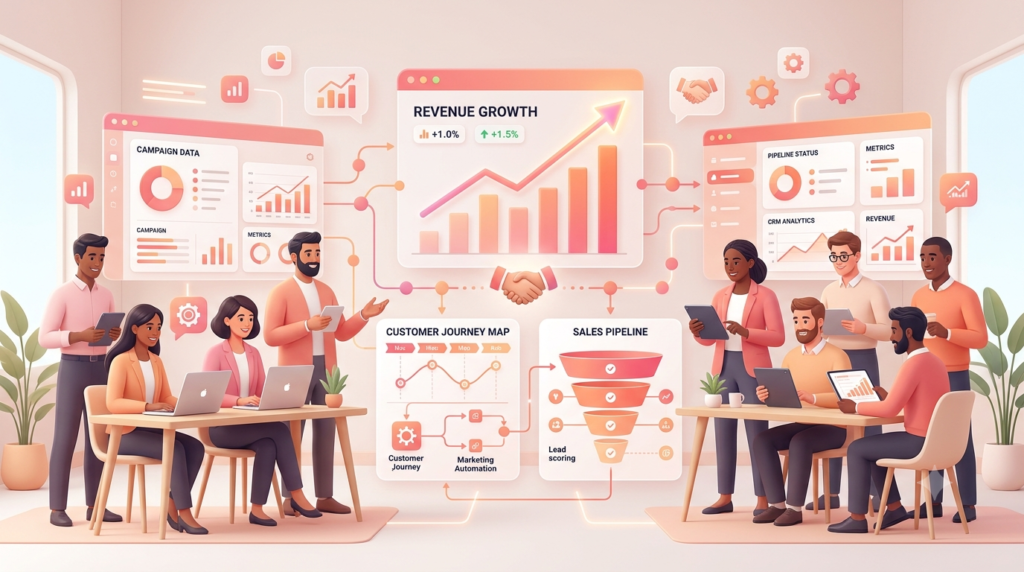
One of the biggest reasons demand generation campaigns fail is the lack of alignment between marketing and sales teams.
Marketing may focus on generating large volumes of leads, while sales prioritizes lead quality and revenue. When both teams measure success differently, opportunities are lost and conversion rates decline.
High-performing organizations solve this problem by establishing shared objectives. Marketing and sales collaborate to define ideal customer profiles, qualification criteria, lead scoring models, and follow-up processes. Both teams review campaign performance together and continuously refine their strategy based on real customer feedback.
This alignment creates a smoother buyer experience and ensures that prospects receive consistent messaging throughout the entire purchasing journey.
Companies with strong sales and marketing alignment consistently generate higher-quality pipeline opportunities and achieve better revenue growth than organizations where departments operate independently.
6. Use Intent Data to Reach Buyers at the Right Time
One of the biggest challenges in B2B marketing is identifying which prospects are actively looking for a solution. Many businesses spend months nurturing leads that have little or no buying intent, while high-intent prospects may be engaging with competitors.
Intent data solves this challenge by revealing the online behaviors that indicate purchase readiness. It helps marketers understand what topics companies are researching, which products they’re comparing, and whether they’re actively evaluating vendors.
For example, if a software company notices that several employees from the same organization are searching for terms like “best CRM software,” downloading sales automation reports, and reading comparison articles, those activities indicate strong buying intent. Marketing teams can use these signals to launch personalized campaigns before competitors engage with the same accounts.
When combined with CRM platforms and marketing automation, intent data helps businesses prioritize the right prospects, personalize outreach, and improve conversion rates. Rather than marketing to everyone equally, organizations can focus their resources where they are most likely to generate revenue.
7. Automate Lead Nurturing Without Losing the Human Touch
Very few prospects become customers after their first interaction with a brand. In most B2B industries, buyers require multiple touchpoints before making a purchasing decision. This is why lead nurturing remains one of the most effective demand generation strategies.
Marketing automation platforms allow businesses to stay connected with prospects throughout the buying journey without manually following up with every contact. However, automation should never feel robotic. Successful campaigns combine automation with personalization to create relevant and timely experiences.
Instead of sending generic promotional emails every week, businesses should deliver educational content based on a prospect’s interests and behavior. Someone who downloads a guide about marketing automation may appreciate a follow-up webinar invitation, while another prospect who visits pricing pages multiple times might benefit from a product demonstration or customer success story.
A well-designed nurturing workflow builds trust gradually. Each interaction answers another question, removes another objection, or provides another reason for prospects to continue engaging with your brand.
Over time, these consistent interactions move buyers closer to making informed purchasing decisions.
8. Invest in Webinars and Educational Events
Educational events continue to generate high-quality demand because they provide direct value to potential customers. Unlike traditional sales presentations, webinars allow businesses to demonstrate expertise while answering real customer questions.
A successful webinar doesn’t focus on selling products. Instead, it addresses industry challenges, shares practical strategies, and provides actionable insights that attendees can apply immediately.
For example, a SalesTech company might host a webinar on improving sales forecasting with artificial intelligence rather than simply demonstrating its software features. By helping attendees solve genuine business problems, the company naturally establishes credibility and trust.
Webinars also create valuable marketing assets beyond the live event. The recording can be transformed into blog articles, social media clips, podcasts, email campaigns, infographics, and downloadable resources, extending its value long after the event ends.
Organizations that consistently host educational events often build stronger relationships with prospects because they position themselves as trusted advisors instead of product vendors.
9. Make Video Content a Core Part of Your Strategy
Video has become one of the most engaging content formats for B2B buyers. Whether prospects are researching solutions on LinkedIn, YouTube, or company websites, they increasingly prefer watching short videos over reading lengthy product descriptions.
Video simplifies complex topics and allows businesses to communicate information in a more engaging way. Product demonstrations, customer testimonials, expert interviews, and educational explainers all help prospects better understand your solution before speaking with sales.
Short-form videos are particularly effective for attracting attention on social platforms, while longer educational videos perform well on landing pages and resource centers.
Businesses can also repurpose one webinar into multiple video assets, including short clips, tutorials, and customer success stories, maximizing the return on every piece of content they create.
As video consumption continues to grow, companies that integrate video into their demand generation strategy often experience higher engagement and longer website session durations.
10. Build a Strong LinkedIn Presence
For B2B organizations, LinkedIn remains one of the most valuable demand generation channels available. Decision-makers actively use the platform to discover industry trends, learn from experts, and evaluate potential vendors.
Publishing valuable content consistently helps companies stay visible throughout the buyer journey. Rather than posting only company updates, successful brands share practical insights, research findings, customer stories, and educational content that encourages meaningful conversations.
Employees also play a significant role in expanding reach. Personal LinkedIn profiles often receive higher engagement than company pages because audiences naturally connect with individuals.
Encouraging subject matter experts, executives, and sales professionals to share their expertise builds credibility while increasing brand awareness.
The most effective LinkedIn strategies focus on starting conversations rather than promoting products.
Table 2: Comparing Popular Demand Generation Channels
| Marketing Channel | Best Use Case | Long-Term Value | Lead Quality |
|---|---|---|---|
| SEO | Organic traffic and awareness | Excellent | High |
| Content Marketing | Educating buyers | Excellent | High |
| LinkedIn Marketing | B2B engagement | High | High |
| Webinars | Buyer education | High | Very High |
| Email Marketing | Lead nurturing | High | High |
| Paid Advertising | Immediate visibility | Medium | Medium |
| Video Marketing | Product education | High | High |
| AI Personalization | Improving conversions | Excellent | Very High |
Build an Omnichannel Demand Generation Strategy
The highest-performing organizations no longer rely on a single marketing channel. Instead, they create an integrated experience where every channel supports the others.
A prospect might first discover your company through a Google search, subscribe to your newsletter after reading a blog article, attend one of your webinars, follow your LinkedIn page, receive personalized email content, and finally request a product demonstration weeks later.
Each interaction reinforces the previous one, gradually increasing trust and confidence in your brand.
Businesses that maintain consistent messaging across all marketing channels create a smoother buyer journey and significantly improve conversion rates.
Common Demand Generation Mistakes to Avoid
Even experienced marketing teams make mistakes that reduce campaign performance. Recognizing these issues early can save both time and budget.
Some of the most common mistakes include:
- Prioritizing lead quantity instead of lead quality.
- Publishing content without a clear SEO strategy.
- Sending generic email campaigns to every contact.
- Ignoring buyer intent signals.
- Failing to align marketing goals with sales objectives.
- Measuring vanity metrics such as impressions while overlooking pipeline contribution.
- Stopping campaigns too early before they have time to generate momentum.
Demand generation is a long-term investment. Businesses that continuously optimize their campaigns based on customer behavior generally achieve far better results than those expecting immediate returns.
How to Measure Demand Generation Success
Without clear performance metrics, it is impossible to know whether your strategy is producing meaningful business outcomes.
While website traffic and social media engagement provide useful indicators, revenue-focused metrics offer a much clearer picture of success.
Key performance indicators include:
| KPI | Why It Matters |
|---|---|
| Organic Website Traffic | Measures brand visibility and SEO performance |
| Marketing Qualified Leads (MQLs) | Indicates campaign effectiveness |
| Sales Qualified Leads (SQLs) | Reflects lead quality |
| Opportunity-to-Customer Conversion Rate | Measures sales efficiency |
| Pipeline Revenue | Shows contribution to business growth |
| Customer Acquisition Cost (CAC) | Evaluates marketing efficiency |
| Customer Lifetime Value (CLV) | Measures long-term profitability |
| Marketing ROI | Determines overall campaign success |
Organizations that review these metrics regularly can identify which channels produce the highest-quality pipeline and optimize future investments accordingly.
Conclusion
Demand generation has evolved far beyond simply collecting leads. In today’s competitive digital marketplace, businesses must earn customer attention by providing valuable information, building trust, and delivering meaningful experiences throughout the buying journey.
The most successful organizations understand that sustainable growth comes from combining multiple strategies rather than relying on a single marketing channel. High-quality content, search engine optimization, AI-powered personalization, marketing automation, webinars, LinkedIn engagement, and intent data all play important roles in creating a predictable pipeline of qualified opportunities.
As technology continues to reshape buyer expectations, businesses that invest in customer education, personalization, and long-term relationship building will be better positioned to outperform competitors. Rather than focusing solely on generating more leads, companies should aim to create genuine demand by solving real customer problems and becoming trusted industry advisors.
Demand generation is not a one-time initiative it is an ongoing process of attracting, educating, nurturing, and converting prospects into loyal customers. Organizations that consistently refine their strategies based on customer behavior and performance data will be best equipped to drive revenue growth in 2026 and beyond.
Frequently Asked Questions
What is the difference between demand generation and lead generation?
Demand generation focuses on creating awareness, educating buyers, and building interest throughout the customer journey. Lead generation begins once prospects are ready to exchange their contact information for valuable content or a product demonstration.
Which demand generation strategy produces the best results?
There is no single strategy that works for every business. The highest-performing organizations combine SEO, content marketing, email nurturing, LinkedIn marketing, webinars, AI personalization, and marketing automation into one integrated approach.
Is demand generation only for large enterprises?
No. Small businesses and startups can benefit significantly from demand generation. Publishing educational content, optimizing for search engines, and building relationships through email and social media can generate qualified leads without requiring large advertising budgets.
How long does demand generation take to produce results?
Some tactics, such as paid advertising, can generate immediate traffic. However, long-term strategies like SEO and content marketing often take several months to deliver consistent pipeline growth. Demand generation should be viewed as an ongoing investment rather than a short-term campaign.
How does AI improve demand generation?
AI helps businesses personalize customer experiences, automate repetitive marketing tasks, analyze buying behavior, score leads, predict purchase intent, and optimize campaigns. These capabilities improve efficiency while allowing marketing and sales teams to focus on higher-value activities.