
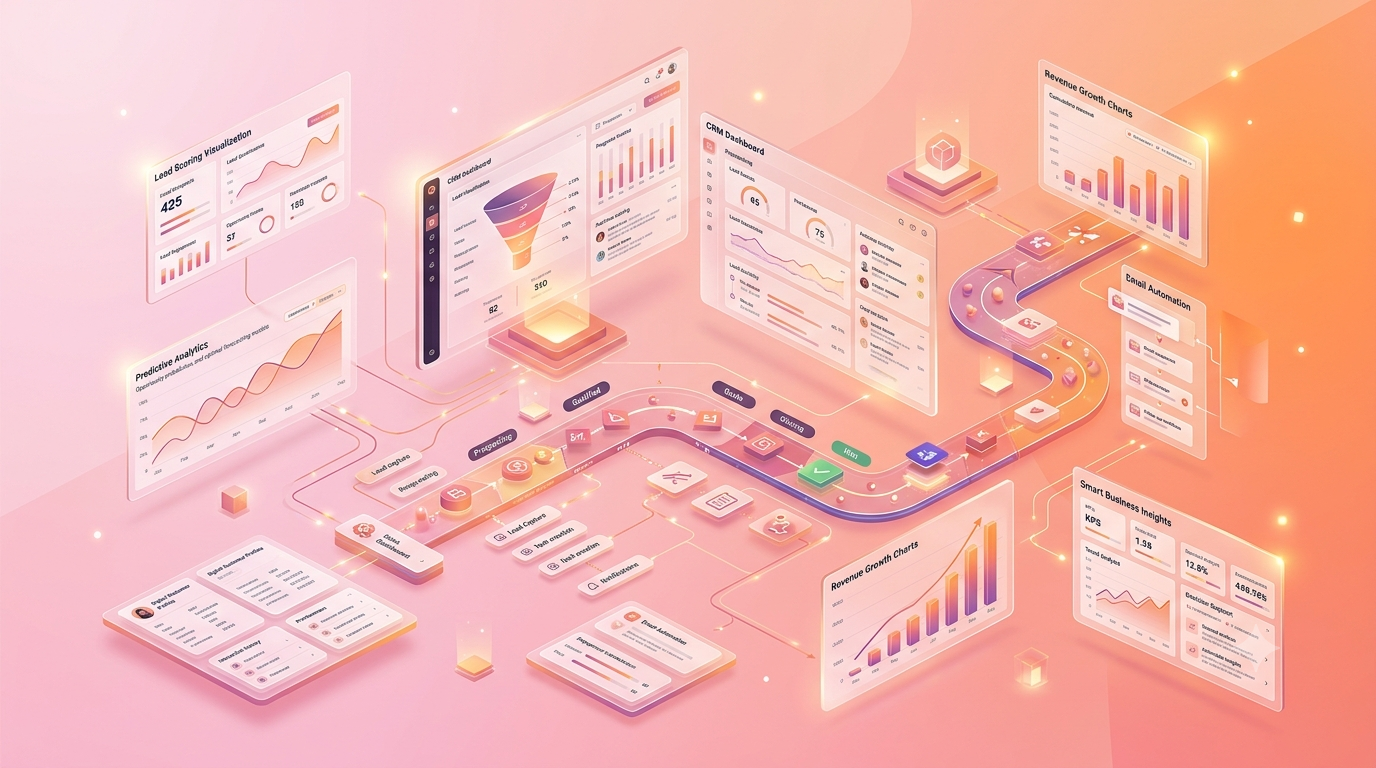
Artificial intelligence is changing the way businesses sell. Sales teams no longer have to spend hours manually searching for prospects, updating CRM records, sending follow-up emails, or analyzing customer behavior. Instead, AI-powered sales automation helps businesses complete repetitive tasks automatically while providing valuable insights that improve decision-making.
Today’s buyers expect faster responses, personalized communication, and a seamless buying experience. Meeting these expectations manually becomes difficult as businesses grow. This is where AI sales automation becomes an important part of modern sales strategies. It helps sales representatives spend more time building relationships with prospects instead of handling administrative work.
Whether you’re a startup looking to generate more leads or a large enterprise managing thousands of customer interactions, AI sales automation can improve productivity, shorten sales cycles, and increase revenue.
In this guide, you’ll learn what AI sales automation is, how it works, its key features, benefits, challenges, and the best practices businesses can follow to achieve better sales performance.
What Is AI Sales Automation?
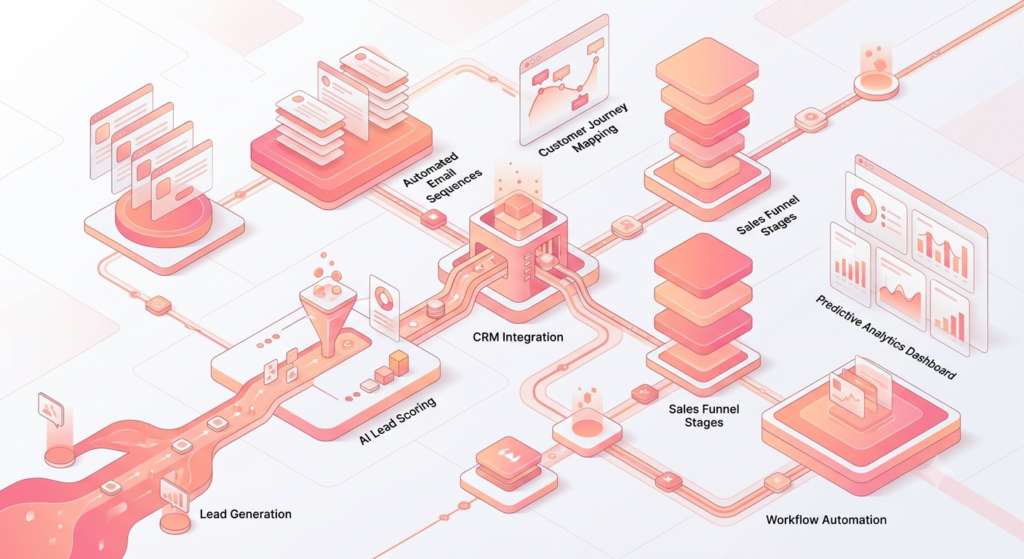
AI sales automation is the use of artificial intelligence, machine learning, and automation technologies to streamline sales activities and reduce manual effort. It automates repetitive tasks while helping sales teams make smarter decisions using customer data and predictive insights.
Instead of simply automating workflows, AI continuously analyzes customer interactions, buying patterns, engagement history, and sales performance to recommend the best next action for every prospect.
For example, AI can automatically:
- Score incoming leads
- Recommend the best time to contact prospects
- Personalize email messages
- Schedule meetings
- Predict deal outcomes
- Update CRM records
- Suggest cross-selling and upselling opportunities
Rather than replacing sales professionals, AI acts as an intelligent assistant that improves efficiency and supports better decision-making throughout the sales process.
Traditional Sales Process vs AI Sales Automation
| Traditional Sales Process | AI Sales Automation |
|---|---|
| Manual lead qualification | AI automatically scores leads |
| Generic email campaigns | Personalized AI-generated emails |
| Manual CRM updates | Automatic CRM synchronization |
| Guess-based forecasting | Predictive sales forecasting |
| Time-consuming follow-ups | Automated follow-up sequences |
| Manual reporting | Real-time AI analytics |
| Limited customer insights | Deep behavioral analysis |
| Reactive selling | Predictive recommendations |
Businesses adopting AI sales automation often experience faster response times, improved lead quality, and greater sales efficiency because repetitive administrative work is significantly reduced.
Why AI Sales Automation Matters
Sales has become more complex than ever. Customers interact with businesses through websites, emails, social media, webinars, live chat, and multiple digital channels before making a purchasing decision.
Managing all these touchpoints manually is nearly impossible. AI helps sales teams understand customer behavior across every interaction, allowing them to engage prospects with the right message at the right time.
Instead of relying on intuition, sales representatives can make decisions based on real-time data.
Some of the biggest reasons businesses are investing in AI sales automation include:
- Faster lead response times
- Better customer personalization
- Improved sales forecasting
- Increased productivity
- Higher conversion rates
- More accurate pipeline management
- Better customer experiences
Companies that embrace AI are often able to identify buying signals much earlier, helping sales representatives prioritize prospects who are most likely to convert.
How AI Sales Automation Works
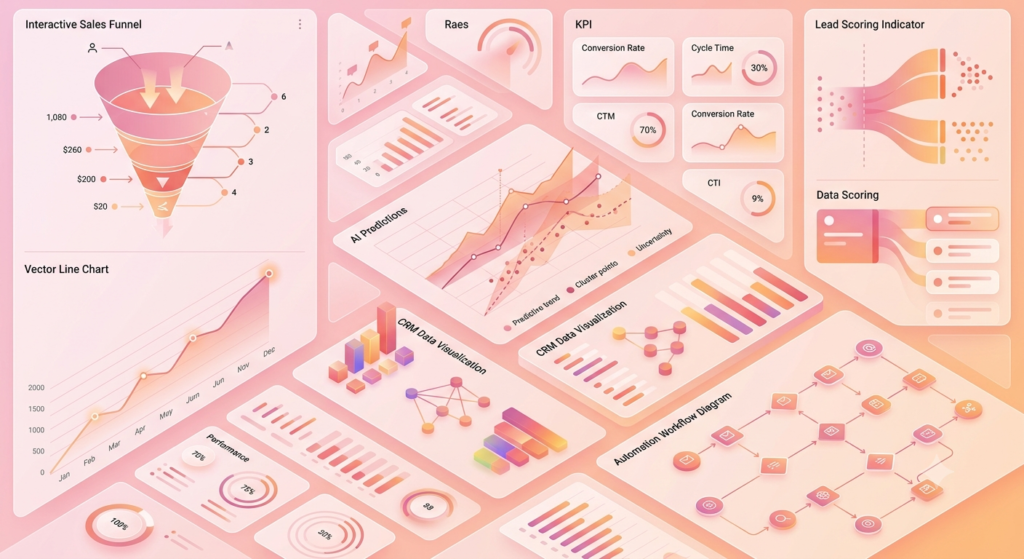
AI sales automation combines several advanced technologies that work together to improve every stage of the sales funnel.
The process begins when customer data is collected from various sources such as CRM platforms, websites, emails, social media, chatbots, and marketing campaigns.
AI algorithms then analyze this information to identify patterns, customer interests, purchase intent, and behavioral trends.
Based on these insights, the system can automatically recommend actions, assign lead scores, personalize communications, predict customer needs, and forecast future sales.
As more customer data becomes available, machine learning continuously improves the accuracy of these recommendations.
How AI Sales Automation Improves the Sales Journey
| Sales Stage | How AI Helps |
|---|---|
| Lead Generation | Identifies potential customers using behavioral data |
| Lead Qualification | Automatically scores and prioritizes leads |
| Prospect Research | Collects company and customer insights instantly |
| Outreach | Personalizes emails and communication |
| Follow-Ups | Sends automated reminders and email sequences |
| Meeting Scheduling | Automatically books meetings based on availability |
| Proposal Creation | Generates customized sales proposals |
| Forecasting | Predicts future sales performance |
| Customer Retention | Recommends upsell and cross-sell opportunities |
This intelligent automation allows sales teams to focus on building relationships instead of spending valuable time on repetitive administrative tasks.
Key Features of AI Sales Automation
Modern AI sales automation platforms offer a wide range of intelligent features that improve efficiency across the sales pipeline.
1. Intelligent Lead Scoring
Not every lead has the same chance of becoming a customer.
AI analyzes demographic information, browsing behavior, engagement history, previous purchases, company size, industry, and buying signals to assign a score to each lead.
Sales representatives can then focus their efforts on high-value prospects instead of contacting every lead equally.
This significantly improves conversion rates while reducing wasted effort.
2. Automated CRM Management
One of the biggest challenges for sales teams is keeping CRM systems updated.
AI automatically records:
- Customer interactions
- Email conversations
- Phone calls
- Meeting notes
- Contact details
- Sales activities
This reduces manual data entry while ensuring accurate customer records.
3. Personalized Email Generation
Generic sales emails rarely produce strong engagement.
AI analyzes customer preferences, previous interactions, industry trends, and purchase behavior to generate personalized email content that feels relevant to each recipient.
Personalized communication increases open rates, reply rates, and customer engagement.
4. Predictive Sales Forecasting
Forecasting revenue manually often depends on assumptions.
AI examines historical sales data, current pipeline activity, seasonal trends, and customer behavior to predict future sales more accurately.
Sales managers can identify potential risks early and adjust strategies before opportunities are lost.
5. Automated Follow-Up Sequences
Following up consistently is one of the biggest challenges in sales.
AI automatically sends:
- Reminder emails
- Follow-up messages
- Meeting confirmations
- Proposal reminders
- Product updates
These automated sequences ensure no prospect is forgotten while keeping communication timely and professional.
6. Conversation Intelligence
AI can analyze customer conversations from emails, phone calls, video meetings, and chat interactions.
It identifies:
- Customer objections
- Buying intent
- Frequently asked questions
- Positive buying signals
- Competitive mentions
- Customer sentiment
These insights help sales representatives prepare more effective responses and improve future conversations.
7. Smart Task Prioritization
AI helps sales representatives organize their daily workload by identifying which tasks deserve immediate attention.
For example, the system may recommend:
- Contacting highly engaged prospects first
- Responding quickly to customers showing buying intent
- Scheduling follow-ups for inactive opportunities
- Prioritizing deals that are closest to closing
This intelligent prioritization allows teams to spend more time on activities that directly contribute to revenue growth.
8. Sales Performance Analytics
AI-powered dashboards provide real-time visibility into sales performance through metrics such as:
- Lead conversion rate
- Sales pipeline health
- Win rate
- Average deal size
- Customer acquisition cost
- Revenue growth
- Sales cycle length
These insights help managers identify strengths, uncover bottlenecks, and make data-driven decisions that improve overall sales performance.
Why Businesses Are Adopting AI Sales Automation
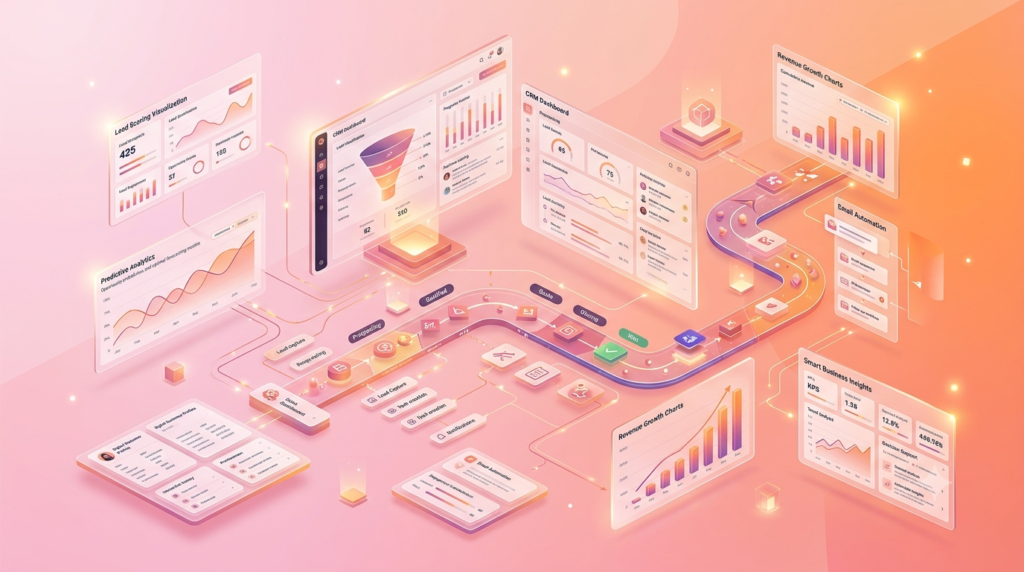
Organizations of all sizes are embracing AI sales automation because it enables teams to work smarter rather than harder. By reducing repetitive tasks, improving lead prioritization, and delivering actionable insights, AI allows sales professionals to focus on what matters most—building relationships and closing deals.
As customer expectations continue to rise, businesses that integrate AI into their sales processes are better positioned to respond quickly, personalize every interaction, and stay competitive in an increasingly digital marketplace.
Top Benefits of AI Sales Automation
AI sales automation is no longer just a productivity tool—it has become a strategic advantage for businesses looking to increase revenue and improve customer experiences. By combining automation with intelligent data analysis, sales teams can work more efficiently while making better decisions throughout the sales process.
Below are some of the most valuable benefits organizations experience after adopting AI sales automation.
1. Increased Sales Productivity
Sales professionals often spend a large portion of their day on administrative tasks such as updating CRM records, scheduling meetings, sending follow-up emails, and preparing reports. These repetitive activities reduce the time available for engaging with potential customers.
AI sales automation takes over many of these routine tasks, allowing representatives to dedicate more time to meaningful conversations and relationship-building.
Instead of manually tracking every interaction, AI automatically records customer activities and keeps sales pipelines updated in real time. As a result, sales teams can focus on generating revenue rather than managing paperwork.
2. Better Lead Qualification
Every business receives leads with different levels of interest and buying intent. Contacting every prospect with the same priority often wastes valuable resources.
AI evaluates customer behavior, website visits, email engagement, previous interactions, company size, industry, and purchase signals to identify which prospects are most likely to convert.
Sales teams can then prioritize high-quality leads while nurturing less-qualified prospects through automated workflows.
This improves both efficiency and conversion rates.
3. Faster Response Times
Speed plays an important role in modern sales. Customers expect businesses to respond quickly to inquiries, whether they arrive through email, websites, or social media.
AI-powered systems instantly acknowledge customer requests, assign leads to the appropriate sales representative, recommend responses, and even send personalized follow-up messages automatically.
Faster communication helps businesses build trust while reducing the risk of losing potential customers to competitors.
4. Personalized Customer Engagement
Modern buyers expect personalized experiences rather than generic sales messages.
AI analyzes customer preferences, browsing history, purchase behavior, and previous conversations to deliver highly relevant communication.
Instead of sending identical emails to every lead, businesses can create tailored messages that address individual interests and business needs.
Personalized communication often results in higher engagement rates and stronger customer relationships.
5. Improved Sales Forecasting
Accurate forecasting is essential for planning budgets, setting targets, and allocating resources.
Traditional forecasting often depends on manual estimates and historical assumptions.
AI continuously analyzes pipeline activity, customer interactions, seasonal patterns, and historical sales data to produce more reliable forecasts.
Managers gain better visibility into future revenue and can identify risks before they impact business performance.
6. Higher Conversion Rates
One of the biggest advantages of AI sales automation is its ability to identify the right opportunity at the right time.
AI recommends the best next action based on customer behavior, helping sales teams engage prospects when they are most likely to make purchasing decisions.
Better timing, personalized communication, and intelligent lead prioritization naturally improve conversion rates.
7. Enhanced Customer Experience
Customers appreciate businesses that understand their needs and respond quickly.
AI enables companies to provide:
- Faster responses
- Personalized recommendations
- Consistent communication
- Better product suggestions
- Timely follow-ups
A positive customer experience often leads to increased satisfaction, repeat purchases, and long-term loyalty.
Key Benefits at a Glance
| Benefit | Business Impact |
|---|---|
| Automated repetitive tasks | More selling time for sales teams |
| Intelligent lead scoring | Better lead prioritization |
| Personalized communication | Higher customer engagement |
| Predictive forecasting | Improved revenue planning |
| Faster response times | Better customer satisfaction |
| CRM automation | Accurate customer records |
| Real-time analytics | Data-driven decision making |
| Workflow automation | Increased operational efficiency |
Real-World Applications of AI Sales Automation
AI sales automation is being used across different industries to simplify sales operations and improve customer engagement.
Here are some of the most common applications.
Lead Generation
AI identifies potential customers by analyzing website visitors, social media interactions, online behavior, and marketing campaign performance.
Instead of relying solely on manual prospecting, businesses receive qualified leads based on predictive insights.
Email Outreach
AI creates personalized email campaigns based on customer interests and previous interactions.
It can determine the best time to send emails, suggest subject lines, and optimize messaging for better response rates.
This improves both open rates and engagement.
Customer Follow-Ups
Following up consistently can be difficult for busy sales representatives.
AI automatically sends reminders, follow-up emails, meeting confirmations, and personalized updates without requiring manual effort.
This ensures that promising opportunities remain active throughout the sales cycle.
Pipeline Management
Managing hundreds of opportunities manually often leads to missed follow-ups and inaccurate forecasting.
AI continuously monitors the sales pipeline and alerts managers about:
- Stalled deals
- High-priority opportunities
- Deals likely to close
- Customers requiring immediate attention
This improves pipeline visibility and overall sales performance.
Sales Forecasting
Using historical data and machine learning models, AI predicts future revenue while identifying trends that may impact business growth.
Managers can make proactive decisions rather than reacting after problems occur.
Customer Retention
AI doesn’t only help acquire customers it also improves retention.
By analyzing customer satisfaction, purchase history, and engagement levels, AI identifies opportunities for:
- Upselling
- Cross-selling
- Renewal reminders
- Customer success outreach
This strengthens long-term customer relationships.
Industries Using AI Sales Automation
Although AI sales automation is popular in technology companies, many industries now rely on it to improve sales performance.
| Industry | Common AI Sales Applications |
|---|---|
| Software and SaaS | Lead scoring, CRM automation, forecasting |
| Healthcare | Patient engagement and appointment automation |
| Financial Services | Personalized product recommendations |
| Manufacturing | Distributor management and sales forecasting |
| Retail and E-commerce | Product recommendations and customer segmentation |
| Telecommunications | Customer retention and upselling |
| Real Estate | Lead qualification and automated follow-ups |
| Education | Student enrollment and inquiry management |
As AI technology continues to evolve, adoption is expected to grow across nearly every industry.
How to Implement AI Sales Automation
Implementing AI successfully requires careful planning rather than simply purchasing new software.
Businesses should begin by identifying repetitive sales activities that consume the most time.
These often include lead qualification, email follow-ups, CRM updates, scheduling meetings, and reporting.
Once these tasks are identified, organizations can evaluate AI tools that integrate with their existing CRM and sales platforms.
The next step involves preparing clean and accurate customer data. Since AI depends heavily on data quality, removing duplicate records and updating outdated information is essential before automation begins.
After implementation, sales teams should receive proper training so they understand how to use AI-generated recommendations instead of relying solely on traditional methods.
Organizations should also monitor performance regularly by measuring metrics such as lead conversion rates, response times, customer engagement, and overall revenue growth.
Continuous optimization ensures that AI systems become more accurate and valuable over time.
Best Practices for Successful AI Sales Automation
To maximize the value of AI sales automation, businesses should follow these proven practices:
- Start with one or two high-impact sales processes before expanding automation.
- Keep CRM and customer data clean and regularly updated.
- Use AI to support sales representatives rather than replace human interaction.
- Personalize customer communication using AI insights.
- Review AI-generated recommendations and forecasts frequently.
- Measure KPIs such as conversion rate, sales cycle length, and customer acquisition cost.
- Continuously refine workflows based on performance data.
- Ensure compliance with privacy and data protection regulations.
By combining AI capabilities with experienced sales professionals, organizations can create a more efficient and customer-focused sales process.
Challenges of AI Sales Automation
Although AI sales automation offers numerous advantages, successful implementation requires businesses to address several challenges. Organizations that understand these limitations can plan better and maximize the return on their investment.
1. Poor Data Quality
Artificial intelligence relies on data to make accurate predictions and recommendations. If customer records are incomplete, outdated, or duplicated, AI models may produce unreliable insights.
Businesses should regularly clean their CRM database and ensure customer information is accurate before implementing AI automation.
2. Integration with Existing Systems
Many organizations use multiple sales tools, marketing platforms, and CRM systems. Integrating AI with these existing technologies can sometimes be complex.
Choosing AI solutions that offer seamless integrations reduces implementation time and improves overall efficiency.
3. Employee Adoption
Introducing AI into sales processes often requires changes in daily workflows. Some sales professionals may hesitate to trust AI-generated recommendations or fear that automation could replace their roles.
Providing proper training and demonstrating how AI supports—not replaces—sales representatives encourages faster adoption.
4. Data Privacy and Security
AI systems process large amounts of customer information. Businesses must ensure that customer data is stored securely and handled in compliance with regulations such as GDPR, CCPA, or other applicable privacy laws.
Strong security measures and transparent data policies help maintain customer trust.
5. Initial Investment
Implementing AI sales automation involves software costs, integration, employee training, and process optimization. While the upfront investment may be significant, many businesses achieve long-term savings through increased productivity, higher conversion rates, and improved operational efficiency.
Common Challenges and Practical Solutions
| Challenge | Solution |
|---|---|
| Poor-quality customer data | Regularly clean and update CRM records |
| Integration issues | Select AI platforms with robust API support |
| Employee resistance | Provide training and demonstrate business value |
| Data privacy concerns | Follow security standards and compliance regulations |
| High implementation costs | Start with high-impact automation projects and scale gradually |
| Overdependence on automation | Combine AI insights with human judgment for better decisions |
Future Trends in AI Sales Automation
Artificial intelligence continues to evolve, and its role in sales is expected to become even more significant. Businesses that stay ahead of these trends will be better positioned to improve customer experiences and maintain a competitive edge.
1. Autonomous AI Sales Agents
AI systems are becoming increasingly capable of handling routine sales activities independently. Future AI agents will qualify leads, schedule meetings, send personalized outreach, and recommend next steps with minimal human intervention.
2. Hyper-Personalized Customer Experiences
Future AI platforms will analyze customer behavior across multiple touchpoints to deliver highly personalized recommendations, offers, and communications in real time.
This level of personalization can significantly improve engagement and customer satisfaction.
3. Predictive Revenue Intelligence
AI will continue to enhance sales forecasting by identifying buying signals, predicting customer churn, and recommending actions that increase the likelihood of closing deals.
Organizations will be able to make more informed business decisions using real-time predictive insights.
4. Voice AI and Conversational Intelligence
Voice-enabled AI assistants will provide real-time guidance during sales calls, summarize conversations automatically, identify customer sentiment, and recommend responses based on the discussion.
This will help sales representatives communicate more effectively and close deals faster.
5. Deeper Integration with Marketing Automation
Sales and marketing platforms will become more interconnected through AI. Customer interactions across websites, email campaigns, webinars, chatbots, and social media will be analyzed together, creating a unified customer journey and improving collaboration between sales and marketing teams.
6. AI-Driven Revenue Operations
Revenue Operations (RevOps) teams will increasingly use AI to monitor sales performance, identify operational bottlenecks, and optimize the entire revenue generation process.
This will enable organizations to improve efficiency while maintaining consistent business growth.
Best Practices for Maximizing AI Sales Automation
Businesses can achieve better results by following these proven recommendations:
- Define clear sales objectives before implementing AI.
- Automate repetitive tasks while preserving human interaction for relationship building.
- Regularly update customer and CRM data to improve AI accuracy.
- Use AI insights to personalize communication and prioritize high-value leads.
- Monitor key performance indicators such as conversion rates, response times, and pipeline growth.
- Continuously evaluate AI models and adjust workflows based on performance.
- Train sales teams to effectively use AI-generated recommendations.
- Prioritize data security and comply with applicable privacy regulations.
- Integrate AI with CRM, marketing automation, and customer support platforms.
- Review automation workflows periodically to ensure they continue to support business goals.
Conclusion
AI sales automation has become a valuable tool for organizations looking to improve productivity, increase revenue, and deliver better customer experiences. By automating repetitive tasks, analyzing customer behavior, and providing predictive insights, AI enables sales teams to focus on building stronger relationships and closing more deals.
While implementing AI requires careful planning, quality data, and employee training, the long-term benefits often outweigh the initial investment. Businesses that combine AI capabilities with human expertise can create more efficient sales processes, improve decision-making, and stay competitive in an increasingly digital marketplace.
As artificial intelligence continues to advance, organizations that adopt AI sales automation today will be better prepared for the future of B2B sales.
Frequently Asked Questions (FAQs)
1. What is AI sales automation?
AI sales automation uses artificial intelligence to automate repetitive sales tasks such as lead scoring, email outreach, CRM updates, forecasting, and follow-ups while providing data-driven recommendations to sales teams.
2. How does AI improve sales performance?
AI improves sales performance by identifying qualified leads, personalizing communication, predicting customer behavior, automating administrative tasks, and helping sales representatives focus on high-value opportunities.
3. Is AI sales automation suitable for small businesses?
Yes. Many AI-powered sales platforms offer scalable solutions that help small businesses improve productivity, reduce manual work, and manage customer relationships more effectively.
4. Can AI replace sales representatives?
No. AI is designed to support sales professionals by automating repetitive tasks and providing valuable insights. Building trust, negotiating complex deals, and maintaining customer relationships still require human expertise.
5. What features should businesses look for in AI sales automation software?
Key features include lead scoring, CRM automation, personalized email generation, predictive forecasting, workflow automation, analytics dashboards, conversation intelligence, and integration with existing business systems.
6. What industries benefit the most from AI sales automation?
Industries such as SaaS, technology, healthcare, finance, manufacturing, telecommunications, education, and retail commonly use AI sales automation to improve sales efficiency and customer engagement.