

In today’s digital-first world, businesses are under constant pressure to deliver exceptional customer interactions across every touchpoint. Customers expect personalized communication, fast responses, seamless support, and consistent experiences whether they are browsing a website, contacting customer service, or making a purchase. However, many organizations still struggle with fragmented systems, disconnected data, and inefficient processes that negatively impact the overall Customer Experience.
As one of the world’s leading customer relationship management (CRM) platforms, Salesforce helps businesses overcome some of the most critical customer experience challenges by connecting data, automating workflows, and enabling personalized engagement at scale.
In this article, we explore the major customer experience problems organizations face today and how Salesforce is helping businesses solve them to build stronger customer relationships and drive long-term growth.
Why Customer Experience Matters More Than Ever
Customer experience is considered to be one of the key differentiators that will help attain competitiveness in the modern world. Competitiveness is easy to achieve in terms of products or prices, but certainly not by creating customer experience.
Examples of things achieved as a result of customer experience include:
- Client satisfaction
- Retention rates
- Brand loyalty
- Recommendations and referrals
- Revenue generation
However, there are many challenges to be faced during the process of developing a customer experience.
Common Customer Experience Problems Businesses Face
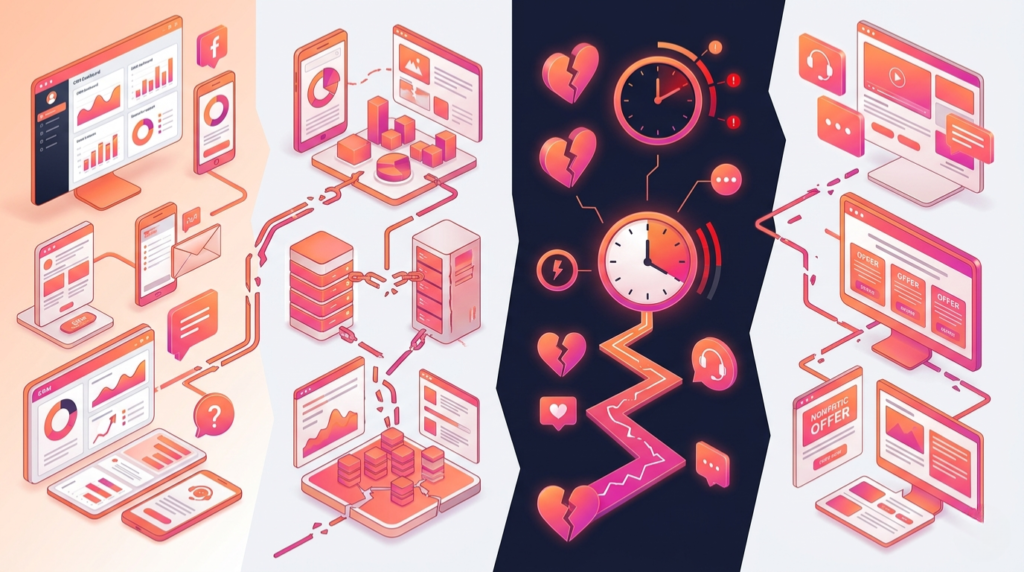
1. Lack of Customer Information Integration
A significant hurdle that organizations face when trying to provide an outstanding customer experience is the lack of integration of customer information.
Most companies store customer data in various systems, which include:
- Sales systems
- Marketing systems
- Support systems
- E-commerce systems
- Social media sites
Therefore, the lack of integration leads to incomplete customer information and inability to offer a personalized experience.
SF integrates all customer data into one system, where all customer information is available.
Using the capabilities provided by Salesforce Customer 360, organizations can:
- Gain access to comprehensive customer profiles
- Track customer engagement
- Collaborate among different departments
- Provide personalized engagement
2. Inconsistent Customer Journeys
Contemporary consumers communicate with companies using various means such as websites, mobile applications, emails, social networks, and customer support services.
Regrettably, it is very challenging for many companies to deliver a unified experience in each channel. Inconsistent communications, repeating themselves during switching from one medium to another – all this irritates the clients.
SF allows businesses to build seamless customer journeys through unification of all interactions on different channels.
Among the advantages there are:
- Omnichannel interaction capability
- Unified communication
- Better customer journey tracking
- Higher customer satisfaction rate
3. Slow Response Times
Customers expect quick responses to questions, concerns, and support requests.
Long wait times can negatively impact customer satisfaction and increase the likelihood of customer churn.
SF uses automation and AI-powered tools to improve response times.
Features such as:
- Automated case routing
- AI-powered chatbots
- Self-service support portals
- Intelligent workflow automation
help businesses resolve customer issues faster and more efficiently.
As a result, customers receive timely support while service teams can focus on more complex tasks.
4. Lack of Personalization
Modern consumers want experiences that cater to their needs and interests.
Standard marketing messages and general communication strategies are no longer relevant.
SF uses customer data and AI technologies to personalize customer experiences.
Organizations can:
- Segment audiences effectively
- Design personalized campaigns
- Suggest suitable products
- Provide targeted content
Through personalization, businesses can establish better relationships with customers and enhance eModern consumers want experiences that cater to their needs and interests.
Standard marketing messages and general communication strategies are no longer relevant.
5. Limited Customer Insights
There exist many companies which face challenges in making sense out of the customer information obtained.
The absence of insightful analytics makes it hard for firms to know what is going on with the customer.
Salesforce is an analytic tool with a powerful reporting capability.
Its capabilities include:
- Analyzing customer actions
- Performance metrics
- Predictive analysis
- Real-time reporting
All these capabilities enable the organization to make decisions that improve its customer strategy.s.
6. Poor Team Collaboration
Customer experiences tend to be poor when departments do not communicate with each other.
Departments like sales, marketing, and customer support work under different databases and information, which results in poor communications among these departments.
SF builds an integrated system where different departments can easily get the information on customers to enable collaboration.
This makes it easier to achieve the following:
- Improved communication
- Issue resolution
- Quality customer services
Collaborations ensure that customers have consistent experiencesce.
7. Customer Retention Challenges
Acquiring new customers is important, but retaining existing customers is often more cost-effective and profitable.
Many businesses struggle to identify customers who may be at risk of leaving.
SF uses predictive analytics and customer engagement tracking to identify retention risks early.
Businesses can:
- Monitor customer health scores
- Track engagement levels
- Launch proactive outreach campaigns
- Address issues before they escalate
These capabilities help improve customer loyalty and long-term retention.
Key Salesforce Features Improving Customer Experience
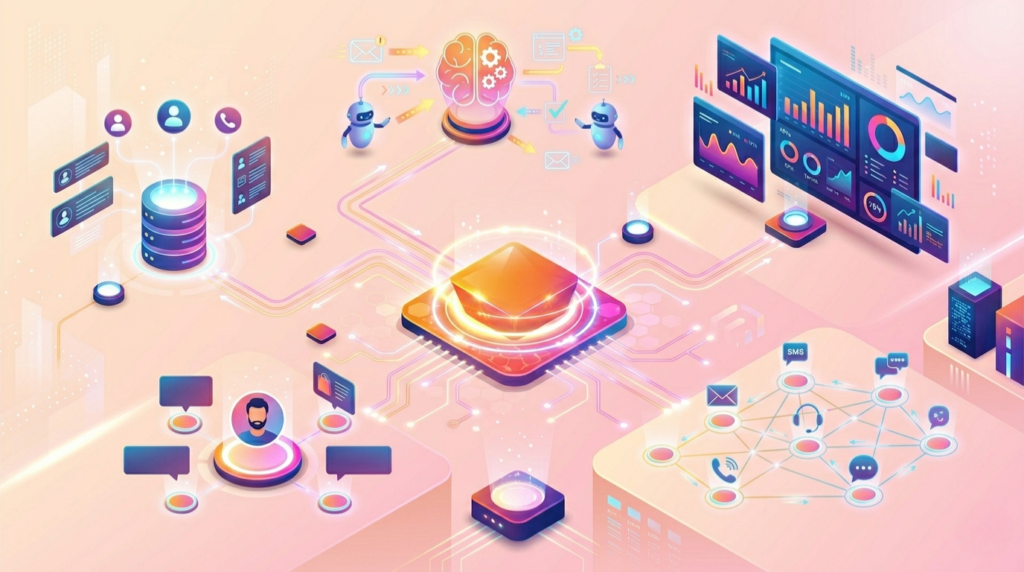
Salesforce Customer 360
Salesforce Customer 360 integrates various types of customer data through sales, marketing, service, and other systems. As a result, Salesforce offers businesses a comprehensive view of customer data to analyze their needs and preferences better.
AI-Powered Automation
With the use of artificial intelligence in Salesforce services, businesses can automate routine processes and save time. Lead scoring, workflow automation, customer service, and other features allow businesses to engage customers actively.
Omnichannel Engagement
Salesforce provides businesses with various channels for communicating with customers through email, mobile applications, social networks, websites, and customer support systems. This allows businesses to communicate with customers efficiently.
Analytics Tools
Analyzing customer behavior, engagement, and performance is crucial to optimizing marketing campaigns and improving customer experiences. The analytics provided by Salesforce gives insights on how to do it properly.
Industry Applications of Salesforce Customer Experience Solutions
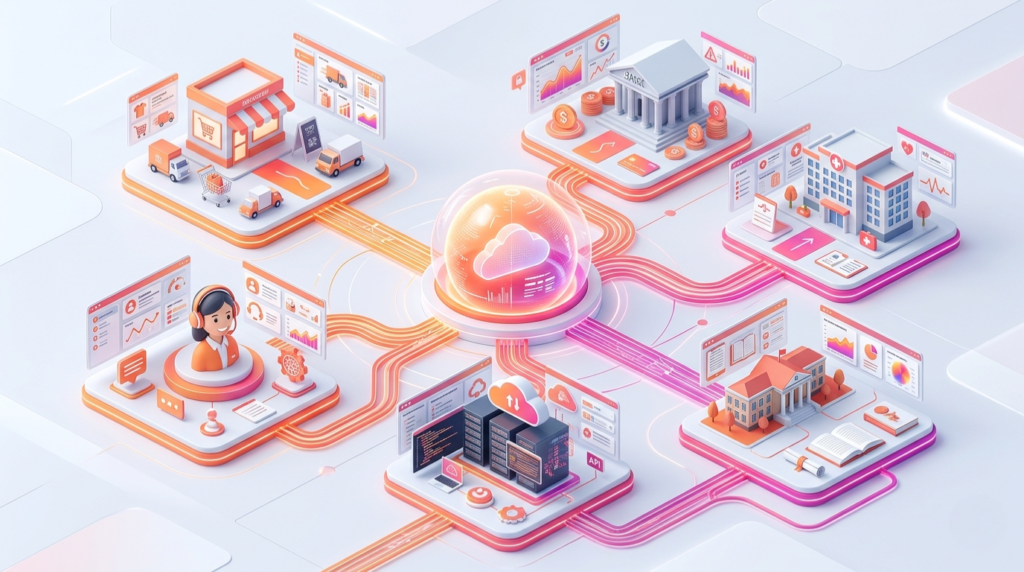
Retail and E-commerce
In retail and e-commerce, the software is used to create an experience that caters to the tastes of the customer by analyzing their behaviors and preferences. Improved customer service is achieved through better responses to customers’ queries. In turn, there is improved customer satisfaction, increased loyalty, and increased sales.
Financial Services
The application is used in banks and other financial organizations to increase customer relations and offer personal financial services. Automated tasks are carried out using this tool, hence increasing effectiveness and efficiency. It is important in improving relationships with clients through proper information sharing.
Healthcare
This software is important in helping organizations manage patient care. It increases the level of engagement between patients and health professionals through communication throughout the process. Proper appointment management is achieved with the use of the platform, as well as other functions.
Education
Educational organizations are able to manage students’ interactions from the point of entry to when they graduate using this software. Improved communication with students, as well as other activities, ensures satisfaction and increased retention of students.
Technology Organizations
Technology organizations depend on this software for the provision of customer service. There is a better understanding of customer needs,
Benefits of Using Salesforce for Customer Experience
| Benefit | Impact |
|---|---|
| Unified Customer Data | Creates a complete customer view |
| Faster Response Times | Improves customer satisfaction |
| Personalized Engagement | Increases loyalty and conversions |
| Better Team Collaboration | Enhances service consistency |
| Predictive Analytics | Supports proactive decision-making |
| Omnichannel Support | Delivers seamless experiences |
| Automation | Improves efficiency and productivity |
The Future of Salesforce and Customer Experience
As customer expectations continue to evolve, Salesforce is investing heavily in artificial intelligence, automation, and data-driven personalization.
Future trends include:
- AI-powered customer service
- Hyper-personalized customer journeys
- Predictive customer engagement
- Real-time customer insights
- Advanced conversational AI
- Smarter automation workflows
These innovations will help businesses deliver even more connected and meaningful customer experiences.
Organizations that embrace these technologies will be better positioned to build stronger customer relationships and remain competitive in an increasingly digital marketplace.
Conclusion
Providing outstanding Customer Experience has become more of a requirement than an edge for businesses today. Nonetheless, certain problems such as disconnected data, inconsistency in customer journeys, delayed actions, limited personalization, and collaboration have continued to face many organizations.
Salesforce seeks to solve these key concerns through a platform that integrates all customer data, workflow automation, personalization, and smart decision-making. Using its CRM features, intelligence through artificial intelligence, and integration across various channels, Salesforce makes it possible for companies to enhance their customer experiences to satisfy, retain, and grow them.
With technological advancement set to persist, Salesforce will still play a significant role in transforming customer experience.
Frequently Asked Questions (FAQs)
1. What is Salesforce Customer Experience?
Salesforce Customer Experience refers to the tools and solutions Salesforce provides to help businesses improve customer interactions, engagement, and satisfaction across all touchpoints.
2. How does Salesforce improve customer experience?
Salesforce improves customer experience by centralizing customer data, enabling personalization, automating workflows, and providing real-time insights.
3. What is Salesforce Customer 360?
Salesforce Customer 360 is a platform that creates a unified view of customer data across sales, marketing, service, and commerce channels.
4. Why is customer experience important for businesses?
Customer experience directly impacts customer satisfaction, loyalty, retention, brand reputation, and overall business growth.
5. Can Salesforce help with customer retention?
Yes. Salesforce offers predictive analytics, customer engagement tracking, and automation tools that help businesses identify retention risks and improve customer loyalty.
6. Which industries use Salesforce for customer experience management?
Industries including retail, healthcare, financial services, education, manufacturing, and technology use Salesforce to enhance customer experiences and strengthen customer relationships.