
Lead generation represents just the initial step in the process of acquiring new customers. There are many cases when a prospect is not ready to make a purchase after finding out about a particular brand. Here, lead nurturing plays an important role. A correctly created lead nurturing process will help to create strong connections with prospects, educate them on certain solutions, and eventually make them buy something.
Organizations which successfully apply lead nurturing practices usually have higher conversion rates, better customer engagement rates, and more profits. With a successful lead nurturing campaign, companies can ensure the engagement of prospects along the entire buyer’s journey.
Here, you will find out how to create high-converting lead nurturing campaigns.
What Is a Lead Nurturing Workflow?
Lead nurturing campaigns refer to the automated series of communications used to drive the potential client through the sales process. These campaigns are based on the information about their behavior, interests, and level of engagement to provide tailored messages.
The main objective of using such a campaign is to establish contact with the prospects until they decide to become clients.
Some of the common elements of a typical lead nurturing campaign are:
- Welcome emails
- Educational materials
- Product suggestions
- Case studies
- Invitations to webinars
- Trial period offer
- Sales follow-up
Why Lead Nurturing Matters
Many prospects require multiple interactions before making a buying decision. Without a nurturing strategy, businesses risk losing potential customers to competitors.
Key Benefits of Lead Nurturing
| Benefit | Impact |
|---|---|
| Higher Conversion Rates | Moves prospects toward purchase decisions faster |
| Improved Engagement | Keeps leads interested and connected with your brand |
| Better Customer Experience | Provides relevant content based on buyer needs |
| Increased Sales Efficiency | Helps sales teams focus on qualified prospects |
| Stronger Brand Trust | Builds credibility through valuable communication |
Research consistently shows that nurtured leads tend to make larger purchases and convert more frequently than non-nurtured leads.
Lead Nurturing Process Overview
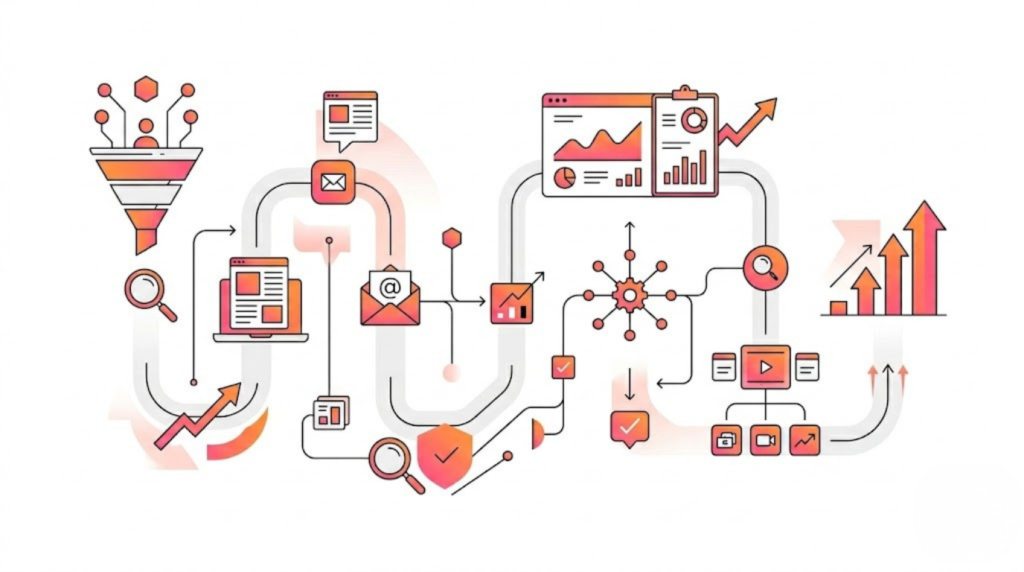
It is crucial to understand the level of engagement that your potential clients are at when designing a lead nurturing process. This will determine what type of communication is needed.
Awareness Stage
At the awareness stage, the lead recognizes that he has a problem or an opportunity but does not fully understand all the ways of addressing his issue. The major goal at this point is to obtain as much information about the problem as possible. Blog posts, industry studies, guide materials, infographic pieces, and video clips can be used to educate leads without selling too hard.
Consideration Stage
At the consideration stage, the lead has recognized and identified his problem, and now begins to look for its solutions. Here, he will explore various options and products and decide what works best for him. Case studies, comparative content, online webinars, expert opinion, and white papers can serve as great sources of educational content at this point.
Decision Stage
By the time leads reach the decision-making stage, they are ready to invest money and commit to purchasing from you. At this stage, they need proof that your solution provides value, as well as the pricing information and consultations regarding whether your solution is the most appropriate for their needs. Demos, free trials, testimonials, pricing information, and consultations help here.
Steps to Build High-Converting Lead Nurturing Workflows
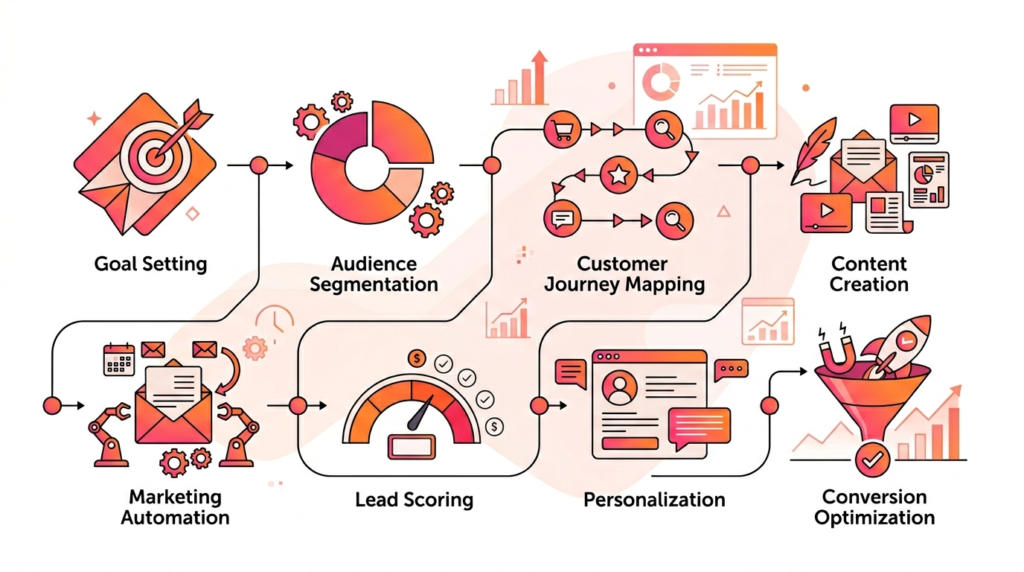
1. Define Your Goals
Before creating a lead nurturing workflow, it is important to establish a clear objective. Having a specific goal helps you design relevant content, choose the right communication channels, and measure success effectively.
Whether your aim is to increase demo requests, drive free trial sign-ups, generate qualified sales opportunities, improve customer onboarding, or encourage repeat purchases, every step in the workflow should support that objective. Clear goals ensure your nurturing efforts remain focused and deliver meaningful business results.
Setting measurable goals helps evaluate workflow performance accurately.
2. Segment Your Audience
Not all leads have the same needs or interests. Effective segmentation ensures personalized communication.
Common Segmentation Criteria
| Segmentation Type | Examples |
|---|---|
| Demographic | Industry, company size, job role |
| Behavioral | Website visits, email clicks |
| Geographic | Country, region |
| Purchase Intent | High-interest vs low-interest leads |
| Lifecycle Stage | New lead, MQL, SQL |
Personalized campaigns often achieve significantly better engagement than generic messaging.
3. Map the Customer Journey
Mapping the customer journey helps businesses understand how prospects move through the sales funnel, from initial awareness to becoming a customer. By visualizing each touchpoint and interaction, marketers can deliver relevant content at the right time and guide leads toward conversion.
For example, a prospect may first download an eBook, receive a welcome email, engage with educational content, attend a webinar, review a case study, and then schedule a product demo before making a purchase. A well-mapped journey ensures a seamless experience and improves the effectiveness of lead nurturing efforts.
4. Create Valuable Content
Content is the foundation of every lead nurturing workflow.
Content Types That Drive Conversions
| Funnel Stage | Content Type |
|---|---|
| Awareness | Blogs, guides, videos |
| Consideration | Webinars, case studies |
| Decision | Demos, free trials, testimonials |
Focus on solving customer problems rather than aggressively promoting products.
5. Use Marketing Automation
Marketing automation platforms streamline lead nurturing and ensure timely communication.
Automation allows businesses to:
- Trigger emails based on actions
- Score leads automatically
- Personalize messaging
- Schedule follow-ups
- Track engagement metrics
This improves consistency while reducing manual workload.
6. Implement Lead Scoring
Lead scoring helps prioritize prospects based on their likelihood to convert.
Sample Lead Scoring Model
| Action | Score |
|---|---|
| Email Open | 5 Points |
| Link Click | 10 Points |
| Webinar Registration | 20 Points |
| Demo Request | 40 Points |
| Pricing Page Visit | 25 Points |
When leads reach a specific score threshold, they can be passed to the sales team.
7. Personalize Every Interaction
Personalization is much more than simply addressing a lead by their first name. Effective lead nurturing involves delivering content and offers that align with a prospect’s industry, interests, behaviors, and specific needs.
This can include industry-specific messaging, relevant product recommendations, dynamic content, behavioral triggers based on user actions, and customized offers. By providing a more tailored experience, businesses can increase engagement, build trust, and create stronger relationships that ultimately lead to higher conversion rates.
8. Optimize Timing and Frequency
Sending too many emails can overwhelm prospects, while too few can reduce engagement.
Suggested Email Cadence
| Day | Action |
|---|---|
| Day 1 | Welcome Email |
| Day 3 | Educational Content |
| Day 7 | Case Study |
| Day 10 | Webinar Invitation |
| Day 14 | Product Demo Offer |
| Day 21 | Follow-Up Email |
Testing different schedules helps determine the optimal frequency for your audience.
Examples of High-Converting Lead Nurturing Workflows
Workflow for Content Download
A content download workflow is activated once someone downloads any piece of informative content, be it an ebook, white paper, or another useful material. The aim here is to educate the lead further by moving him closer to conversion. After providing a resource requested by the visitor, one should offer related content, expert advice, useful insights, and some case studies to establish authority and add more value to a relationship. The final stage of the workflow may involve an invite to a consultative session or another call-to-action.
Re-Engagement Workflow
Trigger: Inactive lead
Sequence:
- Check-in email
- Valuable content offer
- Product updates
- Exclusive incentive
- Final re-engagement attempt
Workflow for Free Trial
A free trial workflow starts once someone registers for a free trial of the product offered. Its main purpose is to ensure that the user understands its usefulness and benefits within the shortest possible time frame. A trial guide, information on important features, tips on how to use the service or product effectively, and case studies that highlight its benefits may be among the most important elements of a free trial workflow.
Common Lead Nurturing Mistakes to Avoid
- Failure to Segment: The transmission of the same message to all leads is likely to lead to minimal engagement.
- Too Much Sales Talk: Customers prefer informative content over sales propaganda.
- Ignoring the Activity of Leads: It prevents you from creating personalized campaigns effectively.
- Bad Timing: Lead engagement decreases when there is a delay in follow-up messages.
Key Metrics to Track
Measuring workflow performance helps improve results over time.
| Metric | Purpose |
|---|---|
| Open Rate | Measures email engagement |
| Click-Through Rate | Evaluates content relevance |
| Conversion Rate | Tracks lead-to-customer success |
| Lead Score Growth | Measures prospect interest |
| Unsubscribe Rate | Indicates audience satisfaction |
| Revenue Attribution | Connects nurturing efforts to sales |
Regular monitoring helps identify areas for improvement.
Future Trends in Lead Nurturing
Modern lead nurturing is becoming increasingly data-driven and personalized.
Emerging trends include:
- AI-powered personalization
- Predictive lead scoring
- Omnichannel nurturing
- Behavioral automation
- Conversational marketing
- Real-time customer engagement
Businesses that adopt these technologies can create more relevant experiences and improve conversion rates.
Conclusion
Creating effective lead nurturing processes is about creating a balanced mix of audience targeting, personalization, marketing automation, and optimization. Instead of forcing customers to buy products immediately, successful nurturing entails creating a valuable experience for them regardless of where they currently are within their journey.
When companies identify what their customers need, offer them valuable content, and automate the process of engaging them, they will be able to build more powerful connections and increase conversions. Lead nurturing will help companies grow sustainably while getting the most out of each generated lead.
FAQs
1. What is a lead nurturing workflow?
A lead nurturing workflow is an automated series of communications designed to guide prospects through the sales funnel and encourage conversions.
2. How long should a lead nurturing campaign last?
The duration depends on the sales cycle, but many campaigns run between two weeks and several months.
3. Why is segmentation important in lead nurturing?
Segmentation ensures leads receive relevant content based on their interests, behaviors, and stage in the buying journey.
4. What tools can help automate lead nurturing?
Marketing automation platforms, CRM systems, email marketing software, and AI-powered customer engagement tools can streamline nurturing efforts.
5. How do you measure lead nurturing success?
Key metrics include open rates, click-through rates, lead-to-customer conversion rates, engagement levels, and revenue generated from nurtured leads.