
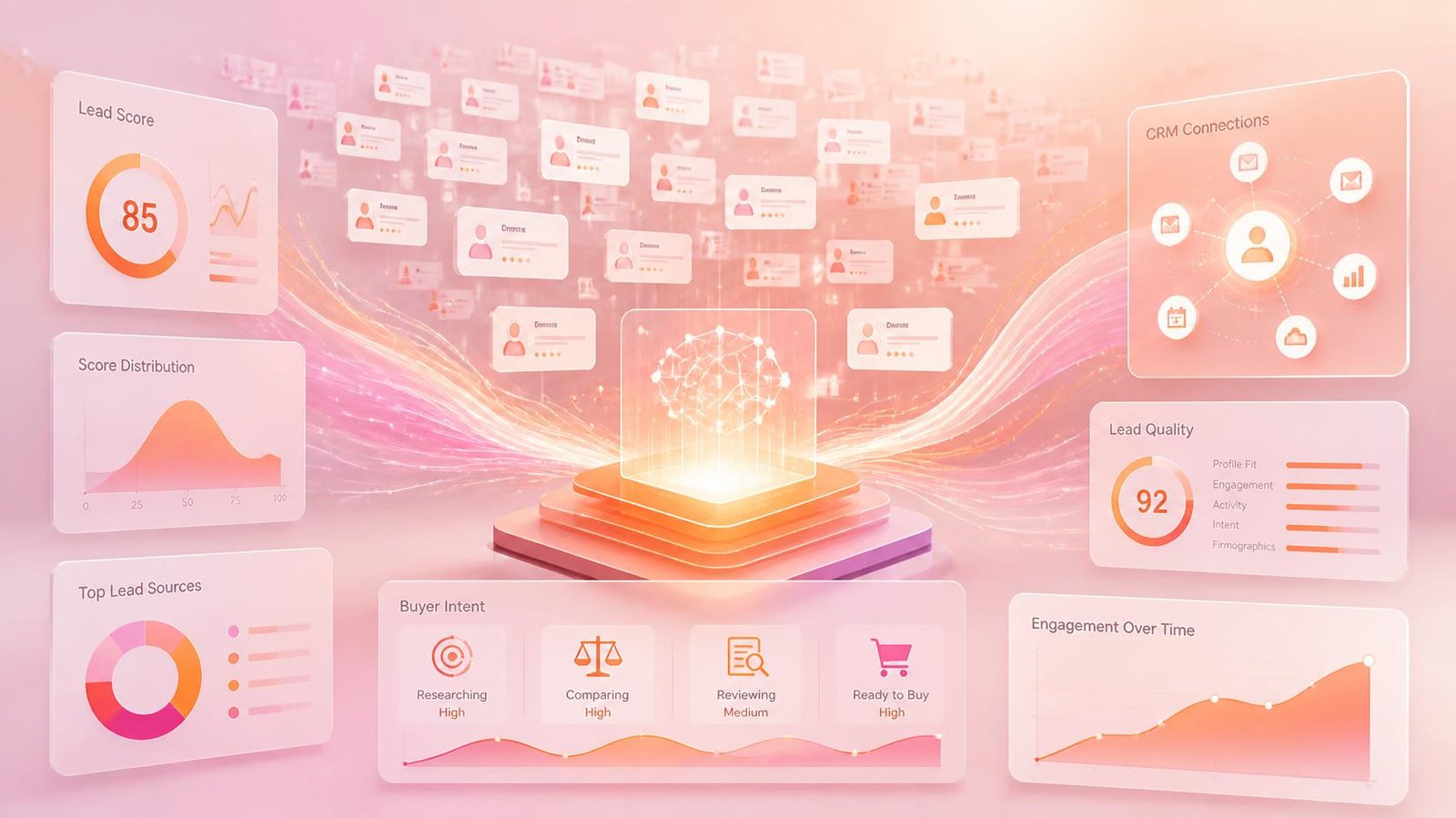
Every business-to-business company desires the same – to attract more clients spending less money on their attraction. But many companies spend a lot of money on advertising, sales and marketing activities without receiving corresponding revenue increase. The costs of advertising grow, the sales process becomes longer and the client himself becomes more educated. All of this results in higher cost of acquiring customers. And because of that problem many businesses search for ways of overcoming it.
One of the technologies which can be used to solve this task effectively is artificial intelligence. Rather than using prospecting, administrative routine and guesswork as in the case with the traditional sales approach, the sales teams use AI-based solutions that help to automate workflow, to prioritize leads with the highest intent, to personalize communication and decision-making. Thanks to the integration of artificial intelligence in sales operations, companies achieve not only increased productivity but also decreased cost of attracting customers.
The problem of decreasing the cost of customer acquisition is not just a matter of spending less money on sales for the business-to-business organizations. It is more important to increase the effectiveness of investments in marketing and sales.
With the continued use of sales technology powered by artificial intelligence, the debate has evolved from questioning if AI should be implemented to discussing the ways in which the business can see tangible results from its use. Business leaders are no longer viewing AI purely as a means of automation. On the contrary, they see it as a valuable resource that can contribute to the business’ growth and cut down costs.
In this guide, we explain how AI sales tools help in decreasing Customer Acquisition Cost, why CAC has become such a significant metric, and what role AI plays in creating a profitable sales funnel.
Understanding Customer Acquisition Cost (CAC)
Customer Acquisition Cost, commonly known as CAC, represents the total amount a business spends to acquire a new customer. It includes all expenses related to marketing, advertising, sales salaries, software subscriptions, commissions, events, content creation, and operational costs associated with generating new business.
The basic formula is straightforward:
Customer Acquisition Cost = Total Sales and Marketing Expenses ÷ Number of New Customers Acquired
For example, if a company spends $100,000 on sales and marketing in one quarter and acquires 200 new customers, its CAC is $500.
Although the calculation appears simple, reducing this number is one of the biggest challenges for modern B2B organizations. Customer expectations continue to rise while competition increases across almost every industry. Buyers conduct extensive research before speaking with sales representatives, making traditional cold outreach less effective than it once was.
Several factors contribute to increasing acquisition costs, including:
- Longer buying cycles
- Growing digital advertising costs
- Increased competition
- Low-quality leads
- Manual sales processes
- Inefficient follow-ups
- Poor customer targeting
- Low conversion rates
When these issues accumulate, businesses spend more money while closing fewer deals. AI addresses many of these challenges by improving accuracy, automation, and productivity throughout the sales process.
Why Customer Acquisition Cost Continues to Rise
By comprehending the reasons behind the rise of CAC, one can understand the importance of artificial intelligence as an important investment for sales organizations.
Modern customers have access to limitless information before purchasing anything. They make comparisons between different companies, go through reviews, watch product demos, participate in webinars, and examine several vendors before speaking to a salesperson. It is a completely new reality for B2B selling.
Modern salespeople are engaged in cultivating leads and not just presenting products to them. There is substantial involvement of the marketing department in content marketing, SEO, webinars, paid ads, and account-based marketing.
In addition to that, the requirements of the customers only keep on increasing.
These changes have resulted in:
- Higher advertising budgets
- Increased software investments
- More complex sales processes
- Larger sales teams
- Additional customer engagement channels
Without automation and intelligent decision-making, these costs continue rising while productivity remains relatively flat.
The Role of AI in Modern B2B Sales
Artificial intelligence is transforming every stage of the B2B sales process.
Instead of replacing sales professionals, AI enhances their capabilities by eliminating repetitive tasks and providing valuable insights that help teams make better decisions.
Modern AI sales platforms combine machine learning, predictive analytics, natural language processing, automation, and behavioral analysis to improve sales performance.
Some of the most valuable AI capabilities include:
- Intelligent lead scoring
- Predictive sales forecasting
- Automated prospect research
- Personalized email generation
- Meeting scheduling
- Conversation intelligence
- CRM data enrichment
- Pipeline analysis
- Sales coaching
- Customer behavior prediction
These technologies allow sales professionals to spend less time on administrative work and more time building relationships with qualified prospects.
How AI Sales Tools Reduce Customer Acquisition Cost
The reduction of CAC requires that efficiency is increased in all the processes of customer acquisition and not just in one particular process. AI helps organizations increase efficiency in all the steps of sales funnel starting from identification of customers to deal closing and maintaining good relationship with customers.
One of the main benefits of the use of AI is its capability of analyzing large amounts of customer data in real time. Rather than making assumptions or analyzing historical data, the AI system analyzes various buying signals, customer behavior, engagement and market trends to identify the most promising leads.
This means that the sales team can focus on high-value prospects instead of wasting time on contacting all the leads equally.
As a result:
- Sales productivity increases.
- Marketing waste decreases.
- Conversion rates improve.
- Sales cycles become shorter.
- Revenue grows without proportional increases in spending.
These combined improvements significantly lower overall Customer Acquisition Cost.
AI Improves Lead Qualification
Poor lead quality is one of the main causes of a high CAC rate. The sales team spends lots of time talking to uninterested leads that aren’t going to buy anything.
This is where AI helps businesses score leads properly.
Rather than using only demographics for scoring, AI takes into account hundreds of behavioral cues, such as web browsing behavior, content downloads, email behavior, CRM interaction, firmographics, purchase intent, technology use, and past purchasing behavior.
This way, businesses get a much better idea of the stage of the customer journey.
High-intent leads are automatically prioritized, helping the sales team to concentrate on those that will bring money.
Businesses benefit through:
- Higher conversion rates
- Better pipeline quality
- Fewer wasted sales calls
- Faster qualification
- Improved sales efficiency
Because sales representatives spend more time speaking with qualified buyers, acquisition costs naturally decrease while revenue increases.
Predictive Analytics Helps Sales Teams Focus on High-Value Opportunities
Conventional forecasting relies heavily on human intuition and reports generated manually, and this can lead to biased predictions and delays in making decisions.
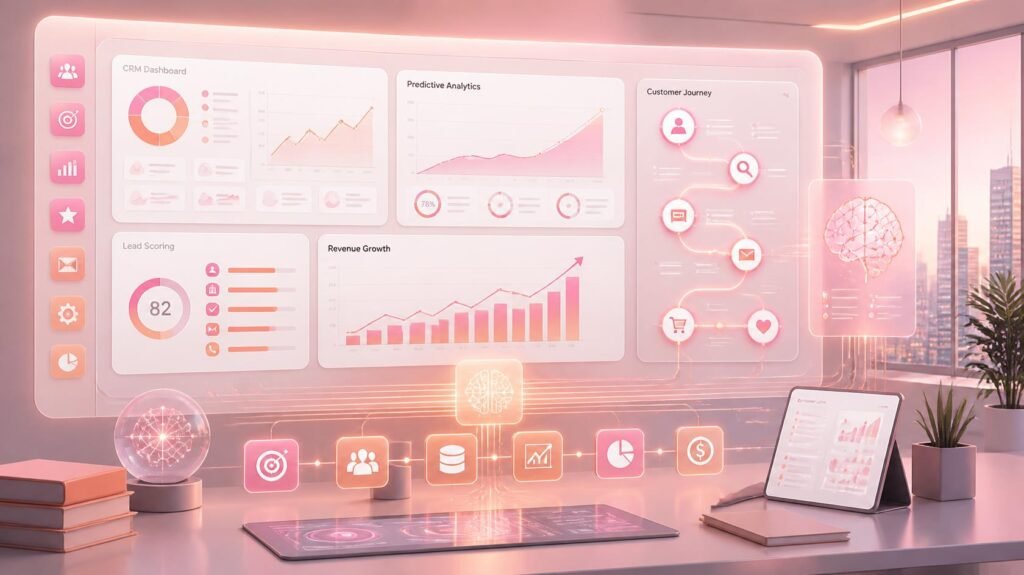
On the other hand, AI-enabled predictive analytics takes things into a different direction as it looks into past sales information, customer interaction history, engagement data, and market trends to predict how likely it is for something to happen in the future.
Unlike the conventional approach that treats all potential clients the same way, AI enables companies to focus only on those opportunities that are most likely to be successful.
It becomes possible to use the available resources in the best possible way, to assign the most experienced salespeople to the most important deals, and even take action when something goes wrong.
It means that the company will not waste time and energy on unprofitable opportunities, and its sales activities will result in higher profits.
AI-Powered Personalization Increases Conversion Rates
Today’s B2B buyers demand more than generic sales email and outreach campaigns. Decision-makers get hundreds of promotions in a week, thus, making it hard for organizations to catch their attention. The use of generic messaging may lead to low open rate, poor engagement, missed opportunities, which consequently result in higher customer acquisition cost.
The emergence of artificial intelligence transforms this practice by offering scalable personalization through the analysis of the data in CRM systems, company profiles, activity on a corporate website, industry trends, past interactions and behavior of the buyer.
It makes it easier to craft personalized emails, LinkedIn messages, proposals and follow-up sequences for each prospect that solve his particular problems. Artificial intelligence also offers the most relevant case studies, information about products and other related content depending on the stage of purchase process.
Personalization increases customer engagement because the communication is relevant to the prospect’s needs and not just another marketing message.
The increased engagement means more responses, meetings and eventually more conversions. With more customers acquired without extra investment into marketing and sales processes, it means lower customer acquisition cost.
AI Automates Repetitive Sales Activities
One of the greatest hidden costs that are associated with B2B sales is administration. Many salespeople waste much of their time filling up CRMs, setting up appointments, sending follow-up emails, investigating companies, and creating reports instead of talking to prospects.
These routine actions eat up precious selling time and lead to increased operational costs.
Using AI-enabled automation, companies manage to get rid of most of these routine actions.
Current sales systems perform CRM updates, appointments, meeting summaries, action recommendation, follow-up email creation, and other actions related to prospecting without constant human involvement.
Thus, salespeople are able to spend their time on networking and closing sales.
The benefits include:
- More productive sales teams
- Faster response times
- Better CRM accuracy
- Reduced operational costs
- Increased sales capacity without hiring additional staff
When every sales representative can manage more qualified opportunities in less time, businesses improve efficiency and lower acquisition costs.
AI Strengthens CRM Data Quality
The CRM system will be useful only if the data contained within it is of high accuracy.
Alas, most businesses encounter such problems as incomplete customer profiles, duplicates, outdated contact information, and inaccurate sales figures. The low-quality CRM results in the inefficiency of marketing activities, incorrect reports, and ineffective sales campaigns.
Using AI, CRM databases get enriched with new data that is collected from trusted sources, duplicates are found and removed, missing data is updated, company information is verified and refreshed, and contact details are checked for accuracy.
There is no need to use manual data entry since businesses get their customer databases updated automatically.
Better CRM quality helps salespeople make informed decisions as they have access to good-quality customer data.
Accurate data supports:
- Better segmentation
- Improved targeting
- Higher-quality lead scoring
- More personalized communication
- Better forecasting
As a result, marketing and sales investments become significantly more efficient.

AI Sales Assistants Improve Team Productivity
AI assistants have become valuable contributors to many B2B sales teams.
AI assistants help the sales reps to do research, answer internal questions, provide a summary of the customer conversation, make suggestions, and generate a proposal in a few seconds.
This means that instead of wasting time looking for information regarding the customer history or generating sales documents, reps get immediate suggestions using artificial intelligence.
AI assistants also help the sales rep to remind them of follow-ups, find overdue opportunities, suggest upsells, and coach them in conversations with customers.
The efficiency gain is significant as sales reps spend less time in preparation for the meeting and more time interacting with the buyers.
Efficiency gain helps the organization earn more without incurring labor costs, thus lowering Customer Acquisition Cost over time.
AI-Powered Conversation Intelligence
Sales conversations are rich sources of information that go unnoticed.
Artificial intelligence (AI)-based conversation intelligence tools record, transcribe, and analyze meetings, calls, and virtual presentations automatically.
The tool assesses customer queries, objections, competition, pricing, sentiments, purchase intent, and follow-up actions.
The managers can understand more about the factors that help make a sale and learn the patterns of lost opportunities.
The salespeople get customized coaching from their actual customer conversations.
Conversation intelligence helps businesses improve:
- Sales messaging
- Objection handling
- Discovery questions
- Closing techniques
- Customer engagement
Over time, these improvements increase conversion rates while reducing the amount of effort required to acquire each customer.
Intelligent Email Optimization
E-mail still plays one of the most critical roles in B2B sales communications. Nonetheless, crafting good e-mails is a very time-consuming process.
AI helps in composing unique subject lines, better e-mail content, optimal sending times, appropriate message lengths, and language which would increase the chances for receiving a reply.
There are even some systems which forecast the chances of getting a response from a prospect before the e-mail is actually sent.
Moreover, businesses get help from automated A/B testing, and thanks to that AI can constantly improve its messages.
Improved email effectiveness produces:
- Higher open rates
- Better click-through rates
- Increased reply rates
- More scheduled meetings
- Greater pipeline efficiency
Every improvement in engagement contributes to lower Customer Acquisition Cost because sales teams generate more qualified opportunities from existing marketing investments.
AI Supports Better Sales Forecasting
Forecasting has been performed through spreadsheets, historical analysis, and sales manager expertise. Although they have their merit, these techniques may not consider changes in customer behavior and market dynamics.
AI-based forecasting systems constantly evaluate CRM actions, pipeline, customer interactions, win rates in the past, seasonality, and buying behavior to create accurate revenue forecasts. Sales managers will have early insight into potential pipeline issues and adjust course before they affect the bottom line.
Better forecasts lead to better budgeting, recruiting, marketing efforts, and resource planning. Companies do not incur unnecessary expenses because they will be making their investments based on data, not assumptions. Proper resource management is part of lowering Customer Acquisition Cost.
AI Accelerates Sales Cycle Length
The longer a sales cycle becomes, the higher the costs of acquiring new customers, as companies spend more money and effort without seeing any return on their investment.
Every extra week taken to convert prospects results in higher costs of labor, software and operation.
Artificial intelligence can reduce sales cycles by detecting buyer’s intention faster, suggesting next steps, scheduling follow-ups, focusing on decision makers and cutting out any unnecessary time.
When sales reps connect buyers at the right time with the right message, then prospects get converted much faster.
Faster sales cycles provide several advantages:
- Lower operational costs
- Faster revenue generation
- Higher sales capacity
- Improved customer experience
- Better pipeline velocity
Businesses that close deals more quickly spend less acquiring each customer while improving overall profitability.
AI Enables Smarter Account-Based Selling
A majority of B2B businesses allocate their resources on high-profile target accounts through ABM and ABS approaches.
AI adds value to the above methods by recognizing accounts with purchasing intent, tracking buying signals, assessing stakeholder interactions, and suggesting personalized outreach programs.
Instead of conducting campaigns that will capture everyone, the organization concentrates its efforts only on those accounts that are going to purchase.
AI also recognizes other stakeholders in the target companies, assisting sales teams in building relationships with different departments in the organization.
The above method saves marketing costs and increases the chances of landing more lucrative deals.
As such, customer acquisition cost is reduced while customer lifetime value is increased because of targeting high-value accounts.
AI SDRs Are Transforming B2B Prospecting
The job of Sales Development Representatives (SDRs) includes prospecting, qualification of leads, and booking meetings for the account executives. However, this task has always involved extensive research and a tedious process of outreach that was done manually. The AI SDRs help automate all these mundane tasks. Sales reps don’t need to spend several hours finding contacts or crafting individual emails.
Using AI SDRs enables the companies to apply machine learning algorithms, NLP, and CRM integration to find valuable leads, personalize interactions, follow up automatically, and book appointments.
Traditional SDR vs AI SDR
| Feature | Traditional SDR | AI SDR |
|---|---|---|
| Prospect Research | Manual | Automated |
| Email Personalization | Time-consuming | AI-generated in seconds |
| Follow-up Emails | Manual | Automated sequences |
| CRM Updates | Manual entry | Automatic synchronization |
| Lead Qualification | Human judgment | AI-powered scoring |
| Meeting Scheduling | Manual coordination | Automated scheduling |
| Productivity | Limited by workload | Scales across thousands of prospects |
Benefits of AI SDRs
- Automates repetitive prospecting tasks
- Books more qualified meetings
- Improves outreach consistency
- Reduces administrative workload
- Enables sales teams to focus on closing deals
- Lowers Customer Acquisition Cost through greater efficiency
Businesses adopting AI SDRs often find that their sales representatives can manage more opportunities while maintaining a higher level of personalization.
Buyer Intent Data Helps Sales Teams Prioritize the Right Prospects
Not every lead entering the sales funnel is ready to purchase. Contacting businesses that have no Immediate buying interest takes up precious time and raises the cost of acquisitions.
The use of AI involves analyzing the signals of buyer intent generated at various digital touchpoints to identify who among the prospects is engaged in looking for a solution.
Common Buyer Intent Signals
| Intent Signal | What It Indicates |
|---|---|
| Multiple website visits | Strong interest in products or services |
| Pricing page visits | Purchase consideration |
| Product comparison searches | Active evaluation stage |
| Whitepaper downloads | Researching solutions |
| Webinar registrations | High engagement |
| Email clicks | Interest in learning more |
| Demo requests | High buying intent |
| Repeat content consumption | Decision-making process |
Using buyer intent data allows businesses to:
- Contact prospects at the right time
- Improve response rates
- Increase conversion rates
- Shorten sales cycles
- Reduce wasted marketing spend

Revenue Intelligence Improves Decision-Making
Today’s sales teams are capable of producing a vast amount of customer data daily. Emails, CRM data, meetings, pitches, and customers themselves have lots of useful information, but analyzing it manually is a nearly impossible task.
A revenue intelligence tool uses AI to gather, aggregate, and analyze all of these data sources and deliver actionable insights.
Revenue Intelligence Helps Businesses
- Identify high-performing sales activities
- Detect deals at risk
- Improve sales forecasting
- Monitor pipeline health
- Analyze customer engagement
- Recommend next-best actions
Key Revenue Intelligence Metrics
| Metric | Business Impact |
|---|---|
| Pipeline Velocity | Measures deal progression |
| Win Rate | Evaluates sales effectiveness |
| Average Sales Cycle | Identifies process bottlenecks |
| Forecast Accuracy | Improves planning |
| Customer Engagement | Measures buying interest |
| Deal Health Score | Predicts closing probability |
Organizations using revenue intelligence make faster, data-driven decisions that improve sales performance while lowering operational costs.
AI Enhances Lead Nurturing
Most of the leads take weeks and sometimes months before making a purchase decision. Mass emails are ineffective since they send same messages irrespective of whether the customer takes any action or not.
The AI system analyzes the customer interaction and adjusts the campaign accordingly.
In contrast to mass emails, AI sends tailored emails to customers based on their actions and interest.
AI-Powered Lead Nurturing Benefits
- Personalized communication
- Higher email engagement
- Better customer experience
- Improved lead qualification
- Increased marketing ROI
- Lower Customer Acquisition Cost
Traditional vs AI Lead Nurturing
| Traditional Nurturing | AI-Powered Nurturing |
|---|---|
| Fixed email sequences | Dynamic personalization |
| Same message for everyone | Customized content |
| Manual segmentation | AI-driven segmentation |
| Scheduled follow-ups | Behavior-triggered follow-ups |
| Limited insights | Real-time analytics |
AI Identifies Cross-Selling and Upselling Opportunities
It is often far more expensive to gain a new customer than to increase the sale of more goods or services to an existing customer.
AI analyzes customers’ actions, their buying history, interactions with support, product use, and engagement levels and suggests cross-selling or upselling options.
Sellers get intelligent suggestions on which customers are likely to buy supplementary products or premium services.
AI Uses These Data Sources
- Purchase history
- Product usage
- Customer satisfaction
- Support tickets
- Website behavior
- Renewal history
- CRM activity
- Engagement scores
Business Benefits
- Increased customer lifetime value
- Higher average deal size
- Better customer retention
- Improved revenue growth
- Reduced dependency on acquiring new customers
Real-World Business Impact of AI Sales Tools
Businesses implementing AI sales technologies commonly experience measurable improvements across multiple departments.
Typical Business Outcomes
| Area | Improvement |
|---|---|
| Lead Qualification | More accurate targeting |
| Sales Productivity | Increased selling time |
| CRM Quality | Better customer data |
| Forecasting | Higher accuracy |
| Marketing ROI | Better campaign performance |
| Customer Experience | Personalized interactions |
| Pipeline Management | Improved visibility |
| Revenue Growth | Higher conversion rates |
These improvements collectively reduce Customer Acquisition Cost while increasing operational efficiency.
Best Practices for Implementing AI Sales Tools
Organizations achieve the best results when AI is introduced strategically rather than all at once.
Implementation Checklist
- Define clear business objectives.
- Identify pain points in the sales process.
- Ensure CRM data is clean and accurate.
- Train sales teams on AI tools.
- Start with pilot projects before scaling.
- Measure key performance indicators regularly.
- Continuously optimize workflows.
- Monitor AI-generated recommendations and adjust strategies.
Following these best practices helps businesses maximize return on investment while minimizing implementation challenges.
Common Mistakes That Increase Customer Acquisition Cost
Even with advanced AI tools, certain mistakes can limit performance. Organizations should avoid the following pitfalls to maximize the value of AI investments.
Mistakes to Avoid
- Poor CRM data quality
- Over-reliance on automation
- Ignoring personalization
- Failing to train employees
- Measuring too few performance metrics
- Using outdated customer data
- Automating inefficient processes
- Neglecting human relationship building
Avoiding these issues ensures that AI delivers measurable improvements in sales efficiency and customer acquisition.
Measuring the ROI of AI Sales Tools
Tracking the right performance indicators helps businesses understand whether AI investments are delivering measurable business value.
Essential KPIs
| KPI | Why It Matters |
|---|---|
| Customer Acquisition Cost (CAC) | Measures acquisition efficiency |
| Customer Lifetime Value (CLV) | Indicates long-term profitability |
| Lead Conversion Rate | Evaluates sales effectiveness |
| Sales Cycle Length | Measures process efficiency |
| Pipeline Velocity | Tracks deal progression |
| Revenue per Sales Representative | Measures productivity |
| Win Rate | Indicates sales performance |
| Marketing ROI | Evaluates campaign success |
Monitoring these metrics before and after AI implementation provides a clear understanding of how AI improves sales performance, increases efficiency, and reduces Customer Acquisition Cost.
Future Trends: How AI Will Continue to Reduce Customer Acquisition Cost
The field of artificial intelligence is developing very quickly and is anticipated to have even greater impact on B2B sales in the future. In the upcoming era of AI sales platforms, the systems are not expected to remain only automated but develop into smart decision-making tools to help salespeople along the way. With improved accuracy and wider availability, the technology will become accessible for companies of any size regardless of technological capacity.
One of the most promising developments is Agentic AI, where AI systems can independently complete multi-step sales tasks with minimal human intervention. These systems will identify target accounts, conduct prospect research, draft personalized outreach, schedule meetings, analyze responses, and recommend the next best action based on real-time buyer behavior.
Additionally, generative AI will continue enhancing customer engagement through the creation of highly personalized offers, pitches, follow-ups, and marketing materials within seconds. The combination of predictive analytics with these capabilities will help companies engage prospects at the right time with the right message.
Early adopters of such innovations will get an edge over other businesses because of enhanced sales efficiency and lowered Customer Acquisition Cost.
Emerging AI Sales Trends
| Trend | Business Benefit |
|---|---|
| Agentic AI | Automates complex sales workflows |
| Predictive Buying Signals | Identifies high-intent prospects earlier |
| AI Voice Assistants | Enhances customer engagement |
| Conversational Intelligence | Improves sales coaching |
| Hyper-Personalization | Increases response and conversion rates |
| Autonomous CRM Updates | Eliminates manual data entry |
| Revenue Intelligence | Supports strategic decision-making |
| AI Sales Forecasting | Improves pipeline accuracy |
How to Choose the Right AI Sales Tool
Selecting the right AI platform is critical for maximizing return on investment. Rather than choosing software based solely on popularity, businesses should evaluate solutions according to their sales objectives, team size, integration requirements, and scalability.
An effective AI sales platform should integrate seamlessly with existing CRM systems, marketing automation platforms, and communication tools. It should also provide actionable insights rather than overwhelming users with excessive data.
Key Features to Look For
- AI-powered lead scoring
- CRM integration
- Email and outreach automation
- Conversation intelligence
- Revenue forecasting
- Sales analytics dashboard
- Buyer intent tracking
- Workflow automation
- Custom reporting
- Enterprise-grade security
Organizations should request product demonstrations, compare vendors, and conduct pilot implementations before making long-term investment decisions.
Best Practices for Maximizing AI ROI
Purchasing AI software alone will not reduce Customer Acquisition Cost. Success depends on how effectively organizations integrate AI into their sales strategy.
Businesses should establish measurable goals before implementation and continuously monitor performance using key sales metrics.
Recommended Best Practices
- Start with one or two high-impact use cases.
- Maintain clean and updated CRM data.
- Combine AI insights with human expertise.
- Train employees regularly on AI capabilities.
- Review performance metrics every month.
- Continuously optimize workflows.
- Protect customer data through strong security practices.
- Collect feedback from sales teams and customers.
Organizations that treat AI as a long-term strategic investment rather than a one-time technology purchase generally achieve the strongest results.
Conclusion
Reducing Customer Acquisition Cost is now seen as one of the key objectives for contemporary B2B enterprises due to high marketing cost, increased expectations of the buyers, and extended sales cycle.
AI sales software is one of the ways to solve the problem through automation of the routine work, more effective qualification of leads, providing personalized customer experience, enhancing forecasting, and making decisions based on data.
AI does not replace the efforts of a sales person but makes it easier to build relationships with clients as AI allows a sales rep to communicate only on meaningful issues. Those organizations which are able to combine the efforts of people and artificial intelligence manage to close deals faster and cheaper, to build better relations with customers.
With the development of the technology, enterprises which are going to implement the intelligent sales platform now are going to have a competitive advantage in the future.
Frequently Asked Questions (FAQs)
1. What is Customer Acquisition Cost (CAC)?
Customer Acquisition Cost (CAC) is the total amount a business spends on sales and marketing activities to acquire one new customer. It includes advertising costs, sales salaries, software subscriptions, marketing campaigns, and operational expenses.
2. How do AI sales tools reduce Customer Acquisition Cost?
AI sales tools reduce CAC by automating repetitive tasks, improving lead qualification, identifying buyer intent, personalizing outreach, enhancing forecasting accuracy, and increasing conversion rates.
3. Can small businesses benefit from AI sales tools?
Yes. Many AI-powered sales platforms are designed for businesses of all sizes. Small businesses can use AI to automate prospecting, improve customer engagement, and increase productivity without expanding their sales teams.
4. Do AI sales tools replace sales representatives?
No. AI is designed to support sales professionals by handling repetitive administrative work and providing actionable insights. Human representatives remain essential for relationship building, negotiations, and closing complex deals.
5. Which industries benefit the most from AI sales tools?
Industries such as SaaS, technology, manufacturing, financial services, healthcare, professional services, telecommunications, and enterprise software benefit significantly from AI-powered sales solutions.