
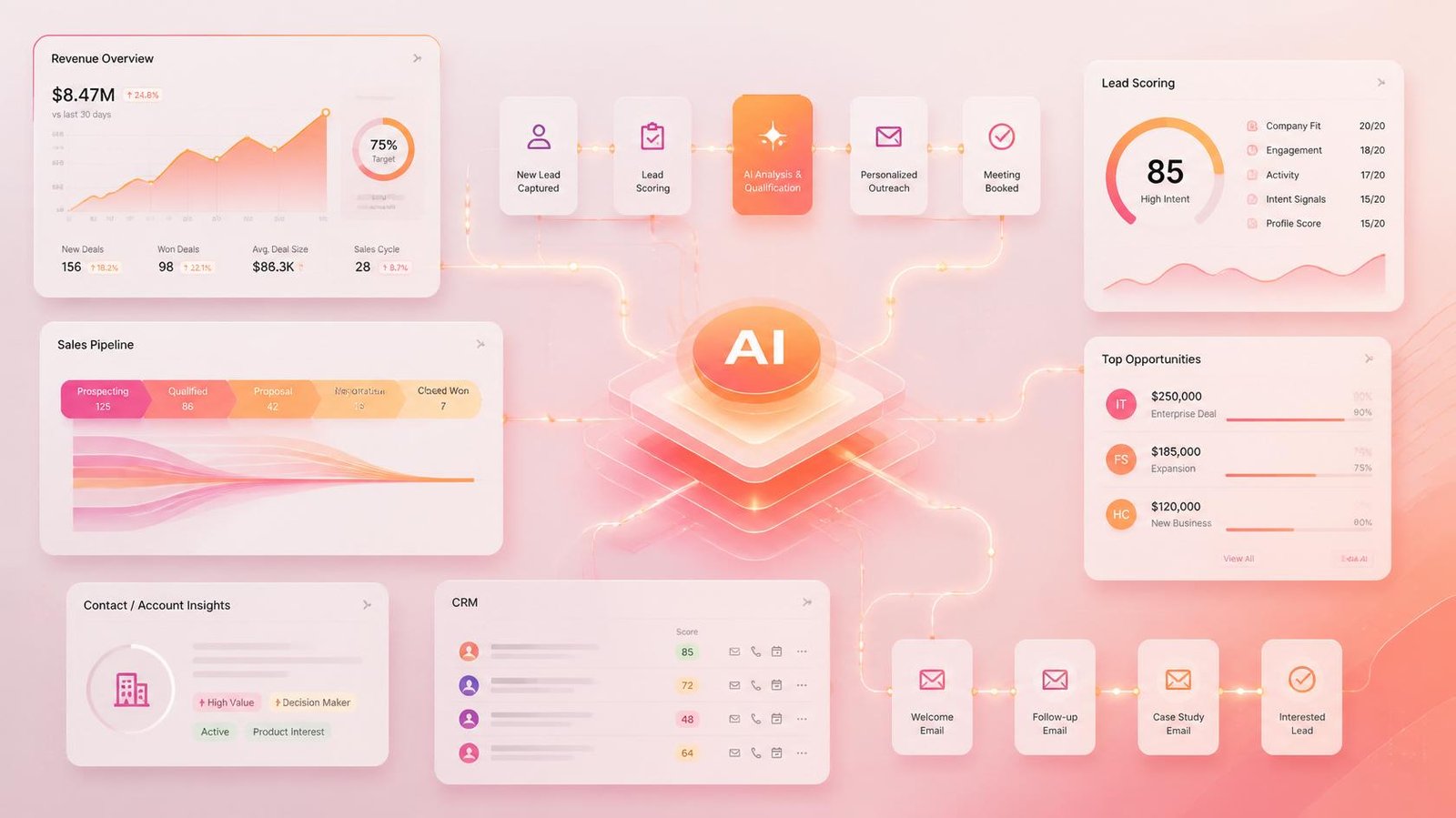
Today’s sales environment is more competitive than ever. Buyers expect personalized communication, instant responses, and seamless experiences across every touchpoint. Meanwhile, sales teams are under increasing pressure to generate more qualified leads, shorten sales cycles, and close deals faster. Relying on spreadsheets, manual follow-ups, or disconnected systems simply isn’t enough to meet these expectations. this is where an AI Sales Automation Platform becomes a game changer.
Unlike traditional automation tools that follow fixed workflows, AI-powered platforms analyze customer behavior, predict buying intent, recommend the next best actions, and automate repetitive sales tasks with remarkable accuracy. By combining artificial intelligence, machine learning, predictive analytics, and workflow automation, these platforms help businesses sell smarter rather than simply working harder.
Organizations that embrace AI-driven sales automation often experience higher productivity, better lead conversion, improved customer engagement, and significant revenue growth. Instead of spending valuable hours on administrative work, sales professionals can focus on building relationships and closing high-value opportunities.
Whether you run a startup, a growing B2B company, or a large enterprise, investing in an AI-powered sales automation platform can transform the way your sales organization operates. This comprehensive guide explores how these intelligent systems accelerate revenue growth, improve sales efficiency, and prepare businesses for the future of selling.
What Is an AI Sales Automation Platform?
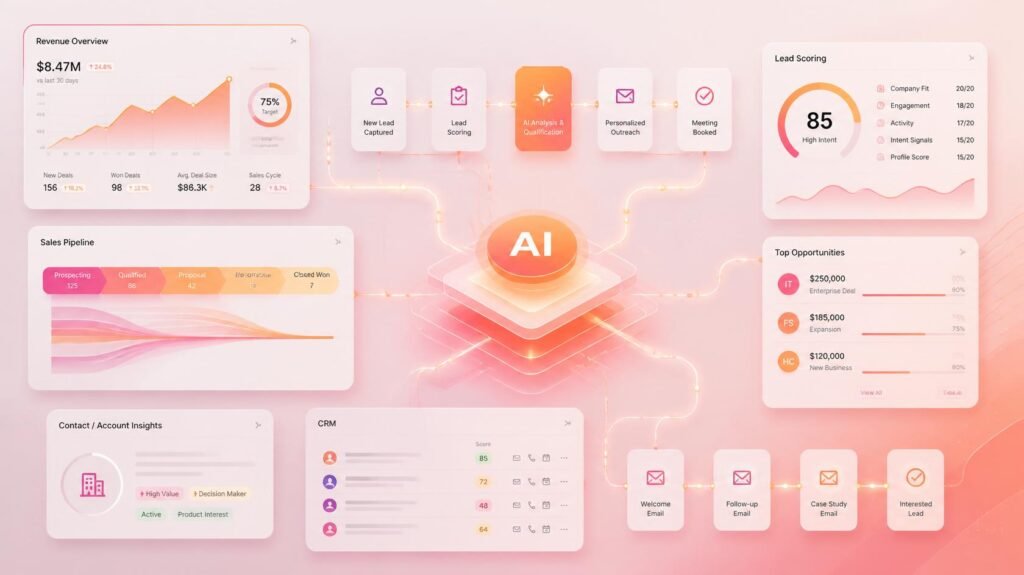
An AI Sales Automation Platform is a software solution that uses artificial intelligence to automate, optimize, and enhance every stage of the sales process. Rather than simply automating repetitive tasks, these platforms continuously learn from customer interactions and historical sales data to make intelligent recommendations.
Traditional sales automation software mainly focuses on task automation, such as sending emails or updating CRM records. AI-powered solutions go much further by identifying high-value prospects, predicting customer intent, prioritizing leads, suggesting personalized communication strategies, and forecasting future revenue.
These intelligent systems bring together multiple technologies into one platform, including:
- Artificial Intelligence
- Machine Learning
- Predictive Analytics
- Natural Language Processing
- Customer Behavior Analysis
- Workflow Automation
- CRM Integration
- Revenue Intelligence
The result is a smarter, faster, and more efficient sales operation capable of delivering better outcomes with less manual effort.
Why Businesses Are Rapidly Adopting AI Sales Automation Platforms
Businesses across industries are embracing AI-powered sales automation because customer expectations continue to rise while competition intensifies.
Sales representatives often spend a significant portion of their day performing non-selling activities such as:
- Updating CRM records
- Scheduling meetings
- Sending follow-up emails
- Qualifying leads
- Preparing reports
- Managing sales pipelines
- Tracking customer interactions
These repetitive tasks consume valuable selling time.
An AI Sales Automation Platform automates these activities while simultaneously improving decision-making through real-time intelligence.
Instead of wondering which prospect deserves immediate attention, AI identifies the highest-converting opportunities automatically.
Instead of manually writing follow-up emails, AI creates personalized outreach based on customer behavior.
Instead of relying on guesswork for forecasting, AI analyzes historical performance and predicts future revenue with greater accuracy.
This shift allows sales teams to spend more time engaging with customers and less time on administrative work.
How AI Is Transforming Modern Sales
Artificial intelligence is changing nearly every aspect of the modern sales process.
Rather than replacing sales professionals, AI acts as an intelligent assistant that enhances productivity and decision-making.
Smarter Lead Qualification
Traditional lead scoring often depends on fixed rules.
AI continuously evaluates hundreds of variables including:
- Website visits
- Email engagement
- Purchase history
- Industry
- Company size
- Social interactions
- Buying signals
- Previous conversations
The platform automatically ranks leads according to their likelihood of converting.
Sales representatives immediately know where to focus their efforts.
Personalized Customer Engagement
Modern buyers expect personalized experiences.
AI analyzes customer preferences and automatically recommends:
- Personalized email content
- Product recommendations
- Best communication channels
- Preferred contact times
- Customized pricing suggestions
This significantly improves customer engagement and response rates.
Intelligent Sales Forecasting
Forecasting revenue has traditionally been difficult.
AI improves forecasting by analyzing:
- Historical sales data
- Pipeline health
- Customer behavior
- Market trends
- Seasonal patterns
- Sales representative performance
Businesses gain more accurate revenue predictions and better strategic planning.
Continuous Learning
One of AI’s biggest strengths is its ability to improve continuously.
As more sales interactions occur, the platform learns:
- Which messaging converts best
- Which industries respond fastest
- Which offers generate the highest ROI
- Which customer profiles become long-term clients
The system becomes smarter over time.
Core Features of an AI Sales Automation Platform
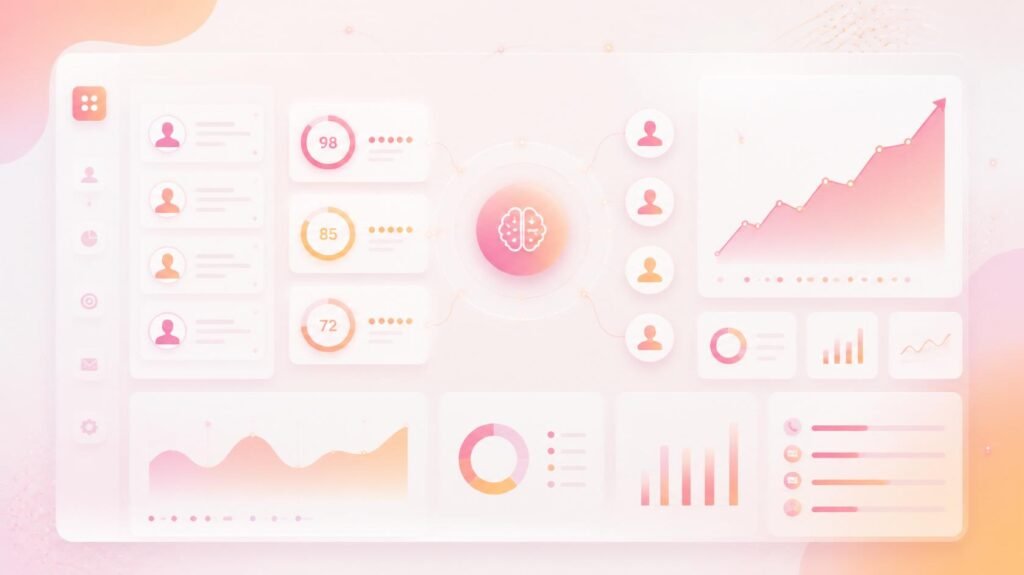
A modern AI Sales Automation Platform combines multiple intelligent capabilities into one centralized solution.
| Feature | Business Benefit |
|---|---|
| AI Lead Scoring | Prioritizes high-conversion prospects |
| Predictive Analytics | Forecasts future sales opportunities |
| CRM Automation | Eliminates manual data entry |
| Sales Workflow Automation | Speeds up repetitive processes |
| Automated Email Sequences | Improves follow-up consistency |
| Conversation Intelligence | Analyzes customer calls and meetings |
| AI Chatbots | Captures leads 24/7 |
| Sales Forecasting | Improves revenue planning |
| Customer Insights | Enables personalized selling |
| Performance Analytics | Measures team productivity |
How an AI Sales Automation Platform Works
Understanding the workflow helps businesses appreciate the value AI brings to the sales process.
Step 1: Capture Customer Data
The platform gathers information from multiple channels including:
- Website forms
- CRM systems
- Emails
- Social media
- Live chat
- Marketing campaigns
- Customer interactions
All information is centralized automatically.
Step 2: Analyze Buyer Behavior
Artificial intelligence studies customer actions including:
- Pages visited
- Time spent on website
- Content downloaded
- Emails opened
- Meetings scheduled
- Product interest
- Purchase intent
Patterns begin to emerge.
Step 3: Prioritize Leads
The AI engine calculates lead scores using predictive algorithms.
Sales representatives receive a prioritized list of prospects most likely to purchase.
This eliminates wasted effort on low-quality leads.
Step 4: Automate Sales Activities
Routine tasks are completed automatically.
Examples include:
- Sending follow-up emails
- Scheduling appointments
- Updating CRM records
- Assigning leads
- Creating reminders
- Tracking customer engagement
Step 5: Recommend Next Best Actions
Rather than simply displaying data, AI suggests actions like:
- Call this prospect today
- Send pricing information
- Schedule a demo
- Offer a free consultation
- Share a case study
- Escalate to senior sales
This guidance improves conversion rates.
Traditional Sales vs AI Sales Automation
| Traditional Sales | AI Sales Automation Platform |
|---|---|
| Manual lead scoring | AI-powered predictive scoring |
| Generic follow-ups | Personalized outreach |
| Manual CRM updates | Automatic synchronization |
| Fixed workflows | Intelligent adaptive workflows |
| Reactive selling | Predictive selling |
| Basic reporting | Real-time analytics |
| Manual forecasting | AI-driven forecasting |
| Slow response times | Instant automation |
| Limited personalization | Dynamic personalization |
| Time-consuming administration | Maximum selling time |
Why Revenue Grows Faster with AI Sales Automation
Revenue growth isn’t driven by automation alone it comes from making every stage of the sales funnel more effective.
An AI Sales Automation Platform increases revenue by:
- Identifying better-quality leads.
- Reducing response times.
- Personalizing every customer interaction.
- Eliminating manual administrative work.
- Improving sales forecasting accuracy.
- Increasing conversion rates.
- Shortening sales cycles.
- Helping representatives focus on high-value opportunities.
- Preventing leads from being forgotten.
- Optimizing every sales activity using real-time data.
Rather than adding more sales representatives, businesses become more productive with the teams they already have.
Business Benefits at a Glance
| Business Challenge | AI-Powered Solution | Revenue Impact |
|---|---|---|
| Poor lead quality | Predictive lead scoring | Higher conversions |
| Slow follow-ups | Automated workflows | Faster deal closure |
| Manual CRM updates | AI synchronization | More selling time |
| Low personalization | Intelligent recommendations | Better engagement |
| Missed opportunities | Buying intent detection | Increased sales |
| Inaccurate forecasting | Predictive analytics | Better planning |
| Long sales cycles | Workflow automation | Quicker revenue generation |
| Sales inefficiency | AI assistants | Higher productivity |
10 Proven Ways AI Sales Automation Platforms Drive Revenue Growth
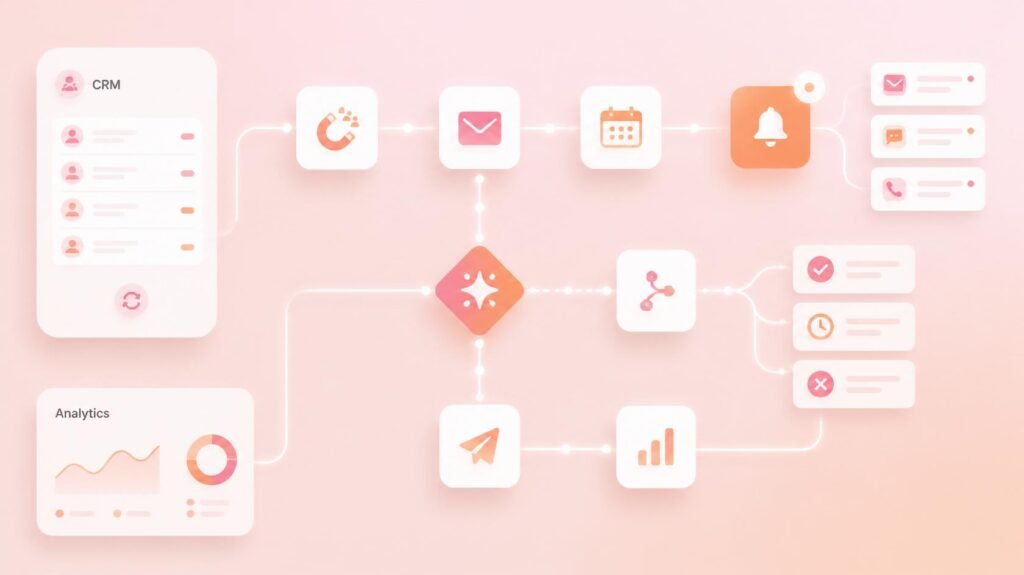
In the first part of this guide, we explored what an AI Sales Automation Platform is, how it works, and why businesses are increasingly adopting AI-driven sales technologies. Now it’s time to examine the real impact these platforms have on revenue.
Revenue growth doesn’t happen because businesses simply install new software. It comes from improving every stage of the sales funnel—from attracting qualified prospects to nurturing relationships, closing deals, and retaining customers. AI makes these improvements measurable, scalable, and repeatable.
1. AI Prioritizes High-Value Leads
Not every lead deserves the same level of attention. One of the biggest challenges for sales teams is determining which prospects are genuinely ready to buy. Without accurate prioritization, representatives often spend hours pursuing low-intent leads while high-potential opportunities remain unattended.
An AI Sales Automation Platform continuously evaluates customer behavior and historical sales data to calculate lead scores. Instead of relying on simple rules, AI analyzes dozens of factors simultaneously, including website visits, email engagement, content downloads, company size, industry, previous interactions, and buying signals.
For example, if a prospect repeatedly visits a pricing page, downloads a product guide, attends a webinar, and requests a demo, the platform recognizes these actions as strong purchase intent. The lead is automatically assigned a higher priority, allowing the sales team to engage at the right moment.
This intelligent lead prioritization helps businesses focus resources where they are most likely to generate revenue.
Benefits
- Improves lead quality
- Reduces wasted sales effort
- Accelerates response times
- Increases conversion rates
- Enhances sales productivity
2. Faster Response Times Increase Conversion Rates
Speed is often the deciding factor in whether a lead becomes a customer. Research consistently shows that businesses responding quickly to inquiries are significantly more likely to win deals.
An AI-powered platform instantly detects new leads and automatically initiates engagement through personalized emails, chatbot conversations, meeting scheduling, or sales notifications. Instead of waiting hours or days for a manual response, prospects receive immediate attention.
Fast responses build trust and keep potential customers engaged before competitors have a chance to intervene.
| Manual Sales Process | AI Sales Automation |
|---|---|
| Response after several hours | Instant response |
| Manual email creation | Automated personalized emails |
| Delayed follow-up | Immediate workflow execution |
| Human scheduling | AI scheduling assistant |
| Risk of missed inquiries | Continuous lead monitoring |
3. Personalized Sales Outreach at Scale
Modern customers expect businesses to understand their needs. Generic sales messages rarely generate meaningful engagement.
AI enables personalization without increasing workload. It analyzes customer preferences, browsing behavior, purchase history, and previous conversations to recommend highly relevant messaging.
Instead of sending identical emails to thousands of prospects, the platform creates personalized communication tailored to each customer’s interests.
For example:
- Recommending products based on browsing history
- Sending industry-specific case studies
- Adjusting messaging according to company size
- Suggesting relevant pricing plans
- Delivering follow-up emails based on previous interactions
Personalization increases trust, strengthens relationships, and improves response rates throughout the sales journey.
4. AI Automates Repetitive Administrative Tasks
Sales professionals often spend a large portion of their workday completing administrative tasks rather than selling. Activities such as updating CRM records, scheduling meetings, creating reminders, logging calls, and tracking emails reduce valuable selling time.
An AI Sales Automation Platform automates these repetitive processes.
Instead of manually entering customer information after every interaction, AI captures and updates data automatically. Meeting invitations, reminders, task assignments, and follow-up emails are generated without manual effort.
Tasks Commonly Automated
- CRM updates
- Contact management
- Appointment scheduling
- Follow-up emails
- Proposal reminders
- Opportunity tracking
- Activity logging
- Lead assignment
- Sales notifications
- Reporting
As administrative workloads decrease, sales representatives can devote more time to building relationships and closing deals.
5. Predictive Analytics Helps Close Deals Faster
Artificial intelligence doesn’t just analyze current opportunities—it predicts future outcomes.
By examining historical customer behavior, successful sales patterns, seasonal trends, and market conditions, predictive analytics estimates which deals are most likely to close.
Sales managers gain valuable insights into:
- Revenue forecasts
- Pipeline health
- Deal probability
- Customer purchase timing
- High-risk opportunities
- Sales representative performance
Rather than relying on intuition, decisions become data-driven.
This leads to more accurate forecasting and faster revenue generation.
6. AI Improves Sales Pipeline Management
Managing dozens or even hundreds of opportunities manually becomes increasingly difficult as businesses grow.
AI continuously monitors every opportunity moving through the pipeline.
If a prospect becomes inactive, the platform automatically triggers reminders or follow-up campaigns. When high-value opportunities require immediate attention, managers receive instant alerts.
Pipeline bottlenecks become visible before they negatively affect revenue.
Pipeline Improvements
| Traditional Pipeline | AI-Driven Pipeline |
|---|---|
| Manual updates | Automatic updates |
| Limited visibility | Real-time insights |
| Delayed follow-ups | Instant reminders |
| Static reporting | Dynamic analytics |
| Reactive management | Predictive management |
7. AI Increases Cross-Selling and Upselling Opportunities
Revenue growth isn’t limited to acquiring new customers. Existing customers often provide the greatest opportunity for increased sales.
AI studies purchasing behavior and identifies complementary products or premium services that customers are likely to purchase.
For example:
- Software upgrades
- Extended warranties
- Premium subscriptions
- Additional licenses
- Related services
- Product bundles
Sales representatives receive recommendations at exactly the right stage of the customer journey.
This improves customer value while increasing revenue without significantly increasing acquisition costs.
8. Intelligent Sales Forecasting Supports Better Business Decisions
Accurate forecasting is essential for budgeting, staffing, inventory planning, and business growth.
Traditional forecasting often depends on subjective estimates provided by sales representatives.
AI forecasting incorporates hundreds of variables, including:
- Historical sales
- Current pipeline activity
- Market demand
- Customer engagement
- Seasonal buying behavior
- Economic trends
- Win-loss ratios
The result is significantly more reliable revenue forecasting.
Leadership teams can confidently make strategic decisions based on real-time insights rather than assumptions.
9. AI Provides Real-Time Sales Insights
One of the greatest advantages of an AI Sales Automation Platform is continuous visibility into business performance.
Instead of waiting until the end of the month to review reports, managers receive real-time dashboards showing:
- Pipeline growth
- Revenue trends
- Lead quality
- Sales cycle length
- Conversion rates
- Team productivity
- Customer engagement
- Opportunity status
Immediate visibility allows businesses to identify problems early and make faster improvements.
10. Continuous Learning Makes Sales Teams Smarter Over Time
Unlike traditional automation software that performs repetitive tasks exactly the same way every time, AI continuously learns from outcomes.
Every customer interaction helps improve future recommendations.
The platform identifies:
- Which email subject lines generate the highest open rates
- Which sales scripts close more deals
- Which industries convert fastest
- Which representatives perform best with specific customer segments
- Which pricing strategies maximize revenue
As more data becomes available, recommendations become increasingly accurate.
This continuous improvement creates a long-term competitive advantage.
Real-World Industry Use Cases
| Industry | AI Sales Automation Platform Use Case |
|---|---|
| SaaS | Automated demo scheduling and lead scoring |
| Healthcare | Patient engagement and appointment automation |
| Banking & Financial Services | Intelligent customer onboarding |
| Manufacturing | Distributor lead management |
| Retail | Personalized product recommendations |
| Real Estate | Property inquiry automation |
| Insurance | Automated policy renewal reminders |
| Education | Student enrollment workflows |
| IT Services | Proposal automation and opportunity tracking |
| E-commerce | Cart recovery and personalized follow-ups |
Best Practices for Implementing an AI Sales Automation Platform
Successful implementation requires more than installing software. Businesses should align AI with existing sales processes and continuously optimize performance.
Some proven best practices include:
- Define clear sales objectives before implementation.
- Clean and organize CRM data for better AI accuracy.
- Integrate the platform with existing business systems.
- Train sales teams to use AI recommendations effectively.
- Automate repetitive tasks while maintaining human interaction for relationship building.
- Continuously monitor KPIs and optimize workflows.
- Personalize automation rather than relying on generic messaging.
- Review AI-generated insights regularly to refine sales strategies.
Common Mistakes Businesses Should Avoid
Many organizations fail to realize the full value of AI because they make avoidable implementation mistakes.
| Mistake | Better Approach |
|---|---|
| Automating poor sales processes | Optimize workflows before automation |
| Ignoring CRM data quality | Maintain accurate customer records |
| Over-automating customer communication | Balance automation with human engagement |
| Failing to train employees | Provide continuous AI training |
| Measuring only short-term ROI | Focus on long-term revenue growth |
| Using disconnected tools | Integrate systems into one ecosystem |
Key Performance Indicators (KPIs) to Measure Success
Tracking the right metrics helps businesses evaluate whether their AI Sales Automation Platform is delivering measurable value.
| KPI | Why It Matters |
|---|---|
| Lead Conversion Rate | Measures sales effectiveness |
| Average Sales Cycle | Indicates sales speed |
| Revenue Growth | Tracks business expansion |
| Customer Acquisition Cost | Evaluates efficiency |
| Customer Lifetime Value | Measures long-term profitability |
| Email Response Rate | Assesses outreach effectiveness |
| Opportunity Win Rate | Reflects sales performance |
| Pipeline Velocity | Measures deal progression |
| Sales Productivity | Evaluates team efficiency |
| Forecast Accuracy | Supports business planning |
Future Trends, Buying Guide, Conclusion & FAQs
As artificial intelligence continues to evolve, AI Sales Automation Platforms are becoming much more than productivity tools. They are transforming into intelligent revenue engines that help businesses predict customer needs, automate complex workflows, and support sales teams with data-driven decisions in real time.
Organizations that invest in AI-powered sales automation today are positioning themselves for long-term growth. Those that delay adoption risk falling behind competitors that can respond faster, personalize customer experiences more effectively, and close deals with greater efficiency.
In this final section, we’ll explore emerging trends, how to choose the right platform, implementation strategies, common challenges, FAQs, and SEO elements to help your content rank.
The Future of AI Sales Automation Platforms
The next generation of AI sales platforms will go beyond automating repetitive tasks. They will act as intelligent assistants capable of making recommendations, predicting outcomes, and even executing routine sales activities with minimal human intervention.
1. AI Sales Agents
AI agents are one of the biggest trends shaping the future of sales. Unlike traditional chatbots, AI sales agents can:
- Qualify leads through natural conversations
- Schedule meetings automatically
- Recommend products based on customer behavior
- Generate personalized follow-up emails
- Answer product questions 24/7
- Hand off qualified prospects to sales representatives
These capabilities reduce response times and improve customer engagement while allowing sales teams to focus on high-value conversations.
2. Predictive Revenue Intelligence
Future platforms will use advanced predictive analytics to forecast:
- Monthly revenue
- Deal closure probability
- Customer churn risk
- Upselling opportunities
- Sales pipeline health
- Seasonal buying trends
Instead of reacting to problems after they occur, businesses will be able to take proactive action based on AI-generated insights.
3. Hyper-Personalized Customer Experiences
Customers increasingly expect personalized interactions. AI will enable businesses to tailor every touchpoint based on:
- Purchase history
- Website behavior
- Industry
- Company size
- Customer preferences
- Previous conversations
- Buying stage
This level of personalization can significantly improve customer satisfaction and conversion rates.
4. Voice and Conversation Intelligence
AI platforms are becoming more effective at analyzing sales calls and virtual meetings.
They can automatically:
- Transcribe conversations
- Identify customer objections
- Detect buying signals
- Suggest next steps
- Measure customer sentiment
- Provide coaching for sales representatives
These insights help teams improve communication and close deals more effectively.
5. Autonomous Sales Workflows
Autonomous workflows reduce manual intervention by allowing AI to execute routine processes such as:
- Assigning leads
- Sending reminders
- Updating CRM records
- Scheduling follow-ups
- Triggering email sequences
- Generating proposals
This improves operational efficiency while reducing administrative workloads.
Emerging Technologies Shaping AI Sales Automation
| Technology | Business Impact |
|---|---|
| Generative AI | Personalized content creation |
| AI Agents | Autonomous customer engagement |
| Machine Learning | Smarter lead scoring |
| Predictive Analytics | Better forecasting |
| Natural Language Processing | Improved conversations |
| Conversation Intelligence | Sales coaching |
| Revenue Intelligence | Pipeline optimization |
| Workflow Automation | Reduced manual tasks |
| CRM Automation | Centralized customer data |
| Customer Analytics | Better decision-making |
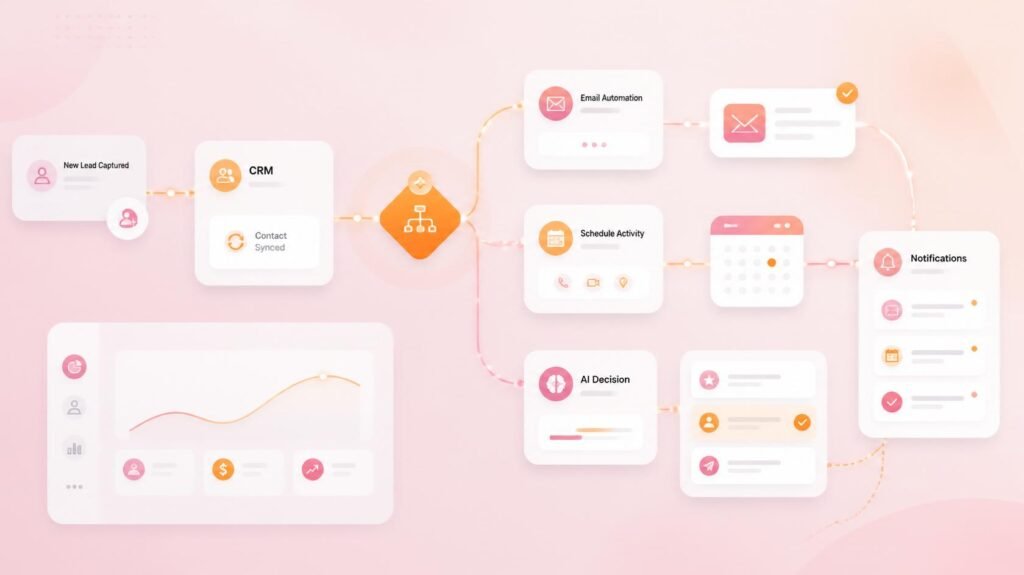
How to Choose the Best AI Sales Automation Platform
Selecting the right platform requires evaluating both current needs and future growth plans.
1. Identify Your Business Goals
Before comparing vendors, define your objectives. Common goals include:
- Increasing qualified leads
- Improving sales productivity
- Reducing manual tasks
- Enhancing customer engagement
- Increasing revenue
- Shortening sales cycles
Clear goals make it easier to evaluate features that directly support your business strategy.
2. Evaluate AI Capabilities
Not all platforms offer the same level of intelligence.
Look for features such as:
- Predictive lead scoring
- AI-powered recommendations
- Automated email generation
- Conversation intelligence
- Sales forecasting
- Customer behavior analysis
- Intelligent workflow automation
3. Check CRM Integration
A platform should integrate seamlessly with your existing CRM and business applications.
Common integrations include:
- CRM software
- Email platforms
- Marketing automation tools
- Customer support systems
- Calendar applications
- Communication platforms
Smooth integration ensures consistent data across the organization.
4. Prioritize Ease of Use
An advanced platform is only valuable if your team can use it effectively.
Look for:
- Intuitive dashboards
- Easy navigation
- Mobile accessibility
- Built-in training resources
- Customizable workflows
- Real-time reporting
User-friendly software accelerates adoption and improves productivity.
5. Consider Scalability
Choose a platform that can grow alongside your business.
Questions to ask include:
- Can it support additional users?
- Does it handle increasing data volumes?
- Are advanced features available as your business expands?
- Can workflows be customized?
A scalable platform protects your investment over the long term.
AI Sales Automation Platform Implementation Checklist
| Task | Status |
|---|---|
| Define sales objectives | ✔ |
| Clean CRM data | ✔ |
| Integrate business systems | ✔ |
| Configure automation workflows | ✔ |
| Train sales representatives | ✔ |
| Monitor KPIs | ✔ |
| Test AI recommendations | ✔ |
| Optimize workflows continuously | ✔ |
| Review customer feedback | ✔ |
| Measure ROI regularly | ✔ |
Common Challenges and Solutions
While AI sales automation offers significant benefits, successful implementation requires addressing a few common challenges.
| Challenge | Solution |
|---|---|
| Poor data quality | Clean and standardize CRM records before implementation |
| Low user adoption | Provide training and ongoing support |
| Over-automation | Maintain a balance between AI and human interaction |
| Integration issues | Select platforms with strong API and CRM compatibility |
| Unrealistic expectations | Set measurable goals and monitor progress over time |
Why Businesses Should Invest in AI Sales Automation Now
Companies that adopt AI-powered sales automation gain advantages that extend beyond operational efficiency. They build stronger customer relationships, make faster decisions, and create scalable sales processes capable of supporting long-term growth.
Key benefits include:
- Increased revenue through better lead conversion
- Reduced administrative workload
- Improved forecasting accuracy
- Faster sales cycles
- Enhanced customer experiences
- Higher productivity across sales teams
- Smarter decision-making with real-time insights
- Greater scalability for future growth
As AI technology continues to advance, these benefits are expected to become even more significant.
Final Thoughts
The modern sales landscape demands speed, personalization, and intelligent decision-making. An AI Sales Automation Platform helps businesses meet these expectations by automating repetitive work, identifying high-value opportunities, and providing actionable insights that improve every stage of the sales process.
Rather than replacing sales professionals, AI empowers them to focus on meaningful customer interactions and strategic selling. By combining automation with predictive intelligence, businesses can improve productivity, shorten sales cycles, and accelerate revenue growth.
Whether you’re a startup seeking efficiency or an enterprise aiming to scale, adopting AI-powered sales automation is no longer a competitive advantage it is quickly becoming a business necessity. Organizations that embrace these technologies today will be better prepared to compete in the increasingly AI-driven marketplace of tomorrow.
Frequently Asked Questions (FAQs)
1. What is an AI Sales Automation Platform?
An AI Sales Automation Platform is software that uses artificial intelligence to automate sales tasks, analyze customer behavior, prioritize leads, and provide predictive insights that help businesses improve sales performance and increase revenue.
2. How does AI sales automation increase revenue?
AI increases revenue by improving lead qualification, automating repetitive tasks, personalizing customer interactions, predicting buying behavior, shortening sales cycles, and helping sales teams focus on high-value opportunities.
3. Which businesses benefit the most from AI sales automation?
Businesses of all sizes can benefit, including startups, SaaS companies, B2B organizations, e-commerce businesses, financial institutions, healthcare providers, manufacturing companies, and professional service firms.
4. Can AI replace sales representatives?
No. AI is designed to assist sales professionals rather than replace them. It automates administrative work and provides intelligent recommendations, allowing representatives to spend more time building relationships and closing deals.
5. What features should I look for in an AI Sales Automation Platform?
Key features include predictive lead scoring, workflow automation, CRM integration, AI-powered forecasting, personalized outreach, conversation intelligence, analytics dashboards, and scalable automation capabilities.