
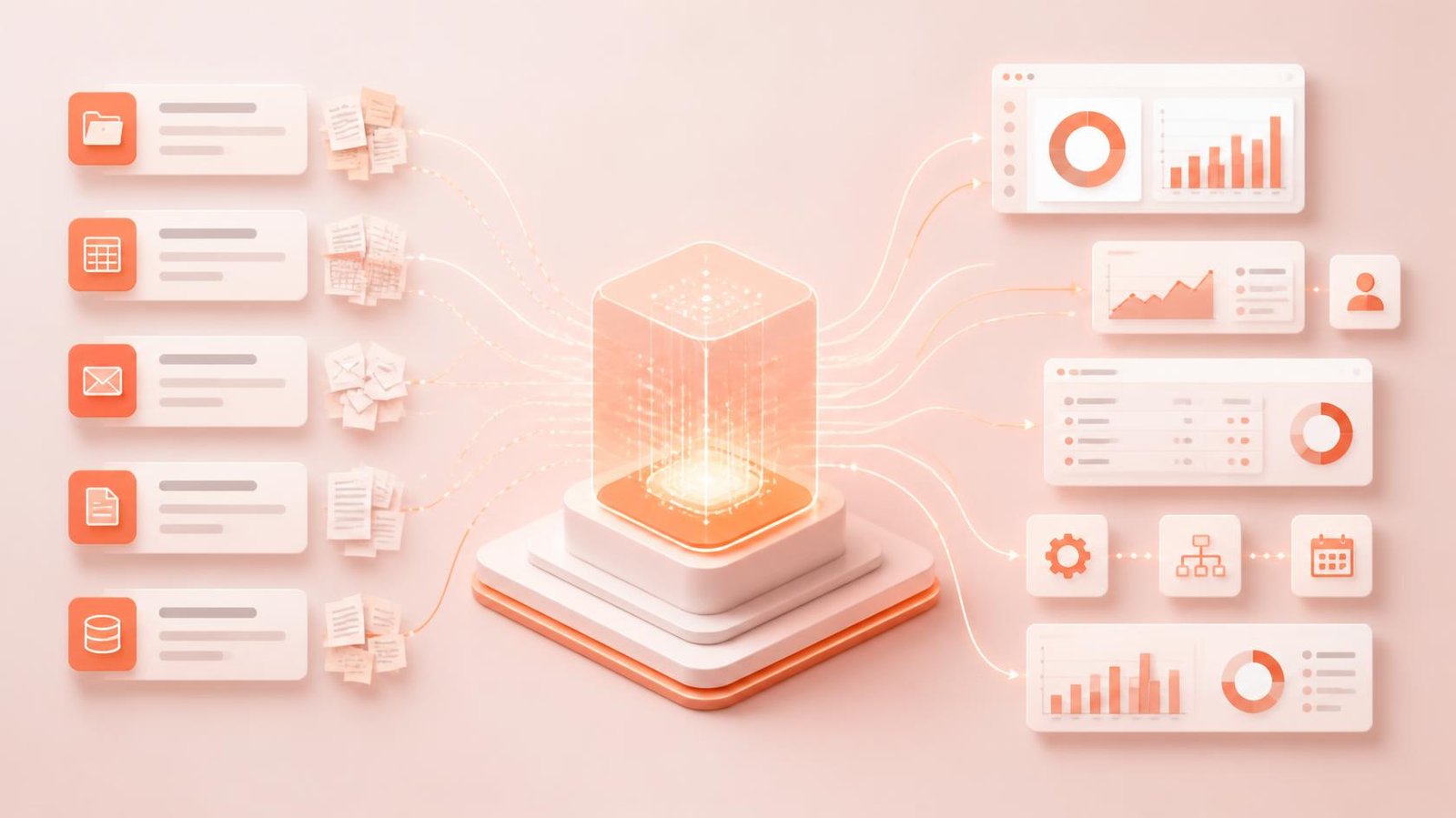
Businesses are under constant pressure to do more with less. Teams manage growing volumes of customer inquiries, sales activities, data, reports, follow-ups, internal requests, and repetitive administrative work. While traditional automation has helped streamline some processes, many business tasks still require employees to manually review information, make decisions, switch between applications, and complete repetitive actions.
This is where AI Agent Automation is changing the way organizations operate.
AI Agent Automation goes beyond basic workflow automation. AI agents can understand context, analyze information, make decisions within defined boundaries, interact with business systems, and take actions to complete multi-step tasks. Instead of simply following a fixed “if this, then that” workflow, AI-powered agents can dynamically respond to changing situations.
For sales organizations, this can significantly reduce the amount of manual work involved in prospect research, lead qualification, CRM updates, follow-ups, meeting preparation, pipeline management, and reporting. This article explains how AI Agent Automation reduces manual business tasks, where it creates the most value, and how businesses can implement it effectively.
What Is AI Agent Automation?
AI Agent Automation refers to the use of AI-powered software agents that can perform tasks, make decisions, interact with systems, and execute workflows with limited human intervention.
An AI agent can typically:
- Understand business goals
- Analyze structured and unstructured data
- Access connected applications
- Identify relevant information
- Make recommendations or decisions
- Execute predefined actions
- Monitor outcomes
- Continue multi-step workflows
For example, consider a sales representative receiving a new lead.
A traditional workflow may require the sales representative to open the CRM, review the lead information, research the company, identify decision-makers, update records, assign a lead score, send a follow-up email, and schedule the next action.
With AI Agent Automation, much of this workflow can be completed automatically. The AI agent can collect information, enrich the lead profile, evaluate buying signals, update the CRM, recommend the next action, and trigger a personalized follow-up.
The salesperson can then focus more on conversations and relationship building.
Why Manual Business Tasks Are a Growing Problem
Manual work does not always appear expensive when viewed as an individual task. However, when employees repeat the same activities hundreds or thousands of times, the cost becomes significant.
Common manual business tasks include:
- Copying information between applications
- Updating CRM records
- Searching for customer information
- Preparing reports
- Sending follow-up emails
- Scheduling meetings
- Managing spreadsheets
- Reviewing documents
- Updating internal systems
- Tracking task progress
These activities consume valuable employee time.
The bigger problem is that repetitive work often creates operational inefficiencies. Employees may delay updates, enter incomplete information, or make mistakes when moving data manually between systems.
AI Agent Automation helps businesses reduce these problems by allowing intelligent agents to manage repetitive and process-driven tasks.
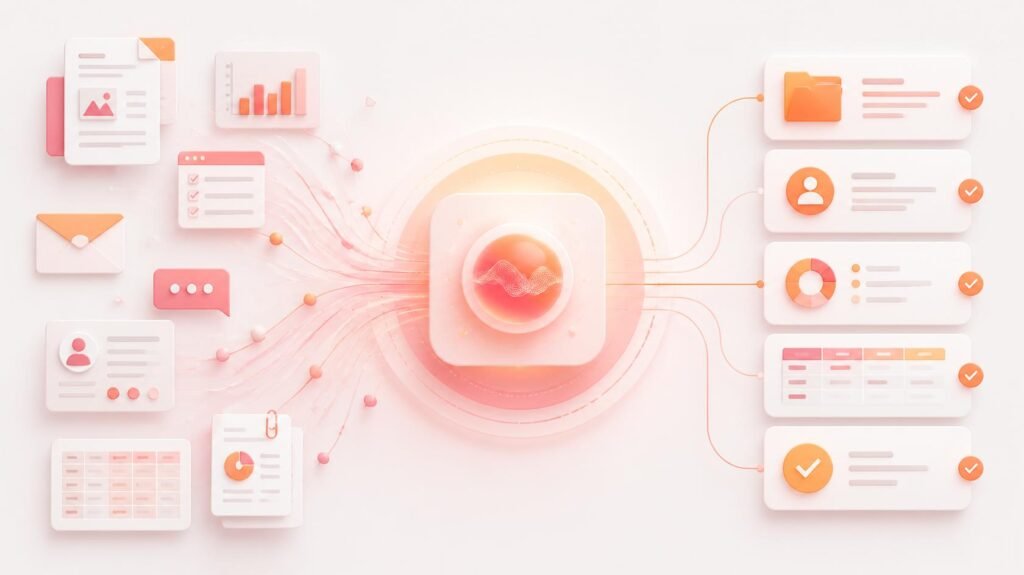
How AI Agent Automation Reduces Manual Business Tasks
1. Automating Repetitive Data Entry
Data entry remains one of the most common manual activities across sales, marketing, finance, customer service, and operations.
Employees frequently copy information from emails, web forms, spreadsheets, meeting notes, customer conversations, documents, and business applications.
An AI agent can extract relevant information and automatically update the appropriate business system.
For example, after a sales call, an AI agent could analyze the conversation and identify:
- Customer requirements
- Budget information
- Decision-makers
- Competitors mentioned
- Buying timeline
- Next steps
The agent can then automatically update the CRM.
This reduces administrative work and helps ensure that sales data remains current.
Business Impact
AI Agent Automation can help businesses:
- Reduce repetitive data entry
- Improve data accuracy
- Save employee time
- Maintain updated customer records
- Reduce operational delays
Instead of employees spending time entering information manually, they can focus on higher-value activities.
2. Automating Lead Research
Sales teams often spend significant time researching potential customers before making contact.
Manual prospect research may involve reviewing company websites, industry information, business news, hiring activity, technology usage, and company growth signals.
AI agents can automate much of this research process.
An AI agent can collect information from connected data sources and create a structured prospect profile. It can identify relevant company details, summarize important information, and highlight potential sales opportunities.
For example, an AI agent may detect that a target company is:
- Expanding into a new market
- Hiring additional employees
- Investing in new technology
- Launching a new product
- Growing rapidly
These signals can help sales teams determine when and how to engage.
How AI Agent Automation Helps Sales Teams
Instead of manually researching every prospect, sales representatives can receive:
- Account summaries
- Buying signals
- Key contacts
- Recommended talking points
- Potential challenges
- Suggested next steps
This makes prospecting faster and more targeted.
3. Improving Lead Qualification
Not every lead deserves the same amount of attention.
Sales teams often spend time manually reviewing leads to determine whether they are ready for sales engagement. This process may involve analyzing company size, engagement history, website activity, job roles, and other buying signals.
AI Agent Automation can continuously evaluate lead information.
An AI agent can analyze factors such as:
- Website engagement
- Email interactions
- Content downloads
- Company size
- Job role
- Industry
- Budget indicators
- Purchase intent
Based on these signals, the agent can prioritize leads.
For example, high-intent leads can be immediately routed to sales representatives, while lower-intent leads can enter an automated nurturing workflow.
This reduces manual lead qualification and helps sales teams focus on the most promising opportunities.
4. Automating Sales Follow-Ups
Sales follow-up is essential, but it can also become repetitive.
Sales representatives may need to manually remember when to follow up, which prospects have not responded, which opportunities require another conversation, and which leads have shown new activity.
AI agents can monitor these activities automatically.
An AI agent can detect when a prospect:
- Opens an email
- Visits a pricing page
- Downloads content
- Stops responding
- Requests information
- Schedules a meeting
Based on these signals, the AI agent can trigger the appropriate action.
For example, it may:
- Send a follow-up
- Notify a sales representative
- Update the CRM
- Recommend a personalized message
- Schedule a reminder
This reduces the risk of missed opportunities.
5. Automatically Updating CRM Systems
CRM maintenance is one of the biggest administrative challenges for sales teams.
Sales representatives often delay CRM updates because they are focused on customer conversations. As a result, customer information may become outdated.
AI Agent Automation can automatically capture and organize information from connected sales activities.
An AI agent can:
- Create contact records
- Update lead information
- Log sales interactions
- Record meeting outcomes
- Update opportunity stages
- Assign follow-up tasks
This improves CRM data quality without requiring employees to manually complete every update.
Better data also improves forecasting and pipeline visibility.
6. Reducing Manual Customer Support Tasks
Customer service teams handle large volumes of repetitive requests. Common questions may involve account information, order status, billing questions, product features, password resets, and technical troubleshooting.
AI agents can handle many of these requests by understanding the customer’s question, accessing relevant business systems, and taking appropriate actions. Unlike simple chatbots, AI agents can potentially perform multi-step tasks.
For example, an AI agent may verify the customer’s information, check the order status, identify a delivery issue, provide an update, and create a support ticket if required. This reduces the workload on support teams and allows human employees to focus on more complex customer issues.
7. Automating Internal Business Requests
Employees spend considerable time handling internal requests.
These may include requests related to:
- IT support
- Human resources
- Finance
- Procurement
- Operations
An AI agent can receive a request, understand the context, determine the appropriate workflow, and route or complete the task.
For example, an employee requesting access to a business application may normally need to contact IT and wait for manual approval.
An AI agent could receive the request, verify employee information, check company policies, route the request for approval, and trigger account provisioning.
This can significantly reduce administrative delays.
8. Simplifying Report Generation
Business reporting often requires employees to collect information from multiple platforms.
A manager may need to review:
- CRM performance
- Marketing campaign results
- Revenue data
- Customer activity
- Sales pipeline information
Traditionally, this requires manually exporting data and preparing reports.
AI Agent Automation can simplify this process.
An AI agent can collect information from connected systems, analyze trends, and generate summaries.
Instead of asking an employee to prepare a report manually, a manager could request a summary of weekly pipeline changes and potential risks.
The AI agent could analyze the relevant data and generate a structured response.
This saves time and provides faster access to business insights.
AI Agent Automation in the Sales Process
Sales organizations are among the biggest beneficiaries of AI Agent Automation because sales workflows involve many repetitive activities.
A typical AI-powered sales workflow could look like this:
New Lead Captured
↓
AI Agent Enriches Lead Information
↓
AI Agent Analyzes Buying Signals
↓
Lead Is Scored and Prioritized
↓
CRM Is Updated Automatically
↓
Personalized Follow-Up Is Prepared
↓
Sales Representative Is Notified
↓
AI Agent Monitors Engagement
↓
Next Action Is Recommended
This type of automation reduces the administrative burden placed on sales representatives.
Instead of managing every operational detail, sales professionals can focus on activities that require human skills.
These include:
- Building trust
- Understanding customer needs
- Negotiating deals
- Managing complex conversations
- Developing relationships
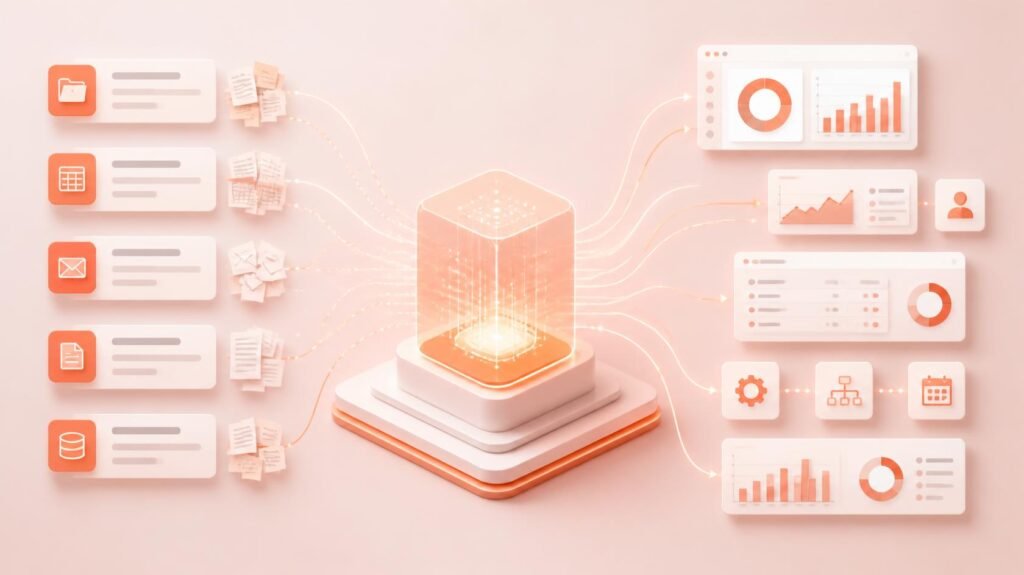
Key Benefits of AI Agent Automation
Increased Employee Productivity
The most immediate benefit is time savings. When employees no longer need to perform repetitive administrative tasks, they can focus on strategic work. A sales representative can spend more time selling instead of updating systems. A marketing professional can focus more on campaign strategy instead of manually organizing data.
Faster Business Processes
AI agents can perform tasks much faster than manual workflows. They can process information continuously, monitor systems, trigger actions, route requests, and update records. This reduces delays caused by manual handoffs.
Improved Accuracy
Manual processes can create errors. Employees may enter incorrect information, forget to update records, duplicate data, or miss follow-ups.
AI Agent Automation can reduce many of these errors by standardizing repetitive processes. However, businesses should still implement monitoring and validation processes for important decisions.
Better Customer Experiences
Customers expect fast responses. AI agents can help businesses respond more quickly to customer needs.
For example, they can:
- Answer routine questions
- Provide account information
- Route complex issues
- Trigger service workflows
Faster responses can improve customer satisfaction.
Lower Operational Costs
Businesses do not need to scale manual work at the same rate as business activity. As transaction volumes, customer interactions, and internal requests increase, AI agents can help manage additional workloads. This can improve operational efficiency and allow teams to scale more effectively.
AI Agent Automation vs Traditional Automation
Traditional automation usually follows predefined rules.
For example:
If a customer submits a form → Send an email.
This works well for simple and predictable workflows.
AI Agent Automation can handle more complex situations.
For example:
Analyze the customer request → Identify intent → Check account information → Determine the appropriate action → Execute the workflow → Escalate if necessary.
The key difference is the ability to understand context and make decisions within defined boundaries.
| Traditional Automation | AI Agent Automation |
|---|---|
| Follows fixed rules | Can analyze context |
| Handles predictable workflows | Can manage multi-step workflows |
| Limited decision-making | Supports adaptive decision-making |
| Requires predefined triggers | Can respond to changing information |
| Focused on task automation | Focused on goal-oriented automation |
Businesses may use both approaches together. Simple tasks can remain rule-based, while complex workflows can use AI agents.
Challenges Businesses Should Consider
Although AI Agent Automation offers major benefits, businesses should not automate every process without planning.
Data Quality
AI agents depend on the quality of the information they receive. Poor CRM data can lead to poor recommendations and incorrect actions. Businesses should improve data quality before implementing large-scale automation.
System Integration
AI agents need secure access to relevant business systems.
This may include:
- CRM platforms
- Marketing automation tools
- Customer support platforms
- Internal databases
- Communication tools
Integration planning is essential.
Security and Permissions
AI agents should not receive unlimited access to sensitive systems.
Businesses should define:
- Access permissions
- Approval workflows
- Data restrictions
- Security controls
Human approval should remain important for high-risk activities.
Monitoring AI Actions
AI agents should be monitored.
Businesses need visibility into:
- Actions taken
- Decisions made
- Errors detected
- Workflow performance
Regular monitoring helps improve automation reliability.
How Businesses Can Start With AI Agent Automation
A successful implementation does not require automating everything at once.
Businesses can begin with repetitive, high-volume tasks.
Step 1: Identify Repetitive Tasks
Look for tasks that employees perform frequently.
Examples include:
- CRM updates
- Lead research
- Data entry
- Follow-up reminders
- Report generation
Step 2: Measure the Current Process
Understand how much time the process requires.
Track:
- Number of tasks
- Employee time
- Error rates
- Processing delays
This helps businesses measure the value of automation.
Step 3: Start With a Small Workflow
Begin with one specific use case.
For example:
Automatically update CRM records after sales calls.
A focused implementation is easier to test and improve.
Step 4: Add Human Oversight
Allow employees to review important AI decisions.
Human oversight is especially important for:
- Financial decisions
- Sensitive customer interactions
- High-value sales opportunities
- Compliance-related actions
Step 5: Measure Results
Track the impact of AI Agent Automation.
Useful metrics include:
- Time saved
- Tasks automated
- Error reduction
- Faster response times
- Employee productivity
- Revenue impact
These insights can help businesses identify additional automation opportunities.
The Future of Manual Business Work
AI Agent Automation will not eliminate the need for human employees. Instead, it is likely to change the type of work people perform.
Routine administrative tasks can increasingly be handled by AI agents, while employees focus on areas where human judgment and creativity provide greater value.
Sales teams, for example, may spend less time on:
- CRM updates
- Prospect research
- Scheduling
- Data entry
- Follow-up tracking
And more time on:
- Customer relationships
- Strategic selling
- Complex negotiations
- Account development
The future of business automation is not simply about completing tasks faster.
It is about creating more intelligent workflows where AI agents manage operational complexity and employees focus on strategic outcomes.
Conclusion
AI Agent Automation is becoming an important tool for businesses that want to reduce repetitive work and improve operational efficiency.
By automating tasks such as data entry, lead research, CRM updates, follow-ups, customer support, and reporting, AI agents can reduce the administrative workload placed on employees. For sales organizations, the benefits can be especially significant. AI Agent Automation allows sales professionals to spend less time managing systems and more time engaging with prospects and customers.
The most successful businesses will not attempt to automate every process immediately. Instead, they will identify high-volume manual tasks, introduce AI agents gradually, maintain human oversight, and measure results. As AI technology becomes more capable, AI Agent Automation will continue to transform how businesses manage everyday work, making operations faster, more efficient, and increasingly intelligent.
Frequently Asked Questions
What is AI Agent Automation?
AI Agent Automation uses AI-powered agents to analyze information, make decisions within defined boundaries, interact with business systems, and complete tasks with limited human intervention.
How does AI Agent Automation reduce manual work?
It can automate repetitive tasks such as data entry, lead research, CRM updates, follow-ups, report generation, request routing, and customer support workflows.
Can AI agents automate sales tasks?
Yes. AI agents can help automate prospect research, lead qualification, CRM updates, follow-up tracking, meeting preparation, and sales pipeline monitoring.
What is the difference between AI Agent Automation and traditional automation?
Traditional automation usually follows predefined rules, while AI Agent Automation can analyze context, manage multi-step workflows, and adapt actions based on available information.
Will AI Agent Automation replace employees?
AI Agent Automation is more likely to reduce repetitive administrative work and allow employees to focus on strategic, creative, and relationship-based tasks.
Which business tasks should be automated first?
Businesses should start with repetitive, high-volume, rule-driven tasks such as data entry, CRM updates, reporting, lead research, and follow-up management.
Is AI Agent Automation useful for small businesses?
Yes. Small businesses can use AI Agent Automation to reduce administrative workloads, improve response times, and help small teams manage growing business operations more efficiently.