

Sales pipelines are no longer just a sequence of stages managed inside a CRM. They are becoming intelligent, adaptive systems powered by Autonomous AI Agents that can observe, decide, and act in real time. This shift is not an incremental improvement it is a fundamental redesign of how revenue is generated in B2B organizations.
For years, sales teams relied on manual prospecting, rigid CRM workflows, and delayed decision-making. Even with automation tools, most systems still required human input at every stage. Today, that model is breaking down. The emergence of agentic AI for B2B sales automation is enabling systems that don’t just support sales teams they actively execute parts of the sales process.
At the center of this transformation is a new concept: how autonomous AI agents are transforming sales pipelines from static, human-driven systems into dynamic, continuously optimized revenue engines.
Understanding Autonomous AI Agents in Sales
Autonomous AI Agents are AI systems designed to perform tasks independently, without requiring step-by-step human instructions. Unlike traditional automation, which follows pre-defined rules, these agents use machine learning, contextual understanding, and real-time data to make decisions.
In sales environments, these agents can independently handle prospecting, qualification, outreach, follow-ups, and even pipeline optimization. They are not just tools executing commands; they behave more like digital workers embedded inside the revenue function.
What makes them powerful is their ability to continuously learn from outcomes. Every interaction, reply, or conversion becomes feedback that improves future performance. This creates a self-improving system that becomes more efficient over time.
- Autonomous AI Agents are AI systems that work independently without step-by-step human instructions
- Unlike rule-based automation, they use machine learning, context, and real-time data to make decisions
- In sales, they can manage prospecting, lead qualification, outreach, follow-ups, and pipeline optimization
- They act more like digital workers inside the revenue team rather than simple automation tools
Evolution of Sales Pipelines: From Manual to Autonomous Systems
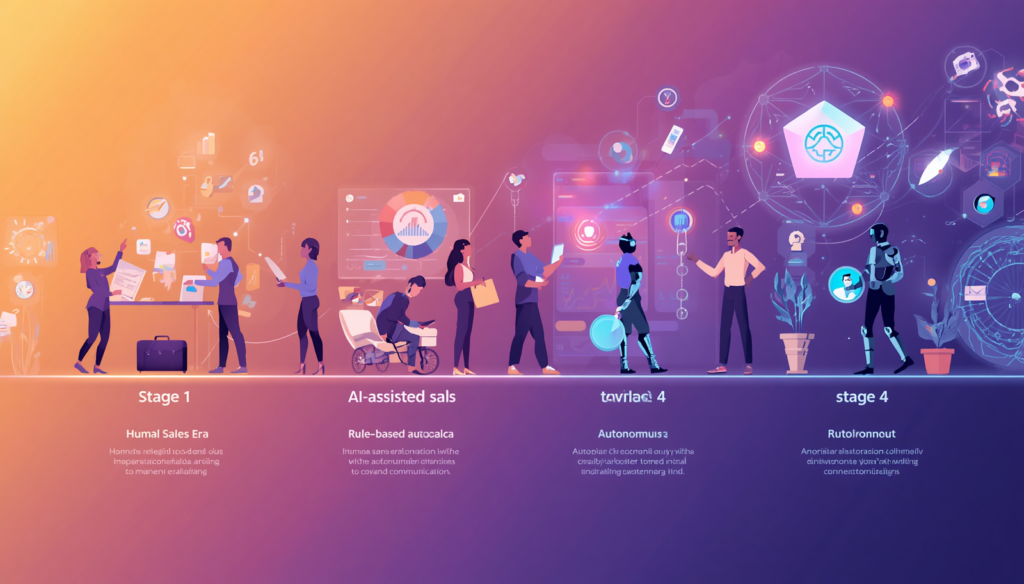
Manual Sales Pipelines: The Traditional Era
In the early stage of digital sales, pipelines were entirely manual. Sales representatives were responsible for identifying leads, entering data into CRMs, tracking conversations, and moving deals through stages. This approach was highly dependent on individual performance and often lacked consistency.
While effective in smaller organizations, manual pipelines struggled at scale. Data was often incomplete, follow-ups were missed, and forecasting accuracy was low. The system relied heavily on human discipline rather than intelligence.
Rule-Based Automation: The First Digital Upgrade
The introduction of CRM systems and marketing automation tools brought structure to sales pipelines. Workflows could now automate email sequences, reminders, and lead scoring based on fixed rules.
However, these systems were still static. They could not adapt to changing buyer behavior or interpret intent beyond predefined conditions. Automation improved efficiency but not intelligence.
AI-Assisted Sales Systems: The Intelligence Layer Begins
With the rise of AI, sales tools began incorporating predictive analytics and recommendation engines. Systems could now suggest the next best action, identify high-probability leads, and forecast revenue more accurately.
Even so, humans remained the decision-makers. AI acted as an advisor rather than an executor. The pipeline was still fundamentally human-driven.
Autonomous AI Sales Pipelines: The Current Transformation
The latest evolution introduces Autonomous AI Agents that actively participate in pipeline execution. These systems no longer wait for human prompts. Instead, they continuously monitor data, detect opportunities, and take action.
Sales pipelines are now becoming self-operating systems where AI handles execution, while humans focus on strategy, relationships, and oversight.
What Is Agentic AI for B2B Sales Automation?

Agentic AI for B2B sales automation refers to AI systems that operate with goal-oriented autonomy. Instead of performing isolated tasks, these systems understand broader objectives such as increasing pipeline quality or improving conversion rates.
They break these objectives into smaller actions and execute them independently. For example, if the goal is to increase qualified leads, the AI may simultaneously identify prospects, personalize outreach messages, and prioritize follow-ups without manual input.
This represents a shift from traditional automation to intelligent decision-making systems capable of executing entire workflows end-to-end.
How Autonomous AI Agents Are Transforming Sales Pipelines
| Sales Pipeline Stage | Traditional Approach | With Autonomous AI Agents |
|---|---|---|
| Lead Generation | Manual research, cold lists | Real-time AI-driven lead discovery |
| Lead Qualification | Rule-based CRM scoring | Behavioral + intent-based scoring |
| Outreach | Human-written emails & calls | Hyper-personalized AI outreach at scale |
| Follow-ups | Manual reminders by reps | Automated AI-triggered follow-ups |
| Pipeline Management | CRM updates by sales teams | Self-updating, real-time pipeline tracking |
| Deal Progression | Human-driven stage movement | AI-assisted deal nurturing & nudging |
| Forecasting | Historical + manual input | Predictive AI revenue forecasting |
| Optimization | Periodic reviews | Continuous AI learning & optimization |
AI-Driven Lead Discovery and Pipeline Creation
One of the most significant transformations is in how leads enter the pipeline. Traditionally, sales teams relied on static databases or manual research. Today, Autonomous AI Agents continuously scan digital signals such as hiring trends, funding announcements, website behavior, and engagement activity.
Instead of waiting for leads to be added, pipelines are dynamically generated in real time. This ensures that opportunities are captured at the exact moment intent is detected, significantly improving conversion potential.
Intelligent Lead Qualification and Prioritization
Lead qualification has also evolved from static scoring models to dynamic, behavior-based evaluation. AI systems analyze multiple data points such as engagement patterns, company growth signals, and historical conversion behavior.
This allows pipelines to prioritize leads based on real-time buying intent rather than outdated scoring rules. As a result, sales teams focus only on high-value opportunities, reducing wasted effort.
Hyper-Personalized Outreach at Scale
Personalization has always been a challenge in B2B sales due to scale limitations. However, agentic AI for B2B sales automation enables personalized communication at scale without increasing manual workload.
AI agents generate context-aware messages based on industry, role, and behavioral signals. Outreach timing is optimized based on engagement probability, making communication more relevant and effective.
This level of personalization was previously impossible without significant human effort.
Automated Pipeline Movement and Deal Progression
In traditional pipelines, deals often stagnate due to lack of follow-ups or delayed responses. Autonomous AI agents actively manage pipeline movement by triggering follow-ups, sending reminders, and re-engaging inactive prospects.
They ensure that every opportunity continues progressing through the pipeline without manual intervention. High-intent leads are escalated to human sales reps, ensuring timely human involvement where needed.
Predictive Forecasting and Revenue Intelligence
Forecasting has historically been one of the weakest areas in sales management. Autonomous AI systems now improve forecasting accuracy by analyzing behavioral data, engagement trends, and historical conversion patterns.
These systems can predict which deals are likely to close, when they will close, and what actions will increase the probability of success. This leads to more reliable revenue planning and better strategic decision-making.
CRM Evolution: From Database to Autonomous System
Traditional CRMs function primarily as data storage systems requiring manual updates. In contrast, AI-powered pipelines transform CRMs into autonomous systems that continuously update themselves.
Every interaction, email, and engagement is automatically recorded. AI agents also recommend next steps and highlight risks in real time. This eliminates administrative overhead and ensures that pipeline data remains accurate and up to date.
Benefits of Autonomous AI Agents in Sales Pipelines
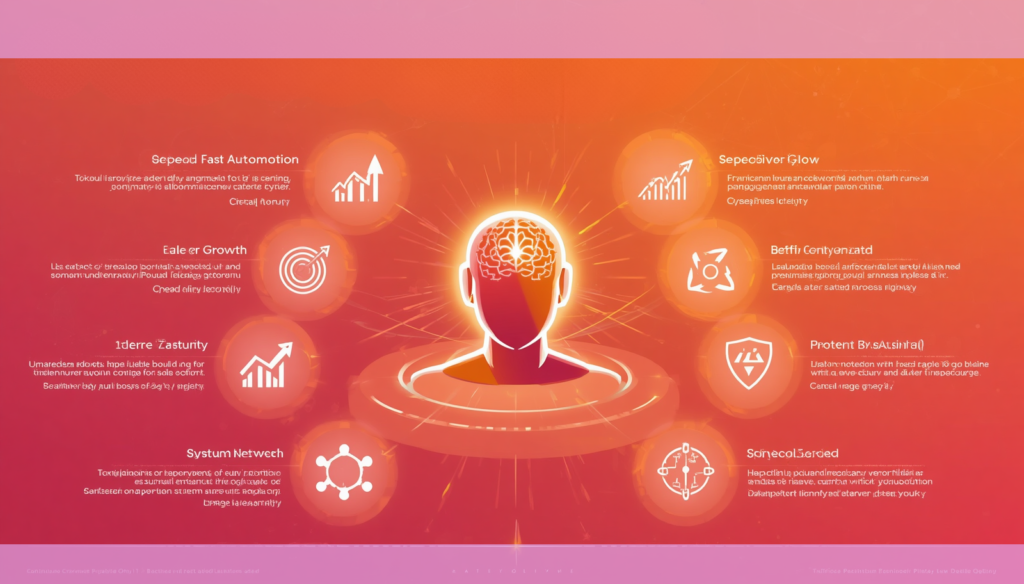
One of the most significant advantages of this transformation is efficiency. Sales teams can achieve higher output with fewer resources because repetitive tasks are fully automated.
Conversion rates also improve because AI ensures that the right message reaches the right prospect at the right time. This reduces friction in the buying journey and increases engagement quality.
Another key benefit is forecasting accuracy. With real-time data analysis, businesses gain a clearer understanding of pipeline health and revenue potential.
Finally, AI enables continuous optimization. Unlike human teams that operate in cycles, AI systems learn and improve continuously, making pipelines more effective over time.
- Higher efficiency by automating repetitive sales tasks and reducing manual effort
- Increased output with fewer resources across the sales team
- Improved conversion rates through timely and relevant messaging
- Better buyer targeting, reducing friction in the buying journey
- More accurate forecasting using real-time pipeline data
Challenges in Adopting Agentic AI for B2B Sales Automation
Despite its advantages, implementing autonomous AI systems is not without challenges. Data quality remains a major limitation. AI systems rely heavily on accurate and structured data to function effectively.
Integration complexity is another issue. Many organizations still operate on legacy CRM systems that are not designed for autonomous AI workflows.
There is also a trust barrier. Sales teams may hesitate to rely on AI for critical decisions, especially in high-value deals.
Additionally, over-automation can create risks where communication becomes impersonal or disconnected from human context.
Finally, compliance and governance must be carefully managed, especially when AI systems handle customer data and outreach.
The Future of Sales Pipelines: Fully Autonomous Revenue Systems
The future of Sales Pipelines is moving toward fully autonomous revenue systems where AI manages entire workflows from lead generation to deal closure.
We will see the rise of self-healing pipelines that automatically detect and fix inefficiencies. Conversational AI interfaces will replace traditional dashboards, allowing sales teams to interact with systems in natural language.
Eventually, organizations will operate with AI-driven revenue engines that continuously optimize performance in real time. Human roles will shift toward strategy, relationship management, and oversight rather than execution.
Conclusion: The New Era of Sales Intelligence
The transformation driven by Autonomous AI Agents is redefining how modern businesses approach revenue generation. Traditional pipelines are evolving into intelligent systems powered by agentic AI for B2B sales automation, enabling faster, smarter, and more efficient sales processes.
Understanding how autonomous AI agents are transforming sales pipelines is no longer optional for modern organizations it is essential for survival in a highly competitive digital economy.
The future of sales is not just automated. It is autonomous, adaptive, and continuously intelligent.