

Technology in sales has transformed itself from a set of independent sales technologies into a technology ecosystem that is heavily interconnected. Sales teams today use CRM systems, sales engagement platforms, customer data platforms, lead enrichment systems, revenue intelligence software, analytics systems, communication APIs, automation platforms, and cloud technologies to facilitate their revenue operations. While such an ever-growing technology stack presents many possibilities in terms of sales productivity, it also makes operations increasingly complex.
While a sales rep might only see a CRM interface, the reality is that there are numerous APIs, databases, integrations, cloud solutions, background processes, authentication systems, data pipelines, and automated workflows behind that CRM interface. Should any of those fail, the consequences can go far beyond the technology department.
Should an integration fail, sales reps would not get their leads. Should an API fail, customer data syncing would be disrupted. Should a database fail, CRM system access would become unavailable. Should a deployment fail, a sales engagement process would be interrupted. A data pipeline failure can produce inaccurate revenue dashboards. This is why the connection between AI Agent Automation, DevOps, SalesTech, and Revenue Operations is becoming increasingly important.
Traditional DevOps automation can execute predefined instructions. AI Agent Automation can add another layer of intelligence by helping systems understand context, investigate problems, select appropriate tools, and execute approved actions.
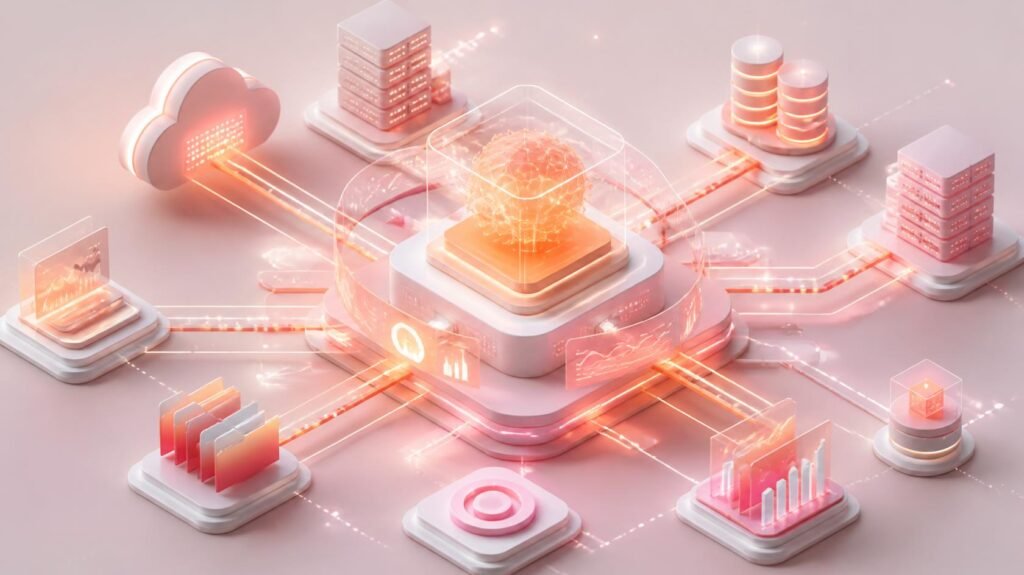
What Is AI Agent Automation?
AI Agent Automation is the concept of utilizing AI-enabled agents for performing, coordinating and optimizing complex multi-step tasks with minimal human involvement.
Contrary to the typical automation script with the set of actions done in a pre-set order, an AI agent may assess the information and decide what action is necessary in accordance with a given goal, tools, policies, and environment.
The classic automation process may work like this:
Trigger → Rule → Action
In other words, for instance, when a particular threshold of a certain resource in the server is achieved, an automation system will do a certain scale-up operation.
AI Agent Automation, however, may function this way:
Observe → Analyze → Reason → Decide → Act → Verify
The agent may collect information from multiple systems and figure out what is going to happen.
For DevOps, it may include infrastructure monitoring, looking into the application logs, debugging the deployment errors, analyzing APIs or assisting in incident management.
And for SalesTech, the exact same capabilities may be used for the revenue operations support technology stack.
This includes monitoring of CRM integrations, lead routing system, sales engagement platform, customer data pipeline, revenue analytics, APIs, and cloud infrastructure.
The purpose of such AI Agent Automation is not only to automatize more processes but to create an operational system that understands the context and performs appropriate actions accordingly.
Why AI Agent Automation Matters for SalesTech
Sales technology has become directly connected to revenue performance. Sales teams depend on reliable systems to access customer information, manage opportunities, receive leads, execute outreach, track activities, and analyze pipeline performance.
As SalesTech stacks become larger, the number of technical dependencies also increases.
A modern revenue technology environment may contain:
- CRM platforms
- Sales engagement platforms
- Lead management systems
- Customer data platforms
- Marketing automation tools
- Data enrichment services
- Revenue intelligence applications
- Analytics platforms
- Cloud infrastructure
- APIs
- Databases
- Data warehouses
- Integration platforms
- Internal business applications
Each system can create dependencies with other systems.
This makes operational reliability increasingly important.
AI Agent Automation can provide an intelligent operational layer that helps organizations monitor these dependencies, investigate problems, and automate selected responses.
The Connection Between DevOps and SalesTech
DevOps has traditionally been viewed as an engineering function focused on software development, infrastructure, deployment, monitoring, and reliability. SalesTech has traditionally been viewed as a business function focused on sales productivity, lead management, customer engagement, and revenue growth.
- The distinction is becoming less clear.
- Sales technology is software.
- Sales workflows depend on APIs.
- Revenue applications depend on cloud infrastructure.
- CRM systems depend on databases and integrations.
- Customer data depends on data pipelines.
- Sales automation depends on reliable background processes.
- As a result, DevOps reliability can directly affect sales productivity.
This creates an important relationship:
Reliable DevOps → Reliable SalesTech → Reliable Revenue Operations
AI Agent Automation can strengthen this connection by allowing operational systems to understand not only technical events but also the workflows those systems support.
How AI Agent Automation Works in DevOps
AI Agent Automation generally combines several components.
AI Model
The AI model provides language understanding, reasoning, pattern interpretation, and decision support.
Agent Orchestration
An orchestration layer manages the agent’s objectives, tasks, memory, tools, and workflow.
Operational Data
Agents need access to relevant information such as logs, metrics, traces, deployment records, API activity, system documentation, and alerts.
Connected Tools
An agent may interact with monitoring systems, cloud environments, code repositories, CI/CD platforms, ticketing systems, databases, and communication tools.
Policies and Permissions
Policies determine what the agent can access and which actions it can perform.
Human Oversight
Human approval can be required for sensitive operations, particularly when changes could affect production systems or customer-facing applications.
Together, these components allow AI Agent Automation to move from simple AI assistance toward more structured operational automation.
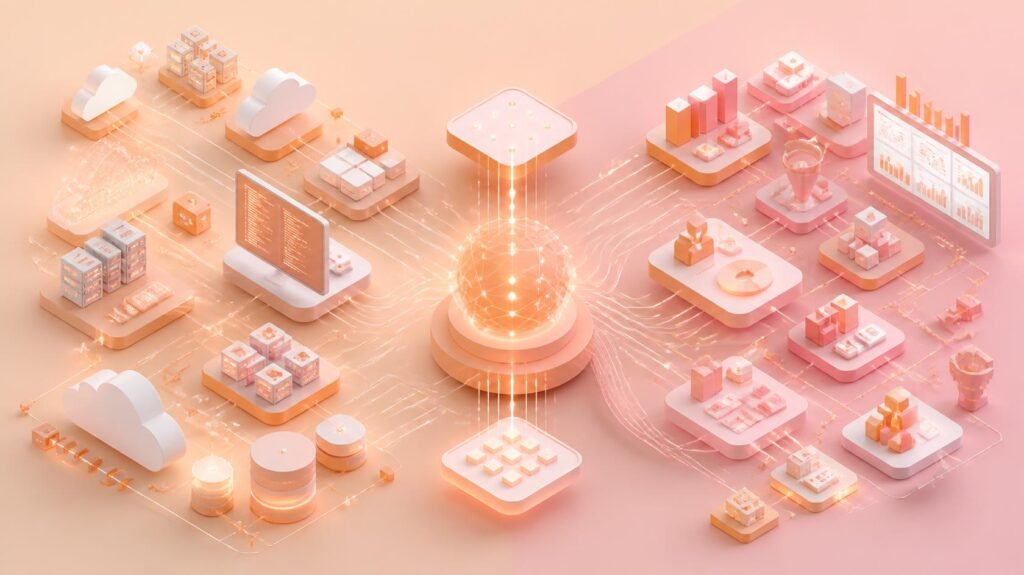
AI Agent Automation for Intelligent SalesTech Monitoring
Monitoring is really important for AI Agent Automation. It is one of the valuable areas for AI Agent Automation. Traditional monitoring systems are often based on thresholds like a limit that should not be crossed. For example a system will send out an alert when the CPU utilization or response time or error rates go above a value that was decided beforehand.
While it is still useful to have threshold-based monitoring it can be a problem in SalesTech environments. This is because these environments can generate a lot of alerts that engineers have to look into by themselves. AI agents can look at things at the same time.
An AI agent that is monitoring a sales technology environment could look at things like
- API response times
- Error rates
- CRM synchronization status
- Database performance
- Application logs
- Recent deployments
- Integration activity
- Infrastructure events
- Traffic patterns
- Service dependencies.
This gives us information, about an alert. Of just saying that a system has errors AI Agent Automation can help figure out why those errors are happening and which systems might be affected by those errors. AI Agent Automation can really help us understand what is going on with the SalesTech environments and the AI Agent Automation.
AI Agent Automation for CRM Reliability
CRM systems are at the center of many sales organizations. Sales representatives use CRM platforms to manage contacts, accounts, opportunities, activities, customer information, and pipeline data. Because the CRM is connected to many other systems, reliability is critical.
AI Agent Automation can support CRM operations by monitoring integrations, synchronization processes, APIs, scheduled jobs, and system health.
For example, if customer records suddenly stop synchronizing with another business system, an AI agent could investigate the available operational information.
It could examine recent integration activity, API responses, authentication events, system logs, and deployment changes. The agent can then summarize the situation for the responsible team. This can reduce the amount of time engineers spend manually gathering information.
AI Agent Automation for Lead Routing
SalesTech does something called lead routing. When a new lead comes into the system that handles money a lot of things happen on its own before it gets to a salesperson. The system checks the leads information to make sure it is correct adds details to the leads file gives the lead a score assigns the lead to an area updates the CRM system sends the lead to the right person sends out notices and gets the sales team involved.
If something goes wrong at any point it can slow down the lead. That is where AI Agent Automation comes in. It can watch these routing processes and find any problems.
For example if the number of leads being routed suddenly gets a lot lower an AI agent can look into it. See if the problem is with the connection to another system the flow of data how different systems work together a problem with logging in or a problem with the application. This helps connect the sales side of things which’s lead routing and sales execution with the technical side, which is monitoring the systems and it helps make sure that lead routing works properly. Lead routing is important because it is a part of the sales process and lead routing helps the sales team do their job. Lead routing and sales execution are crucial, to making money and lead routing is a part of that.
AI Agent Automation for Sales Engagement Platforms
Sales engagement platforms do a lot of things for us. They help with things like reaching out to customers following up with them and keeping track of what sales people are doing. These platforms use a lot of things to work properly like connections to other systems, big collections of data things that run in the background, email services, systems that check who people are and connections to other services.
The AI Agent Automation is, like a helper that keeps an eye on all these things. It can find problems that do not look right look into what’s going wrong when something breaks and give us a summary of what is happening. This helps the people in charge of sales technology make sure everything works better even when sales organizations start to use automation with sales engagement platforms and the AI Agent Automation. Sales engagement platforms are very important. The AI Agent Automation helps them.
AI Agent Automation for API Operations
APIs are really crucial for SalesTech infrastructure these days. You see different applications use APIs to share information about customers, leads, accounts, activities and analytics data. When an API does not work properly it can affect SalesTech workflows that rely on APIs and this is because APIs play such a big role in exchanging data between different applications that use APIs. APIs are used by applications to get and send data so when APIs have problems it can be a big issue, for APIs and the applications that use them.
AI Agent Automation can help monitor API behavior by analyzing:
| API Signal | What AI Agent Automation Can Analyze |
|---|---|
| Error rates | Unusual increases and patterns |
| Response time | Performance degradation |
| Request volume | Unexpected traffic changes |
| Authentication | Access failures |
| Rate limits | Excessive request activity |
| Data transfer | Synchronization problems |
| Dependencies | Related service failures |
| Availability | Service interruptions |
This provides DevOps teams with a broader operational view.
An AI agent can also help connect API problems to business workflows.
For example, an API failure affecting a lead management integration may have a much higher business priority than an internal service with limited operational impact.
AI Agent Automation for Incident Response
Incident response is another major opportunity.
A typical technical incident may require engineers to perform several manual tasks.
They may need to:
- Review the alert.
- Identify affected services.
- Examine logs.
- Check infrastructure metrics.
- Review recent deployments.
- Investigate API activity.
- Identify potential root causes.
- Communicate with stakeholders.
- Recommend remediation.
- Verify recovery.
AI Agent Automation can support many of these steps.
An agent can collect information from different systems and create a structured incident summary.
Instead of starting an investigation with incomplete information, engineers can receive a consolidated view of the incident.
This can potentially reduce the time required to understand operational problems.
AI Agent Automation and Root-Cause Analysis
Root cause analysis takes a lot of time when it comes to DevOps.
A system will show us a problem. It does not always tell us what is really going on.
For people who work with SalesTech this can be even harder because a lot of applications are connected to each other.
Some things that can cause problems with CRM synchronization are:
- API authentication
- Rate limiting
- Database performance
- Configuration changes
- Integration updates
- Network problems
- Application errors
- Data validation failures
- Deployment changes
AI Agent Automation can help us figure out what is going on by looking at all these things.
An agent can look at what happened and when and it can check system events and logs to see if it can find any connections that engineers should look into.
We should not just take what the agent says as the truth.
We need to make sure that the important things it finds are really true before we make any changes to SalesTech or DevOps or anything else.
Engineers should always check the findings of AI Agent Automation before making changes, to DevOps or SalesTech.
AI Agent Automation for Deployment Validation
SalesTech applications often receive frequent updates.
Every deployment introduces some level of operational risk.
AI Agent Automation can support deployment validation by analyzing application health before and after a release.
The agent can examine:
- Error rates
- API performance
- Application latency
- Resource utilization
- Failed requests
- Service health
- Database performance
- Integration status
If system performance changes significantly after deployment, the agent can notify the appropriate team.
In controlled environments, it may also trigger an approved rollback workflow.
This can help organizations make deployment processes more intelligent without removing human governance.
AI Agent Automation for Data Synchronization
Data synchronization is essential to modern SalesTech. Customer information may move between CRM systems, customer data platforms, analytics systems, marketing platforms, and sales engagement applications.
A synchronization failure can create inaccurate or incomplete data. AI Agent Automation can monitor synchronization processes and identify abnormal patterns.
For example, an agent may detect that the volume of synchronized records has dropped unexpectedly.
It can investigate whether the issue relates to API failures, data validation, authentication, infrastructure problems, or processing errors. This can help prevent small technical issues from becoming larger revenue operations problems.
AI Agent Automation and Revenue Operations
Revenue Operations is where sales and marketing and customer success and data and technology all come together. This is why Revenue Operations is a place for AI Agent Automation to happen. Revenue teams need systems that work well all the time. AI Agent Automation can help tie watching how things are working with the things that bring in revenue. AI agents can do more than just give information they can also give it to us in a way that makes sense for our business.
For example:
- event: something goes wrong with syncing leads.
- Operational impact: new leads are not getting into our customer relationship management system.
- Business impact: the people who sell things for us may not get the leads they need.
Revenue Operations and the people who work with technology can use this kind of information to figure out what to fix AI Agent Automation is really helpful for Revenue Operations because it brings everything together. Revenue Operations is all, about Revenue Operations. How it can be improved with AI Agent Automation.
AI Agent Automation and Sales Automation
Sales automation focuses on improving the efficiency of sales workflows. AI Agent Automation can complement sales automation by supporting the infrastructure behind those workflows.
Traditional sales automation might automate:
- Lead assignment
- Follow-up tasks
- Sales sequences
- Notifications
- CRM updates
- Prospect segmentation
AI Agent Automation can support:
- Integration monitoring
- API analysis
- Incident response
- Infrastructure monitoring
- Data synchronization
- Deployment validation
- System reliability
Together, these technologies create a broader automation ecosystem.

Key Benefits of AI Agent Automation for SalesTech
Faster Incident Investigation
When something goes wrong AI agents can collect information quickly. This means we do not have to spend much time investigating.
Better System Reliability
If we use AI to watch our systems all the time it can help us find problems before they become issues. The AI can look at the information. Figure out what is going on.
Reduced Engineering Workload
We can use AI to take care of tasks. This way engineers do not have to do these tasks. They can focus on other things.
Improved Revenue Technology Performance
If our SalesTech infrastructure is working well our revenue teams can do their jobs consistently. This is because they have the technology they need to work
Better Lead Operations
We can use AI to watch the technology that handles leads. This helps us find and fix problems before they cause issues.
Faster Response to API Problems
If there is a problem with an API, an AI agent can look at what happened and figure out what is going on. The AI agent can do this quickly.
Devops and RevOps Collaboration
AI agents can help our technical teams and business teams work together better. The AI agents can explain problems in a way that everyone can understand.
More Scalable Operations
As our SalesTech environments get bigger we need to be able to handle complexity. Intelligent automation can help us do this.
AI Agent Automation vs Traditional DevOps Automation
The main difference, between automation and AI Agent Automation is how they make decisions.
| Feature | Traditional Automation | AI Agent Automation |
|---|---|---|
| Logic | Rule-based | Context-aware |
| Workflow | Predefined | Adaptive |
| Decision-making | Fixed conditions | AI-assisted reasoning |
| Data analysis | Limited | Multi-source |
| Incident investigation | Mostly manual | Agent-assisted |
| Tool selection | Preconfigured | Can be dynamically selected |
| Response | Predetermined | Goal-oriented |
| Human involvement | Task dependent | Risk dependent |
| Scalability | Script dependent | Agent and infrastructure dependent |
Traditional automation remains important. AI Agent Automation should not replace every existing workflow.
Instead, it can add intelligence to areas where predefined rules are insufficient.
AI Agent Automation vs AIOps
AI Agent Automation is closely related to AIOps, but the concepts are not identical. AIOps generally focuses on applying AI and machine learning to IT operations data.
It can support:
- Monitoring
- Anomaly detection
- Event correlation
- Performance analysis
- Operational insights
AI Agent Automation adds an action-oriented capability. An AIOps system might detect an unusual event. An AI agent can potentially investigate that event, gather additional information, recommend a response, execute an approved action, and verify the outcome.
A simple distinction is:
AIOps: Detect and understand.
AI Agent Automation: Detect, understand, decide, act, and verify.
The two approaches can work together within modern DevOps environments.
Challenges of AI Agent Automation
AI Agent Automation opens up opportunities but companies need to solve many problems before using self-driving features.
Security
AI agents might work with systems and business tools. Access has to be managed carefully.
Permissions
Agents should follow the rule of privilege. An agent that watches over things should not get the power to change systems.
Data Privacy
SalesTech setups might have customer and company data. Companies need ways to protect data and control who can see it.
Incorrect Decisions
AI agents can give advice. Big decisions should always have a person check them.
Integration Complexity
Linking agents to DevOps and SalesTech tools can take a lot of planning.
Governance
Companies must have rules about what agents can do, on their own and what needs permission.
Human-in-the-Loop AI Agent Automation
Fully autonomous DevOps may sound attractive, but controlled autonomy is generally a more practical approach.
Human-in-the-loop AI Agent Automation allows organizations to automate routine tasks while keeping people responsible for high-risk decisions.
A simple model is:
Low Risk → Automatic
Medium Risk → Approval
High Risk → Human Control
For example, an AI agent could automatically collect logs and create an incident summary.
It could recommend restarting a non-critical service but request approval before executing the action. A production infrastructure change could require mandatory human authorization. This approach allows organizations to gain the benefits of AI Agent Automation without giving unrestricted control to AI systems.
How to Implement AI Agent Automation in SalesTech
Step 1: Identify Operational Bottlenecks
Start by identifying recurring problems affecting SalesTech systems. Look for repetitive incident investigations, API monitoring challenges, synchronization issues, and deployment problems.
Step 2: Choose Low-Risk Use Cases
Start with workflows that have limited operational risk.
Examples include:
- Log collection
- Incident summaries
- Alert classification
- Monitoring
- Documentation
- Notifications
Step 3: Connect Operational Data
Provide agents with access to relevant logs, metrics, APIs, deployment records, documentation, and system information.
Step 4: Define Agent Responsibilities
Each AI agent should have a clearly defined objective. Avoid creating an agent with unrestricted responsibilities.
Step 5: Establish Permissions
Define exactly which systems the agent can access and what actions it can perform.
Step 6: Add Approval Mechanisms
Sensitive actions should require human approval.
Step 7: Test Against Historical Incidents
Before deploying an agent into production, organizations can evaluate its performance against previous operational incidents.
Step 8: Measure Results
Track performance using clear operational metrics.
Step 9: Expand Gradually
Once the agent performs consistently, organizations can extend it to additional workflows.
Metrics for Measuring AI Agent Automation ROI
Organizations should measure business and technical outcomes rather than simply counting automated tasks.
| Area | Metrics |
|---|---|
| Reliability | System availability, incident frequency |
| Incident Response | Mean time to detection, mean time to resolution |
| SalesTech | Lead synchronization failures, integration uptime |
| Engineering | Engineer hours saved |
| Deployment | Deployment failure rate, rollback rate |
| APIs | Error rates, response times |
| Revenue Operations | Workflow disruption frequency |
| Cost | Infrastructure and operational costs |
The strongest AI Agent Automation programs should demonstrate measurable improvements in efficiency, reliability, and business operations.

Best Practices for AI Agent Automation
Start Small
Do not attempt to automate the entire DevOps environment immediately.
Start with a specific problem and measure results.
Keep Humans Involved
Use human approval for high-impact operations.
Use Reliable Data
AI agents are only as useful as the information available to them.
Clean logs, accurate monitoring, consistent documentation, and reliable system data are essential.
Apply Least Privilege
Agents should receive only the permissions necessary to perform their assigned tasks.
Maintain Audit Trails
Record important recommendations, decisions, and actions.
Monitor Agent Performance
Organizations should monitor the AI agents themselves.
They need to know when agents fail, produce incorrect recommendations, or behave unexpectedly.
Build Clear Escalation Paths
If an agent cannot confidently resolve an issue, it should escalate the problem to a human.
The Future of AI Agent Automation in SalesTech
The future of SalesTech will involve more than AI-powered prospecting and sales assistants.
AI agents will increasingly operate behind the scenes, supporting the infrastructure that makes modern sales technology possible. Specialized AI agents could monitor different parts of the revenue technology environment.
- One agent might focus on API reliability.
- Another could monitor CRM synchronization.
- Another could investigate infrastructure incidents.
- Another could support security operations.
- Another could analyze deployment health.
These specialized agents could communicate through an orchestration layer.
For example, an infrastructure agent might detect an issue.
A second agent could investigate the application impact. A third could evaluate whether revenue workflows are affected. The system could then provide a consolidated recommendation to a human engineer or RevOps leader. This creates the possibility of more intelligent and coordinated software operations.
AI Agent Automation and the Future of RevOps
Revenue Operations is becoming increasingly technology-driven. RevOps teams are responsible for Making sure that systems, data, processes and teams all work well together is very important.
As the technology that brings in money gets more complicated it will become really important to have intelligence. The AI Agent Automation can help the RevOps teams understand problems with technology in a way that makes sense for the business.
Of just getting a message that something is wrong from a technical standpoint teams can actually understand what is going on. They can find out things like:
- What happened?
- Which system is having problems?
- Which part of the revenue workflow is affected by this system?
- How big of a deal is this problem?
- What made this issue happen?
- What should we do to fix it?
- Has the problem been fixed yet?
This can really help the teams and the revenue teams work together better. The RevOps teams and the revenue teams and the technical teams will all be, on the page. The systems and the data and the processes will all work together smoothly. The RevOps teams will be able to use the AI Agent Automation to make sure that everything is running well.
AI Agent Automation and Revenue-Critical Infrastructure
Sales organizations increasingly depend on software for almost every stage of the revenue process.
- Lead acquisition depends on technology.
- Lead qualification depends on technology.
- Customer data depends on technology.
- Sales engagement depends on technology.
- Pipeline management depends on technology.
- Forecasting depends on technology.
- Reporting depends on technology.
Therefore, software reliability has become a revenue concern.
AI Agent Automation can help organizations build a more resilient operational foundation for these systems. The value extends beyond engineering productivity. It can help protect the technology infrastructure that supports revenue generation.
What AI Agent Automation Means for DevOps Engineers
AI Agent Automation is unlikely to eliminate the need for DevOps engineers.
Instead, it can change how engineers spend their time. Rather than manually investigating every alert, engineers may increasingly supervise intelligent automation systems.
Their responsibilities can shift toward:
- Architecture
- Reliability strategy
- Security
- Governance
- Automation design
- AI agent evaluation
- Infrastructure optimization
- Risk management
- Complex incident response
This can make DevOps more strategic.
The important skill will increasingly be the ability to design reliable systems in which humans and AI agents work together.
What SalesTech Leaders Should Consider
SalesTech leaders should look at AI Agent Automation as part of a broader operational strategy.
The question should not simply be:
“Where can we add AI?”
A better question is:
“Which operational problems prevent our sales technology from working at its best?”
From there organizations can find out where AI Agent Automation can really make a difference. Some good places to start with AI Agent Automation are things, like getting customer relationship management systems to work together figuring out how to route leads keeping an eye on application programming interfaces responding to incidents checking if deployments are working, synchronizing data and monitoring infrastructure.
The main goal of using AI Agent Automation should always be to make things better in a way that can be measured not to use AI Agent Automation for the sake of using AI Agent Automation.
Conclusion
AI Agent Automation is changing how companies think about the software they use. For companies that sell technology to sales teams this change is really important. These companies rely on a lot of technology systems that all need to work together. This includes things like CRM platforms, sales engagement applications and lead management systems. All of these systems need to work for sales teams to do their jobs efficiently.
AI Agent Automation can help make sure all these systems work together smoothly. It can watch over the technology systems figure out what is going wrong when there are problems and help fix issues with the APIs. It can also make sure the CRM platforms are working right monitor the workflows for routing leads and check that new deployments are working as they should.. It can help connect what is happening with the technology systems to how it affects the sales team.
The best thing about AI Agent Automation is not just that it can do tasks that people used to do. It is that it can create a system where intelligent agents are always watching the technology systems, understanding what is happening and coordinating workflows. This means that when problems come up the system can respond quickly while people are still in charge of making the decisions.
As technology for sales teams continues to change AI Agent Automation is going to become more and more important. It will be used along with automation technologies to make sure that sales teams have the technology they need to do their jobs. Companies that build technology systems will be able to grow and sell more without being held back by complicated technology. AI Agent Automation and technology, for sales teams will help these companies make money.
Frequently Asked Questions
What is AI Agent Automation in DevOps?
AI Agent Automation in DevOps uses intelligent AI agents to monitor systems, analyze operational information, investigate problems, coordinate tools, and perform approved actions across software operations.
How can AI Agent Automation help SalesTech companies?
AI Agent Automation can support CRM reliability, API monitoring, lead-routing infrastructure, data synchronization, sales engagement systems, incident response, deployment validation, and revenue technology operations.
Can AI Agent Automation replace DevOps teams?
No. AI Agent Automation is better viewed as an augmentation technology. It can reduce repetitive work while allowing DevOps engineers to focus on architecture, reliability, security, governance, and complex technical decisions.
How is AI Agent Automation different from traditional automation?
Traditional automation generally follows predefined rules. AI Agent Automation can analyze context, work with multiple data sources, select tools, and coordinate multi-step workflows.
Can AI agents fix production problems automatically?
AI agents can potentially perform approved low-risk remediation tasks. However, sensitive production changes should use strong permissions, monitoring, audit trails, and human approval.
How does AI Agent Automation support RevOps?
AI Agent Automation can connect technical monitoring with revenue workflows, helping RevOps teams understand how infrastructure, integrations, APIs, and data problems may affect sales operations.
What SalesTech systems can benefit from AI Agent Automation?
CRM platforms, sales engagement systems, lead management platforms, customer data systems, analytics applications, revenue intelligence platforms, APIs, integration platforms, and cloud infrastructure can all potentially benefit.
Is AI Agent Automation the same as AIOps?
No. AIOps focuses heavily on AI-driven IT operations monitoring, event correlation, anomaly detection, and insights. AI Agent Automation adds the ability to coordinate actions and execute approved workflows.
What is the best way to start with AI Agent Automation?
Organizations should start with a narrow, low-risk operational problem, connect the required data sources, define agent permissions, introduce human approval for sensitive actions, measure results, and gradually expand automation.