
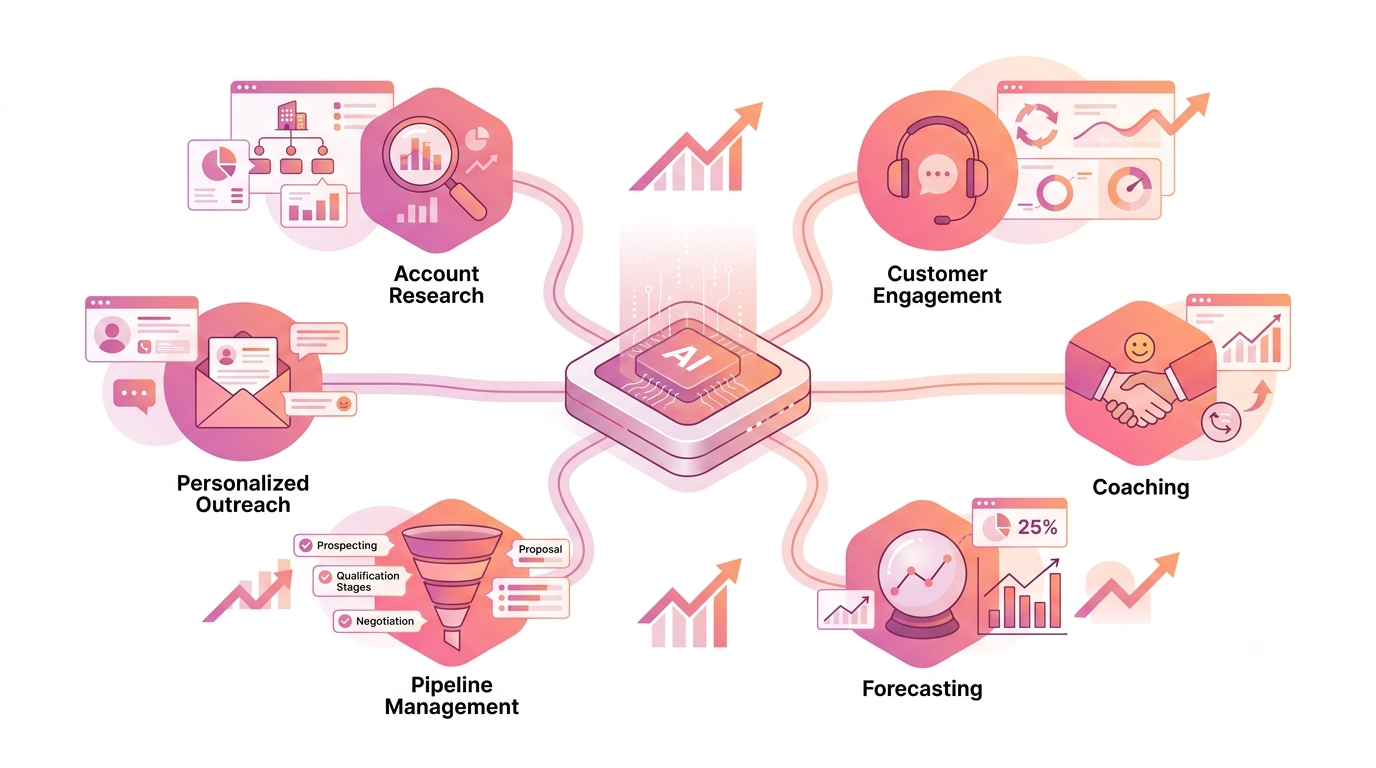
AI is saving sales teams time. That part is no longer a future promise. Sales reps are using AI to write follow-up emails, summarize calls, prepare account notes, research buyers, draft proposals, update CRM fields, and find next-best actions faster than before.
But a new problem is showing up inside many sales organizations. The time saved by AI is not always turning into stronger pipeline, better customer conversations, or higher conversion rates. Teams are getting efficiency, but they are not always getting growth.
This problem is called the AI Sales Reinvestment Gap.
In simple words, the AI Sales Reinvestment Gap happens when sales teams use AI to save time but do not reinvest that time into high-value selling work. A rep may save five hours a week with AI tools, but if those hours are absorbed by more admin work, scattered meetings, inbox checking, or low-value tasks, the business does not gain much. The team feels busier, but the pipeline does not improve.
This is becoming one of the most important sales technology conversations in 2026. AI adoption is rising quickly, but adoption alone does not create revenue. The real advantage comes when sales leaders design a clear plan for what reps should do with the time AI gives back.
For SalesTech Publishers, this is a timely topic because it sits at the center of sales productivity, AI adoption, RevOps strategy, and revenue leadership. The question is no longer, “Can AI make sellers faster?” The better question is, “Can sales teams turn AI time savings into measurable revenue outcomes?”
Why the AI Sales Reinvestment Gap Matters Now
Sales leaders have spent years trying to remove friction from the sales process. CRM automation, sales engagement platforms, conversation intelligence, lead scoring, revenue intelligence, and AI assistants all promise to help sellers spend less time on manual work.
That mission still makes sense. Salespeople should not waste hours copying notes, rewriting similar emails, or searching across disconnected tools. AI can remove a lot of that friction.
The issue is what happens next.
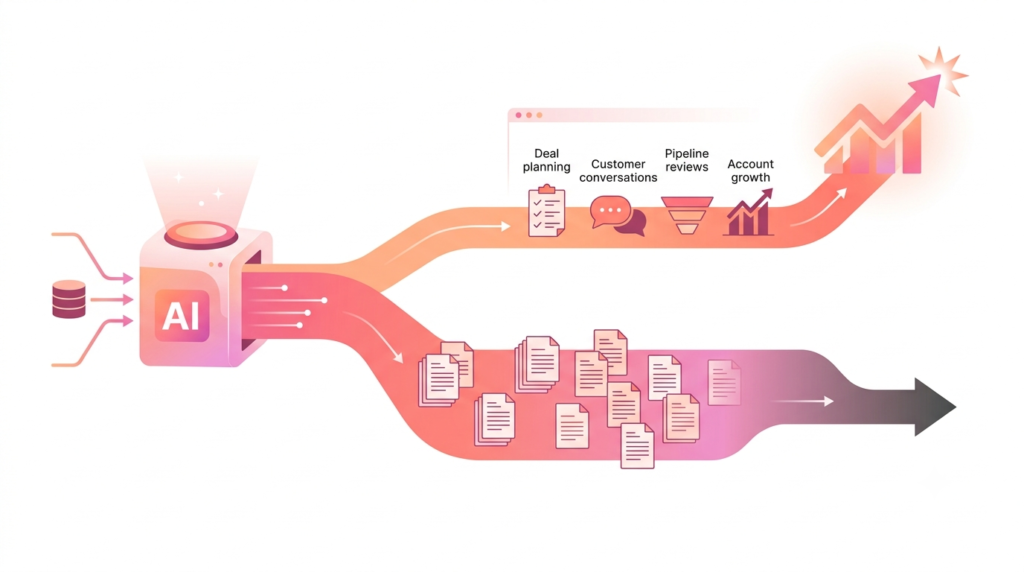
If a seller saves time but does not use it for better discovery, deeper account planning, stronger follow-up, better stakeholder mapping, or more thoughtful coaching, the value of AI stays limited. The organization gets speed but not strategy.
This is why the AI Sales Reinvestment Gap matters. It separates teams that simply use AI from teams that use AI well.
In 2026, many sales organizations are moving from AI experimentation to AI operating models. Leaders want to know which tools actually improve pipeline, which workflows deserve automation, and where human sellers still create the most value. Reinvestment is the missing link between productivity and performance.
What the AI Sales Reinvestment Gap Looks Like
The gap does not always look dramatic. It often hides in normal work habits.
A sales rep may use AI to create a meeting summary in seconds, but then never use that summary to improve the next conversation. A manager may use AI to review call recordings faster, but never turn those insights into coaching. A RevOps team may automate CRM updates, but never redesign the sales process around cleaner data.
The result is a quiet waste of potential.The difference is not the AI tool alone. The difference is the behavior after the tool saves time.
| AI Time Saved From | Weak Reinvestment | Strong Reinvestment |
|---|---|---|
| Call summaries | Stored in CRM but not reviewed | Used to prepare better next steps |
| Email drafting | More generic outreach volume | More personalized buyer messages |
| Account research | Quick notes only | Better stakeholder mapping |
| CRM automation | Less admin but no behavior change | More time for pipeline inspection |
| Forecast support | Faster reports | Better risk conversations |
| Proposal drafting | Faster document creation | More time tailoring value to the buyer |
AI Should Create Selling Capacity, Not Just Speed
Sales productivity is often measured in activity. How many calls did reps make? How many emails did they send? How many tasks were completed? These numbers are easy to count, but they do not always show quality.
AI can make activity numbers rise quickly. A rep can send more emails, generate more account notes, and complete more tasks. But more activity is not always better selling.
The best sales organizations use AI to create selling capacity. That means reps have more time and mental energy for work that requires judgment, empathy, creativity, and strategy.
High-value selling work includes:
- Understanding buyer priorities
- Preparing for complex discovery calls
- Mapping decision-makers and influencers
- Creating relevant business cases
- Following up with useful insight
- Improving deal strategy with managers
- Re-engaging stalled opportunities
- Learning from lost deals
These activities are harder to automate because they require context. AI can help with them, but humans still need to guide the work. The goal is not to replace the seller. The goal is to make the seller more prepared, more focused, and more useful to the buyer.
Why Sales Teams Fail to Reinvest AI Time
The AI Sales Reinvestment Gap usually appears for a few reasons.
First, leaders do not define what saved time should become. They buy AI tools, train teams, and celebrate adoption, but they do not create a clear reinvestment plan. Reps are told to “use AI” but not told what new behavior should follow.
Second, managers are not always equipped to coach around AI. A manager may know that reps are saving time, but they may not know how to inspect whether that time is improving deal quality.
Third, workflows remain unchanged. If the sales process is still designed around old admin-heavy habits, AI savings may simply get swallowed by the same broken process.
Fourth, teams confuse automation with improvement. Automating a weak workflow can make the weak workflow faster. It does not automatically make it better.
Fifth, sales teams may not measure the right outcomes. If leaders only track AI usage, they may miss whether AI is actually helping conversion, cycle time, win rate, or account growth.
The New Role of Sales Managers
Sales managers are central to solving the AI Sales Reinvestment Gap.
AI tools can summarize calls, score conversations, suggest next steps, and highlight risk signals. But managers still need to turn those signals into better coaching. If managers do not change how they lead, AI insights may become just another dashboard.
The managers role is shifting from task checker to performance architect. Instead of only asking, “Did you complete the activity?” managers need to ask:
- Did AI help you prepare better?
- What did you learn about the buyer?
- Which stakeholder still needs attention?
- What risk did the AI surface?
- How will you use the saved time this week?
- Which deal needs deeper human focus?
This changes the coaching conversation. AI becomes a support system, but the manager still creates accountability.
Where Reps Should Reinvest Time
Not every saved hour should be used the same way. Different sales roles need different reinvestment priorities.
An SDR may reinvest time into better account research, more thoughtful prospecting, and stronger personalization. An account executive may reinvest time into discovery preparation, stakeholder mapping, and deal strategy. A customer success manager may reinvest time into expansion planning and risk prevention.
| Sales Role | Best Reinvestment Area | Why It Matters |
|---|---|---|
| SDR | Account research and personalized outreach | Improves meeting quality |
| Account Executive | Discovery planning and deal strategy | Improves conversion and win rate |
| Sales Manager | Coaching and pipeline inspection | Turns AI insight into behavior change |
| RevOps | Process design and data quality | Makes AI outputs more reliable |
| Customer Success | Expansion and retention planning | Protects revenue after the sale |
| Sales Enablement | Skill development and playbook updates | Helps teams learn faster |
This is where sales leaders need discipline. AI time savings should be assigned to the work that creates the most value for each role.
The RevOps View of the Reinvestment Gap
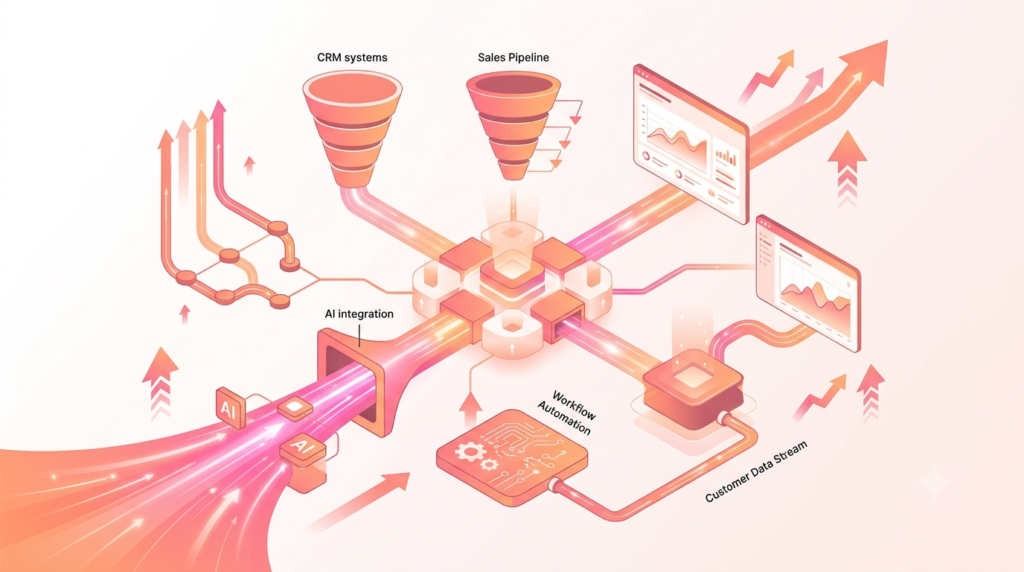
RevOps teams play an important role because they connect people, process, data, and technology.
If RevOps only measures AI tool usage, the organization may get a shallow view of success. A team may have high adoption but low impact. The better approach is to connect AI usage to sales process outcomes.
RevOps should ask:
- Are reps spending less time on admin?
- Are they using saved time for better selling actions?
- Is pipeline quality improving?
- Are next steps more complete?
- Are managers coaching more consistently?
- Are forecast risks easier to identify?
- Are buyer responses improving?
The AI Sales Reinvestment Gap becomes easier to manage when RevOps builds clear measurement around it. This does not need to be complicated. Start with a few simple before-and-after metrics, then improve over time.
Metrics That Show Whether AI Time Is Working
Good measurement keeps teams honest. It helps leaders avoid the trap of celebrating AI adoption without business impact.
Useful metrics may include:
- Time saved per rep per week
- Number of high-value selling actions completed
- Meeting-to-opportunity conversion rate
- Opportunity-to-win conversion rate
- Average sales cycle length
- Deal inspection quality
- CRM data completeness
- Manager coaching frequency
- Buyer reply quality
- Stalled deal reactivation rate
These metrics should be reviewed together. If time saved is high but conversion does not improve, the team may have a reinvestment problem. If AI usage is high but managers are not coaching differently, the value may stay stuck.
A Simple Reinvestment Framework
Sales leaders can use a simple framework to close the gap.
- Identify where AI saves time.
- Decide which high-value activity should receive that time.
- Update manager coaching to inspect the new behavior.
- Measure whether the behavior improves pipeline outcomes.
- Repeat the process every month.
This framework is simple, but it forces leaders to connect AI savings with business results.
For example, if AI saves account executives two hours a week on admin work, the team may reinvest that time into deal strategy sessions for late-stage opportunities. Managers can then track whether those deals show better next steps, stronger stakeholder coverage, and higher close rates.
Without this link, AI productivity remains a nice story. With this link, AI becomes part of revenue operating discipline.
Common Mistakes to Avoid
The first mistake is assuming that saved time automatically becomes productive time. It does not. Time needs direction.
The second mistake is pushing reps to use AI only for volume. More emails and more tasks may create noise if the quality is weak.
The third mistake is leaving managers out of the AI process. Managers need training, dashboards, and coaching prompts that help them guide reinvestment.
The fourth mistake is ignoring buyer experience. AI should help sellers become more relevant, not more robotic.
The fifth mistake is failing to update the sales process. If AI changes how work gets done, the operating rhythm should change too.
How to Make AI Reinvestment Practical
Start small. Choose one sales motion and one AI workflow. For example, focus on discovery preparation for account executives. Use AI to summarize account history and recent buyer signals. Then require reps to use the saved time to prepare three better discovery questions before each call.
That is practical. It is clear, measurable, and easy for managers to coach.
After that, expand to other workflows. Add reinvestment habits for follow-up quality, stalled deal recovery, renewal preparation, or coaching.
Sales leaders should also make reinvestment visible. Teams can discuss it in weekly meetings:
- Where did AI save time this week?
- Where did we reinvest that time?
- What improved because of it?
- What still feels like wasted effort?
These questions create a learning culture around AI. They also keep the team focused on outcomes instead of tools.
The Future of AI in Sales Depends on Reinvestment
AI will keep getting better. Sales tools will become more automated, more predictive, and more agent-like. Some workflows that feel advanced today will feel normal soon.
But the core challenge will remain the same. Technology can create capacity, but leaders must decide how to use that capacity.
The best sales teams in 2026 will not be the ones with the most AI tools. They will be the ones with the clearest reinvestment strategy. They will know which tasks to automate, which human behaviors to strengthen, and which metrics prove that AI is helping revenue.
AI should give sellers more time for the work buyers actually value. That means better preparation, sharper discovery, stronger follow-up, clearer business cases, and more thoughtful deal strategy.
Conclusion
The AI Sales Reinvestment Gap is a warning sign for modern sales organizations. It shows that AI productivity is not the same as revenue performance.
Sales teams can save hours every week and still miss growth goals if they do not reinvest that time wisely. The solution is not to slow down AI adoption. The solution is to connect AI savings to high-value selling behaviors.
Leaders should define where time is saved, decide where it should go, coach the new behavior, and measure the result. When teams do this well, AI becomes more than a productivity tool. It becomes a revenue multiplier.
In 2026, the winners in sales technology will be the teams that turn saved time into better selling. That is how AI moves from activity to impact.